
By Michael Hayes
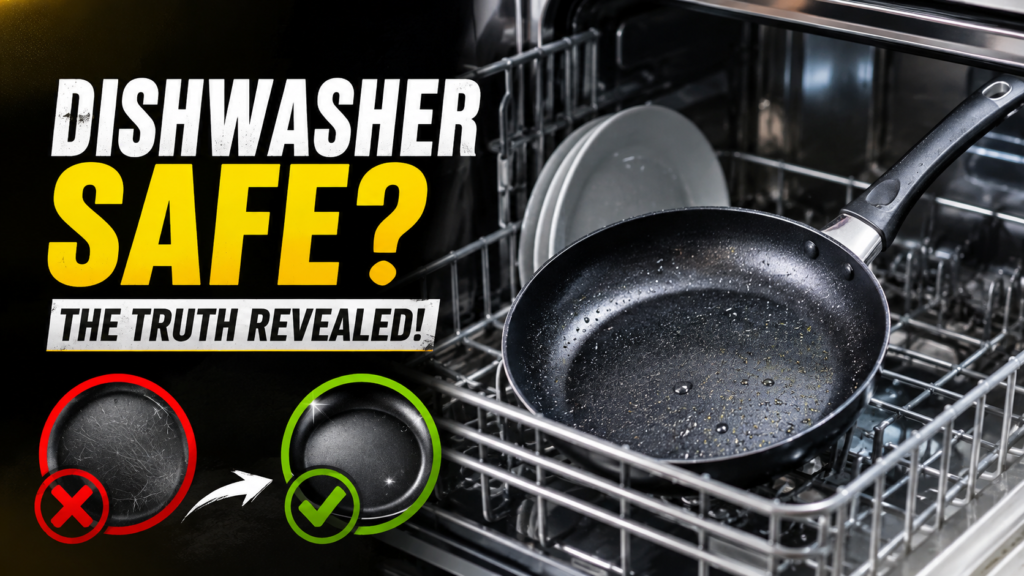
If you’ve ever loaded a non-stick skillet into the dishwasher and wondered whether you just made a mistake, you’re not alone. This is one of the most common kitchen cleaning questions, and the honest answer depends on the pan’s coating, its label, and how it was made. Below, we break down what actually happens to non-stick cookware in a dishwasher, when it’s genuinely fine, and how to protect your pan so it lasts through daily cooking.
What “Dishwasher Safe” Actually Means for a Non-Stick Pan
The question “can non stick frying pan go in dishwasher” doesn’t have one universal answer, because non-stick pans are not all built the same way. Some are stamped with a “dishwasher safe” symbol on the base or in the manual. Others only say “hand wash recommended.” The label matters more than the general reputation of the pan’s brand.
When a manufacturer marks a pan dishwasher safe, it usually means the coating, handle material, and any rivets were tested to hold up to the detergent, heat, and water pressure inside a dishwasher. Without that label, the same non stick frying pan can go in the dishwasher physically, but the coating may not be built to handle it long-term.
Why the Washing Method Matters So Much
Non-stick coatings work because of a smooth, low-friction surface layer. That layer is thin, and it can be worn down by three things dishwashers are especially good at: strong detergent, high heat, and friction from other dishes and utensils bumping against it during the cycle.
In daily cooking, I usually notice that pans washed by hand for months still release food easily, while pans run through repeated dishwasher cycles tend to lose that easy-release feel sooner. This isn’t a guarantee for every pan, but it’s a pattern many home cooks report.
Here’s a simple decision path to check before loading any non-stick pan into the dishwasher.
Practical guide only — always confirm with the manufacturer’s specific instructions.
How Different Coating Types Hold Up
Not every “non-stick” pan uses the same coating, and this affects how well it tolerates a dishwasher cycle.
Comparing Common Non-Stick Coating Types
General guidance only. Always check the specific product manual, since formulations vary by manufacturer.
Look for a small dishwasher icon stamped on the pan’s underside or handle. If you don’t see one, treat the pan as hand-wash only.
Watch for dulling or a slightly rough feel on the cooking surface — an early sign the coating is wearing, even before food starts sticking.
A weeknight scramble that used to slide right off the pan starts needing extra oil — often the first practical sign coating wear is happening.
Choose hand washing if the label is unclear. Avoid the dishwasher if the coating already shows scratches, dullness, or flaking.
Step-by-Step: Hand-Washing a Non-Stick Pan Safely
If you’d rather not risk the dishwasher, hand-washing takes only a few extra minutes and is often used for extending a non-stick pan’s lifespan.
Safety and Hygiene Checks
Whether or not a non stick frying pan can go in the dishwasher in your kitchen, food safety still comes first. A worn or flaking coating isn’t just a performance issue — it can also mean loose flakes ending up in food.
Safe vs. Risky Cleaning Practices
Common Problems and Likely Causes
Troubleshooting Table
Common Mistakes to Avoid
Mistake vs. Better Choice
Pro Tips and Best Practices
Many home cooks find that treating non-stick cookware differently from stainless steel pays off in the long run. A few habits can help a non-stick pan stay in good shape for years, even in a busy kitchen setup.
A simple maintenance checklist dashboard for keeping a non-stick pan performing well:
A practical routine, not a guarantee against wear over time.
Choosing a Non-Stick Pan That Fits Your Cleaning Routine
If washing by hand every time isn’t realistic for your kitchen setup, it can help to shop with that in mind from the start.
Product Fit by Kitchen Habit
A relative look at everyday priorities when picking between hand-wash-only and dishwasher-safe non-stick pans:
Practical guide only, based on general patterns — not lab-tested data.
Non-Stick Pans and Care Tools Worth Considering
Dishwasher-Safe Labeled Non-Stick Frying Pan
Many home cooks find a pan with a manufacturer-confirmed dishwasher-safe label more convenient for daily kitchen use, since it removes the guesswork around cleaning.
Soft Sponge and Non-Stick-Safe Cleaning Set
A non-abrasive sponge and gentle dish soap combo can make daily cooking easier by helping protect the coating during regular hand washing.
When to Contact a Professional or the Manufacturer
Frequently Asked Questions
Can non stick frying pan go in dishwasher every time I cook?
Only if the manufacturer labels the pan dishwasher safe. Even then, many home cooks find hand washing helps the coating last longer with everyday use.
What happens if I put a non-dishwasher-safe pan in the dishwasher once?
A single cycle usually won’t ruin the pan, but repeated cycles can gradually wear the coating and loosen handles or rivets over time.
Does the dishwasher damage the non-stick coating directly?
Heat, strong detergent, and contact with other dishes can all contribute to coating wear, though the extent varies by pan and coating type.
Is hand washing really better for non-stick pans?
Many home cooks find hand washing gentler on the coating, since it avoids the heat and friction common in a dishwasher cycle.
How do I know if my specific non-stick pan is dishwasher safe?
Check the base of the pan for a dishwasher-safe icon, or check the manufacturer’s manual or official product page for care instructions.
Can a flaking non-stick pan be unsafe to cook with?
A flaking or peeling coating is a sign the pan should be checked against the manufacturer’s guidance, and many home cooks choose to stop using it until confirmed.
What’s the safest way to clean a non-stick pan overall?
Let it cool, hand wash with warm water and mild soap using a soft sponge, and avoid abrasive scrubbers or sudden temperature changes.
So, can non stick frying pan go in dishwasher without any risk? For most pans, the safest habit is checking the label first and hand washing when in doubt. A few extra minutes of careful cleaning is often used by experienced home cooks to help a non-stick pan perform well for longer. Always confirm care instructions and materials directly with the manufacturer, and seek professional or medical help for any product defect, burn, or cut related to cookware use.
Helpful references: U.S. Consumer Product Safety Commission, U.S. Food and Drug Administration, and NSF International for general cookware and food-contact material safety information.
