
By Olivia Bennett
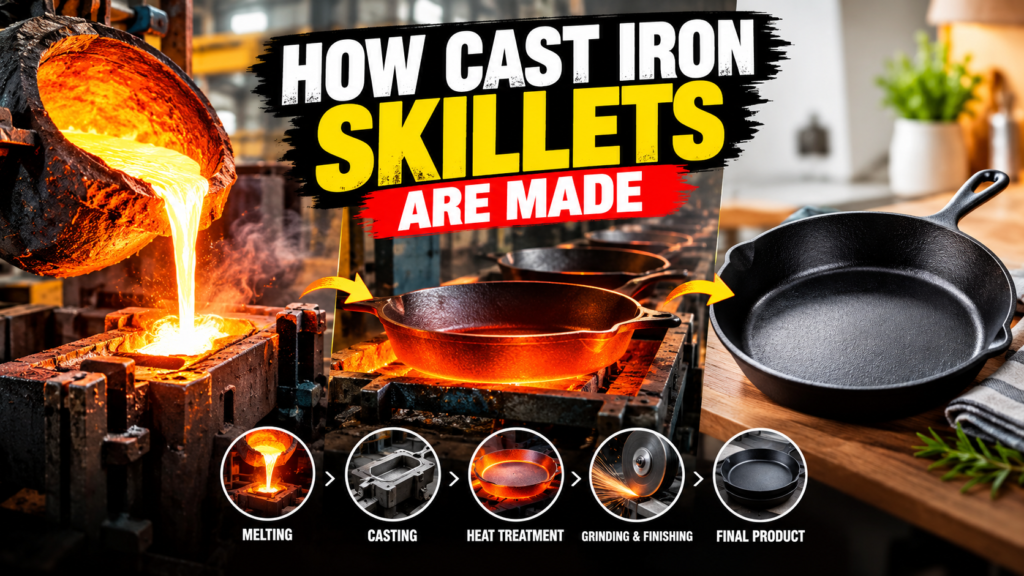
Quick Answer: Cast iron skillets are made by melting iron, pouring it into a mold (often sand-based), and letting it cool. The rough casting is then cleaned, ground or machined, and often seasoned with baked-on oil. Exact methods and finishes vary by brand.
That heavy pan on your stove started as a pile of metal and a shaped hole in packed sand. This guide explains how cast iron skillets are made in plain language, so you can understand why one pan feels rough, another feels smooth, and why some weigh more than others.
You will learn the main stages of production, what common surface differences mean, what to check before buying, and how to care for the pan once it is home.
This article is for general educational and buying-guidance purposes only. It does not replace the manufacturer’s official manual, food safety guidance, or professional advice. Materials, specifications, and care instructions can vary by product and should be confirmed with the manufacturer before purchase or use. For product defects, suspected food-safety issues, or injuries such as burns or cuts, contact the manufacturer, a qualified professional, or seek medical help as needed.
How Cast Iron Skillets Are Made: The Big Picture
Cast iron cookware is shaped by casting, which means liquid metal is poured into a mold and allowed to harden. Unlike a stamped steel pan, a cast skillet is formed in one piece, handle included. That one-piece shape is a big reason these pans are thick, heavy, and slow to heat but good at holding heat.
Foundries differ in equipment and finishing steps, so treat the stages below as a general overview rather than a description of any single brand.
The flow below shows the four main phases in order. Think of it as a practical guide, not a factory manual.
Practical guide: The four phases of skillet production
A skillet-shaped cavity is formed, often in packed sand. The shape of the handle is part of that cavity.
Iron is heated until liquid and poured into the mold. It then cools and hardens in place.
The casting is removed and extra metal is trimmed. The surface may be ground, blasted, or machined.
Many makers bake on a thin oil layer. The pan is then inspected and packaged.
Each phase affects what you feel in your hand. The mold affects texture, the pour affects soundness, the finishing affects smoothness, and the seasoning affects how the pan looks and behaves on day one.
Step-by-Step: From Pattern to Finished Skillet
Here is how cast iron skillets are made from start to finish in a typical foundry, described in beginner-friendly steps.
Note: Not every maker follows the same path. Some use different mold materials or finishing machines, and the details of seasoning are often proprietary. If you want specifics about one pan, the manufacturer is the best source.
Why Surface Finish Differs Between Skillets
Learning how cast iron skillets are made explains why two pans can feel so different. The mold texture carries over to the metal, and what happens afterward decides whether that texture stays or is smoothed away.
Rougher Finish vs. Smoother Finish
Neither finish is automatically better. Results depend on the brand, the seasoning, and how you cook. Check the maker’s description to see which type you are buying.
Common Casting Flaws and Likely Causes
Warning: Do not try to cast iron cookware yourself. Molten metal can cause severe burns and fires, and home setups are not a safe place to experiment. If you enjoy the craft, look for a professional foundry tour or class instead.
Use the path below when you unbox or inspect a skillet. It is a simple decision guide, not a quality certificate.
Practical guide: Inspecting a new skillet
Press lightly on each side. If it wobbles, ask the seller or manufacturer whether this is normal for that pan.
Look closely at the rim, the handle joint, and the base. If you spot one, do not heat the pan and contact the maker.
Texture alone is common on as-cast surfaces. Many home cooks find it smooths out with regular use and seasoning.
Read the care leaflet to see how the maker wants it washed. If the problem continues, ask the manufacturer.
Most issues on this path are either cosmetic or fixable with care. Cracks and instability are the ones to take seriously, because heat can make them worse.
What the Making Process Means for Your Cooking
Once you understand how cast iron skillets are made, you can read product descriptions with more confidence. The details below are the ones most home cooks notice first.
Casting allows thick walls, which hold heat well. The same thickness makes the pan heavy, so test how comfortable it feels to lift.
Mold quality and finishing decide how smooth the cooking surface is. Experienced cooks often notice this first when they run a hand across the pan.
The handle is cast with the pan, so its length and curve are fixed. Remember that it gets hot on the stove and in the oven, so keep a mitt close.
A factory seasoning gives you a head start, but it is not a permanent coating. Daily cooking and good care keep building it.
Safe Handling vs. Risky Habits With a New Skillet
Tip: Set a new skillet on a flat counter and spin it gently before buying. If it wobbles, the base may not sit evenly on a flat stovetop. A flat base helps heat spread more evenly.
Choosing a Skillet With the Process in Mind
Which Skillet Type Fits Your Kitchen?
The tool below compares how closely each skillet type matches a few common kitchen needs. It is a practical guide and not a test result.
Practical guide: Skillet fit at a glance
Pre-seasoned bare iron is often a convenient choice. Enameled pans can also feel simple because they skip seasoning.
Bare cast iron is often used for browning and baking. Always confirm the oven limits for your exact skillet.
Enameled pans may suit tomato-based dishes better. Bare iron can handle brief use, but the seasoning may wear faster.
Thinner, modern skillets can be easier to handle. Compare product details so you know what you are getting.
Pick the fit that matches how you cook most often. If you are unsure, a pre-seasoned bare iron skillet is a common starting point.
Buying Mistakes vs. Better Choices
Accuracy and Safety Note: Cast iron is generally used for cooking, but coatings, enamel, and seasoning products vary by maker. For food-contact questions, see guidance from the FDA, and always follow the manufacturer’s instructions for your specific pan.
Care After the Factory: Keeping the Finish Working
The factory does the casting and first seasoning, but you keep the pan in good shape. A short routine goes a long way, and here is how experienced home cooks keep a skillet performing well.
Practical guide: Care checklist
Use warm water and a soft brush or sponge. Check whether your maker allows a small amount of mild soap.
Wipe the pan and dry it on a warm burner for a moment. Moisture left behind is a common cause of rust.
Rub a very light coat of cooking oil over the surface. Wipe off the excess so it does not turn sticky.
Keep the skillet somewhere with good airflow. A paper towel inside can help absorb stray moisture.
Done consistently, these four habits help protect the finish created at the foundry. Skip any step now and then, and the pan will usually recover with a little attention.
Not every habit matters equally. The bars below show a typical routine priority, drawn only as a practical guide and not as measured data.
Typical routine priority (practical guide, not scientific data)
Drying and gentle heating matter most for protecting the pan. Oiling and fatty cooking help, but they are less urgent than keeping moisture and sudden heat away.
When to Contact the Manufacturer or a Professional: Reach out if your skillet arrives cracked, rocks badly, or has a coating that will not come off with the steps in the manual. For product safety concerns, you can also look at the CPSC website. For burns, deep cuts, or kitchen fires, seek medical or emergency help right away.
This article may contain affiliate links. If you buy through these links, we may earn a small commission at no extra cost to you. We only mention products that fit the topic and recommend checking current specs and care instructions directly with the manufacturer.
Skillet Options Worth Browsing
A pre-seasoned pan can make daily cooking easier because you can start right away. Compare sizes and handle styles, then confirm care instructions with the maker.
Many home cooks find enameled pans convenient because there is no seasoning routine. Check heat limits and utensil guidance from the manufacturer before use.
Frequently Asked Questions
What are cast iron skillets made of?
They are made mostly of iron with small amounts of carbon and other elements. The exact mix varies by maker, so check the manufacturer’s details.
Are cast iron skillets poured in sand molds?
Many are, because sand molds are widely used for iron casting. Some makers use other mold methods, so the process can differ by brand.
Why do some new skillets feel rough?
Rough texture often comes from the mold surface and a limited finishing step. Regular cooking and seasoning may help the surface feel smoother over time.
What does pre-seasoned mean on a skillet?
It means the maker has applied oil and baked it on before shipping. It gives you a head start, but you still need to follow the care steps.
Can I cast an iron skillet at home?
It is not recommended. Molten metal can cause severe burns and fires, so leave casting to professional foundries.
What should I do if my new skillet has a crack?
Stop using it and contact the seller or manufacturer. A cracked pan can fail under heat, so do not keep cooking with it.
Final Thoughts
Now that you know how cast iron skillets are made, you can judge finish, weight, and seasoning with a clearer eye. Always check the manufacturer’s instructions for your exact pan, confirm any material or care requirements, and follow food-safety guidance in your kitchen. For serious burns, cuts, fires, or product defects, contact the right professional, the manufacturer, or emergency services.
