
By Michael Hayes
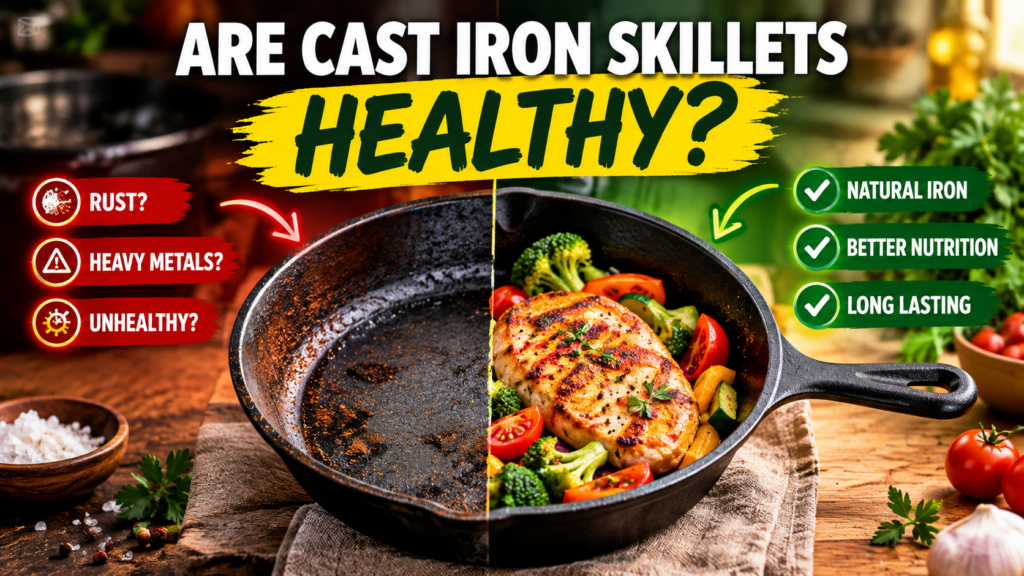
Quick Answer: Are cast iron skillets healthy? For most people, yes. Bare cast iron has no synthetic nonstick coating and may add a small amount of dietary iron to food. Keep it well seasoned, limit long acidic cooking, and ask a doctor if you must limit iron.
Many home cooks ask, are cast iron skillets healthy for everyday meals? This guide explains iron, seasoning, acidic foods, and care in plain language. You will learn who should be careful, which habits matter most, and how to choose a pan.
Kitchen Tips Cookware Cast Iron Care Kitchen Safety
This article is for general educational and buying-guidance purposes only. It does not replace the manufacturer’s official manual, food safety guidance, or professional advice. Materials, specifications, and care instructions can vary by product and should be confirmed with the manufacturer before purchase or use. For product defects, suspected food-safety issues, or injuries such as burns or cuts, contact the manufacturer, a qualified professional, or seek medical help as needed.
What “Healthy” Means for a Skillet
A pan cannot make food healthy by itself. It can stay stable under heat, avoid unwanted coatings, and fit the way you cook. Cast iron does well on all three when it is cared for. Choose it if you want a durable, simple pan. Check the manufacturer’s guidance if you own an enameled or specialty piece.
How Iron Gets Into Your Food
Bare cast iron is mostly iron, so small amounts can move into food. This happens more with moist, acidic dishes, such as tomato sauce simmered for a long time. A new or poorly seasoned pan may release more than a well-seasoned one. The amount varies by pan and recipe, so no single number fits every kitchen.
Cast Iron vs Other Common Skillet Types
Note: Dry foods like seared steak or pan-fried potatoes usually pick up less iron than a sauce that simmers for an hour.
Seasoning: The Layer Between Pan and Food
Seasoning is a thin layer of cooking oil baked onto the metal until it hardens. A good layer looks smooth and slightly dark. A weak layer looks dull, gray, or patchy. Flaking black bits mean the layer is breaking down.
This flow shows how a seasoning layer is usually built and kept up.
Practical guide: seasoning routine
Wash and dry the pan fully.
Rub on a very thin oil layer.
Cool, then store dry.
Thin layers beat thick ones, because thick oil can turn sticky. Follow the maker’s seasoning instructions for your pan.
Are Cast Iron Skillets Healthy for Everyone?
Most healthy adults can cook in cast iron without worry. People told by a doctor to limit iron should ask before using it daily, especially for long, acidic recipes. Choose it if you like durable cookware and have no iron restrictions. Avoid daily long-simmered acidic dishes in it if a doctor has advised limiting iron.
Safety Note: Cookware advice is general. If a medical provider has told you to limit iron, ask about cast iron before making it your main pan.
Foods That Work Well and Foods to Watch
Cast iron shines at searing, roasting vegetables, baking cornbread, and shallow frying. Tomato sauce, wine reductions, and lemon-heavy dishes can wear on seasoning and may taste metallic after long cooking. Eggs and fish can stick on a young pan.
Common Skillet Problems and Likely Causes
Safe Habits That Support Healthy Cooking
Pan choice is only part of the story. Cook meat to safe internal temperatures, keep raw and cooked foods apart, and refrigerate leftovers promptly. FoodSafety.gov publishes current temperature and storage charts, so check them rather than guessing.
Safer Practices vs Riskier Practices
Warning: Cast iron stays hot long after it leaves the stove or oven. Keep a mitt or towel over the handle as a reminder.
Use this quick path when a skillet looks worn.
Practical guide: skillet check path
Most surface problems are fixable. Cracks and warping are different, because a damaged pan may not heat safely.
Daily Care Steps
Simple care keeps the cooking surface in good shape. Follow your maker’s instructions first.
- Let the pan cool a little, then rinse with hot water.
- Scrub with a brush or non-scratch pad. A little mild soap is fine for most bare pans.
- Dry right away with a towel, then warm briefly on the stove.
- Rub on a very thin coat of oil and wipe off the extra.
- Store in a dry spot, with a paper towel between stacked pans.
Tip: For stuck food, simmer a little water in the pan for a few minutes, then scrape with a wooden spoon. Avoid long soaking.
Keep this short checklist near your stove.
Practical guide: care checklist
If you only do two things, dry the pan and keep a thin oil layer on it.
Bare or Enameled: Choosing the Right Skillet
Bare cast iron suits searing and baking. Enameled skillets have a coated surface, need less seasoning care, and suit saucy dishes, but enamel can chip and often costs more. So are cast iron skillets healthy in both forms? Generally yes, when you follow the maker’s care steps.
Which Skillet Fits Your Cooking
This dashboard sums up the fit by cooking habit.
Practical guide: skillet fit dashboard
Bare cast iron
Enameled
Bare cast iron
Seasoned or other pan
Many cooks keep one bare skillet for searing and another pan for acidic dishes.
This article may contain affiliate links. If you buy through these links, we may earn a small commission at no extra cost to you. We only mention products that fit the topic and recommend checking current specs and care instructions directly with the manufacturer.
Pre-Seasoned Cast Iron Skillet
Many home cooks find a pre-seasoned skillet convenient for starting out. Confirm the maker’s seasoning and care notes before use.
Enameled Cast Iron Skillet
May suit cooks who simmer acidic sauces and want less seasoning upkeep. Check the maker’s heat limits and utensil guidance.
Common Mistakes and Better Choices
Mistake vs Better Choice
This meter ranks the habits that usually matter most.
Practical guide: typical routine priority (not scientific data)
The bars show a rough practical order, not measured results. Drying and oiling prevent most everyday problems.
When to Contact a Professional or Manufacturer: Contact the maker if a pan arrives cracked, warped, or without clear care instructions. Seek medical help for serious burns, and ask a doctor about iron intake. For product safety concerns, see the CPSC, and for general food information, see the FDA.
Frequently Asked Questions
Are cast iron skillets healthy to cook with every day?
For most people, yes. Bare cast iron has no synthetic coating and may add a little iron to food. Keep the pan seasoned, and vary your cookware if you simmer acidic foods often.
Does cast iron leach iron into food?
Small amounts can transfer, mostly during long cooking of moist, acidic foods. The amount varies by pan and recipe.
Is a rusty cast iron skillet safe to use?
Light surface rust can usually be scrubbed off, dried, and re-oiled. Deep pitting, cracks, or flaking that will not clean up are reasons to replace the pan.
Can I cook tomato sauce in cast iron?
Short cooking is usually fine in a well-seasoned pan. Long simmering can strip seasoning and add a metallic taste, so an enameled pan may suit better.
Can I use soap on cast iron?
A small amount of mild dish soap is fine for most bare pans if you rinse and dry well. Skip the dishwasher and follow the maker’s guidance.
Who should limit cooking in cast iron?
People told by a doctor to limit iron should ask before cooking acidic foods in it often. If you are unsure of your needs, ask a healthcare provider.
Is enameled cast iron healthier than bare cast iron?
Neither is automatically healthier. Enameled pans have a coated surface and need less seasoning, while bare pans are simple and durable. Watch for chipped enamel.
Final Thoughts
Are cast iron skillets healthy? For most kitchens, yes, with sensible care. Keep the pan dry and lightly oiled, and match it to the food you cook.
Check the manufacturer’s instructions for your exact pan, follow food-safety guidance, and seek medical help for serious burns or questions about iron.
