
By Michael Hayes
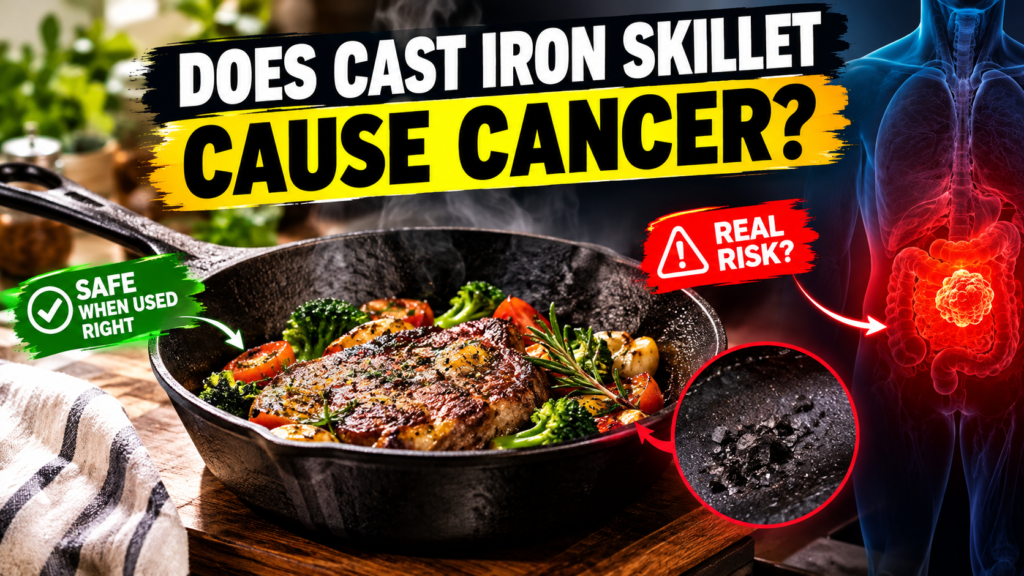
Quick Answer: No, a cast iron skillet is not known to cause cancer when used normally. It adds a small amount of dietary iron, which is not a toxin for most people. Real risks come from burnt food, smoking oil, rust, and unknown vintage pans.
Cast iron lasts for decades, yet many cooks still ask, does cast iron skillet cause cancer? Headlines about cookware chemicals make people nervous, and that is understandable. This guide explains where real concerns come from, what you can safely ignore, and how iron, smoke, rust, and older pans fit into the picture. You will also get simple habits that keep your skillet safe.
This article is for general educational and buying-guidance purposes only. It does not replace the manufacturer’s official manual, food safety guidance, or professional advice. Materials, specifications, and care instructions can vary by product and should be confirmed with the manufacturer before purchase or use. For product defects, suspected food-safety issues, or injuries such as burns or cuts, contact the manufacturer, a qualified professional, or seek medical help as needed.
Does Cast Iron Skillet Cause Cancer? The Short Evidence Summary
There is no established evidence that normal cast iron cooking causes cancer. Cast iron is mostly iron and carbon, with a baked-on oil layer called seasoning. It is one of the oldest and simplest cookware materials in home kitchens.
So, does cast iron skillet cause cancer in everyday use? Current public guidance says no. Researchers have studied compounds that can form when food is charred or oil smokes heavily, but that can happen in any pan. How you heat and maintain the skillet matters more than the metal.
Note: Guidance can change over time. This article gives general information and does not claim any lab or product testing. Check current advice from the FDA if you want the latest updates.
How Cast Iron Compares With Other Skillets
Cast Iron vs Other Cookware at a Glance
Each material has its own care needs and watch-outs. This comparison helps you see where cast iron fits.
Choose cast iron if you want a durable pan and do not mind a little upkeep. Avoid it if you want a pan you can soak or put in the dishwasher.
Where the Real Risks Come From
When readers wonder does cast iron skillet cause cancer, they usually have one of four worries. Here is how each one works.
Heavily blackened food can form compounds that scientists study. That happens in any pan, so lower the heat and trim charred bits.
Oil heated past its smoke point makes harsh smoke that irritates eyes and lungs. Ventilate the kitchen and pick an oil that suits your heat.
Light rust is mostly a care problem and can taste metallic. Scrub it off and re-season the pan.
Some old, imported, or decorative cookware has raised lead concerns, especially glazes. Ask the maker or check the CPSC when unsure.
Skillet Problem vs Likely Cause
Most of these are quality problems, not health emergencies. They are easy to fix with basic care.
Warning: Never leave a hot skillet unattended with oil. If a grease fire starts, turn off the heat and cover the pan with a lid. Do not use water.
What About Iron From the Pan?
Cast iron can add a small amount of iron to food. This is more likely with new pans, acidic foods, and long cooking times. For most people that is not a concern, since iron is a nutrient the body needs.
Safety Note: Anyone whose doctor has advised limiting iron should ask a healthcare provider before cooking often in cast iron.
Safe Practice vs Risky Practice
How to Use Your Skillet Safely Every Day
To keep the answer to does cast iron skillet cause cancer firmly at no, build a few steady habits. This simple routine covers most of them.
Practical guide: Daily skillet routine
→
→
→
→
The routine works because it limits smoke, stops rust, and protects the seasoning. Always cook food to safe internal temperatures, which you can look up at FoodSafety.gov.
Tip: If oil shimmers, you are ready to cook. If it smokes, pull the pan off the heat and let it cool a little first.
Experienced cooks notice small signals, such as a dull gray surface that needs oil or a sour smell from old grease. Catching these early keeps the pan in good shape. Check the manufacturer’s guidance if your pan has an enamel coating or came pre-seasoned with special instructions.
Is This Pan Safe to Keep Using?
Use this quick path whenever you pull an older skillet from the cabinet.
Practical guide: Skillet decision path
Most pans end at the last step. Only damage or unknown coatings need real caution.
After-Cooking Care Checklist
Practical guide: Care dashboard
These four checks take under five minutes. Skipping the drying step causes most rust.
Choosing and Caring for the Right Skillet
Which Skillet Type Fits Your Kitchen
Use this dashboard to match a pan to your habits before you buy.
Practical guide: Skillet fit dashboard
Fit matters more than any single feature. Confirm current care instructions with the manufacturer before buying.
Which Habits Matter Most
Practical guide: Typical routine priority
This is a practical guide, not scientific data. It simply shows where your effort pays off first.
Common Mistakes vs Better Choices
When to Contact a Professional or Manufacturer: Reach out to the maker if a pan cracks, the enamel chips, or you are unsure what coating a vintage piece has. Seek medical help for serious burns, and see the CPSC site for product safety reports.
This article may contain affiliate links. If you buy through these links, we may earn a small commission at no extra cost to you. We only mention products that fit the topic and recommend checking current specs and care instructions directly with the manufacturer.
Many home cooks find a pre-seasoned pan convenient for getting started. Read the maker’s care guide before the first use.
A dedicated scrubber can make cleaning stuck-on bits easier. Check that it suits your pan’s finish before use.
Frequently Asked Questions
Does cast iron skillet cause cancer?
No proven link exists between normal cast iron cooking and cancer. Real concerns involve burnt food, smoking oil, rust, and unknown vintage or imported pieces, not the skillet itself.
Is cast iron safer than nonstick?
Cast iron has no coating to wear off, which many cooks like. Both types are generally fine when used as directed, so follow each manufacturer’s heat and care guidance.
Does cooking in cast iron add iron to food?
Yes, a small amount, especially with acidic foods or newer pans. Anyone advised to limit iron should ask a doctor first.
Is rust on a cast iron skillet dangerous?
Light surface rust is usually a care problem, not a poison. Scrub it off, wash, dry, and re-season. Retire the pan if it is cracked or deeply pitted.
Are black flakes from my skillet harmful?
The flakes are usually bits of worn seasoning, which is baked oil. Scrub gently and re-season. If flakes look like rust or enamel chips, stop using the pan.
Can I use soap on cast iron?
A little mild dish soap is generally fine on a well-seasoned pan. Dry it right away, add a thin coat of oil, and check your manufacturer’s guidance.
Are vintage cast iron skillets safe to use?
Plain vintage cast iron is often used for years. Check for cracks, deep pitting, and unknown coatings, and contact the maker or the CPSC about decorative or imported pieces.
Final Thoughts
The answer to does cast iron skillet cause cancer is reassuring for most home cooks. Keep heat moderate, avoid burnt food, and keep the pan dry and lightly oiled. Confirm care instructions with the manufacturer, follow food-safety guidance, and seek professional or medical help for serious burns, damaged pans, or health questions.
