
By Michael Hayes
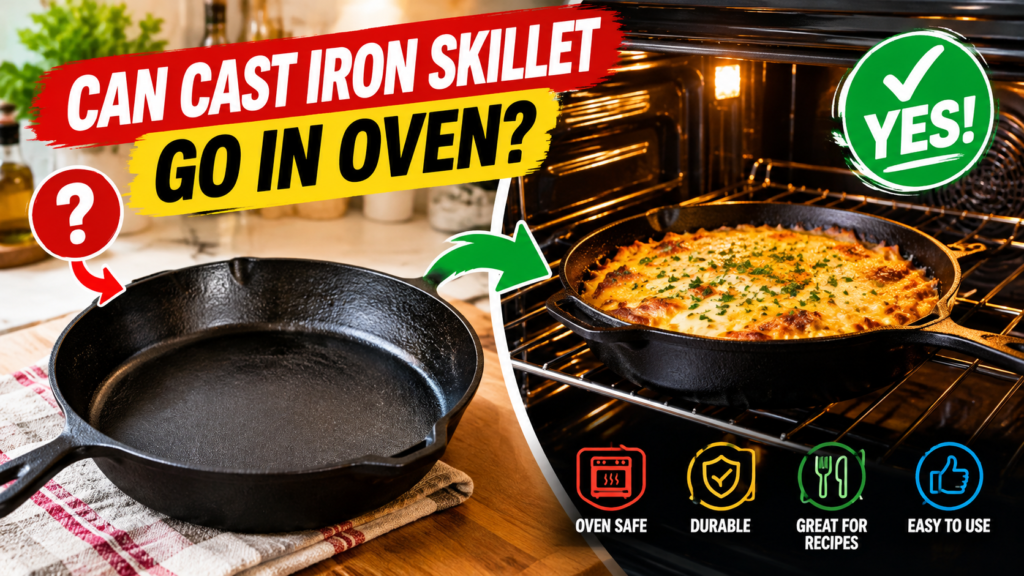
Quick Answer: Yes, in most cases. A plain cast iron skillet is usually safe in the oven and is often used for baking, roasting, and broiling. Check the handle, lid, and any coating first, since wood, plastic, and some silicone parts may not handle oven heat. Confirm limits with the manufacturer.
If you have ever wondered can cast iron skillet go in oven, you are not alone. The answer is usually yes, but a few details decide whether it goes smoothly. This guide covers what to check, how to use the pan step by step, safe handling, and care afterward.
This article is for general educational and buying-guidance purposes only. It does not replace the manufacturer’s official manual, food safety guidance, or professional advice. Materials, specifications, and care instructions can vary by product and should be confirmed with the manufacturer before purchase or use. For product defects, suspected food-safety issues, or injuries such as burns or cuts, contact the manufacturer, a qualified professional, or seek medical help as needed.
Can Cast Iron Skillet Go in Oven? The Full Answer
Yes. A standard cast iron skillet is cast as one solid piece, which is why it handles oven heat so well. Many home cooks bake cornbread, roast chicken thighs, and finish steaks in the same pan. The iron is rarely the problem. The parts attached to it are.
Bare and seasoned skillets are the easiest case. Enameled pans, wooden handles, and lids can be different, so product details matter. Choose this if your skillet is plain metal from handle to rim. Check the manufacturer’s guidance if any part is not metal.
Note: Seasoning is the thin, baked-on oil layer that protects the pan. It is built with heat, so normal oven cooking does not harm it.
Why Cast Iron Works So Well in the Oven
Cast iron suits oven cooking for a few practical reasons.
Steady Heat
Cast iron is heavy and holds heat well. Many cooks notice even browning and food that stays warm longer.
One-Piece Build
Classic skillets are cast with the handle attached. That means fewer parts to loosen in the heat.
Stove to Oven
You can sear on the stovetop, then move the pan into the oven. It saves a dish and builds flavor.
Long Life
With basic care, many skillets serve cooks for years. Dryness and rust are the main things to watch.
Oven Readiness by Skillet Type
Check These Parts Before You Bake
Start with the handle. All-metal handles are the safest choice for hot ovens. Next, look at the lid. A metal lid is often fine, but glass lids and plastic knobs have their own limits. So, can cast iron skillet go in oven with a lid on? Often yes, if every part of that lid is rated for oven heat. Finally, inspect the pan for cracks, and skip oven use if you find one.
Warning: Do not put a skillet with a wooden handle or plastic part in the oven unless the manufacturer clearly says it is oven-safe. Heat can burn, melt, or crack those parts.
Common Oven Problems and Likely Causes
How to Use a Cast Iron Skillet in the Oven, Step by Step
These six steps work for most baking and roasting recipes.
- Inspect the skillet. Check the handle, lid, and surface for damage or non-metal parts.
- Set the rack. Place it low or middle, with room for the handle and your mitts.
- Preheat gently. Let the empty skillet warm as the oven heats if your recipe calls for a hot pan.
- Add food carefully. Use dry oven mitts and keep your body back from the open door.
- Cook as directed. Use a food thermometer to check doneness, not just the look of the food.
- Rest it safely. Set the skillet on a trivet and treat the handle as hot until it is fully cool.
Here is a simple look at how heat moves through the process.
Practical guide: heat-handling flow
Notice that most stages happen after the oven. Many mishaps come from leftover heat, not from the cooking itself.
Oven Cooking Methods That Suit Cast Iron
Baking suits cornbread, biscuits, and skillet desserts. Roasting works well for vegetables and chicken pieces. Broiling can finish the top of a dish, but keep the handle clear of the heating element. Many recipes call for 350°F to 450°F, and these are ordinary ranges for cast iron. Still, can cast iron skillet go in oven at higher heat? Often yes, but check the manufacturer’s note first.
Long cooking with acidic foods, like tomato sauce, may dull seasoning, so many cooks use enameled pans for those dishes. Food safety still matters, so use a thermometer and follow the temperature guidance at FoodSafety.gov.
Tip: Let the skillet heat up along with the oven. Gradual heating is gentler on the metal and often helps food release better.
Burn Safety and Handle Heat
The question “can cast iron skillet go in oven” has an easy yes. The harder part is handling the pan afterward. A handle that sat in a hot oven can burn you long after the pan comes out, and many accidents happen when someone grabs it later by habit.
Safety Note: Burns that blister, cover a large area, or affect the face or hands call for medical help. You can also read product safety information from the U.S. Consumer Product Safety Commission.
Safer Handling vs Risky Habits
Use this quick path to decide whether your pan is ready.
Practical guide: is it ready for the oven?
If you answer “unsure” at any point, pause and check the manufacturer’s guidance. A short delay beats a damaged pan or a burn.
When to Contact a Professional or the Manufacturer: Reach out to the manufacturer if your skillet cracks, warps, or has a loose or damaged handle. Seek medical help for serious burns, and follow official guidance for any suspected food-safety issue.
Caring for Your Skillet After Oven Cooking
Oven cooking leaves the pan hot, oily, and sometimes dotted with baked-on bits. A short routine keeps it ready for next time. Follow the maker’s cleaning advice, since care rules can vary by product.
Use this checklist after each oven session.
Practical guide: care checklist dashboard
Drying is the step people skip most often. Moisture left on the pan is a common path to rust.
Helpful Accessories and Common Mistakes
You do not need much gear, but a few items make oven use safer and easier.
Tool Fit for Oven Cast Iron Cooking
This dashboard shows where each tool tends to fit.
Practical guide: tool fit dashboard
Start with mitts and a trivet. Add the rest if they match how you cook.
Common Mistakes and Better Choices
Not every habit matters equally. This chart shows a typical routine priority.
Typical routine priority
Practical guide only, not scientific data.
Hand protection and part checks come first because they prevent injuries and damage. The other habits protect the pan over time.
This article may contain affiliate links. If you buy through these links, we may earn a small commission at no extra cost to you. We only mention products that fit the topic and recommend checking current specs and care instructions directly with the manufacturer.
Helpful Gear for Oven Use
Heat-Resistant Oven Mitts
Many home cooks find these convenient for lifting a hot skillet. Check the product’s stated heat rating before use.
Cast Iron Skillet Handle Cover
Can help reduce accidental contact with a hot handle. Confirm the maker’s heat limit before using it near the oven.
Frequently Asked Questions
Can cast iron skillet go in oven safely?
Yes, a standard all-metal cast iron skillet is usually safe in the oven. Check any lid, handle sleeve, or coating with the manufacturer first.
What oven temperature is safe for a cast iron skillet?
Many recipes use 350°F to 450°F, which is a normal range for cast iron. For higher heat, check the manufacturer’s guidance for your skillet.
Can I put a cast iron skillet with a lid in the oven?
Often yes, if the lid is all metal. Glass lids and plastic knobs have separate heat limits, so check their ratings.
Can a cast iron skillet go under the broiler?
Bare cast iron is often used under the broiler. Keep the handle away from the heating element and confirm with the manufacturer, especially for enameled pans.
Does oven use ruin cast iron seasoning?
Normal oven cooking usually does not harm seasoning. Too much oil can bake on and feel sticky, so use a thin coat.
Can I put a hot cast iron skillet in cold water?
It is best not to. A sudden temperature change may crack the pan, so let it cool first.
Final Thoughts
So, can cast iron skillet go in oven? Yes, in most cases, as long as every part of the pan is oven-safe. Check the handle and lid, confirm care instructions with the manufacturer, use a thermometer to follow food-safety guidance, and seek professional or medical help for serious burns or damage.
