
By Olivia Bennett
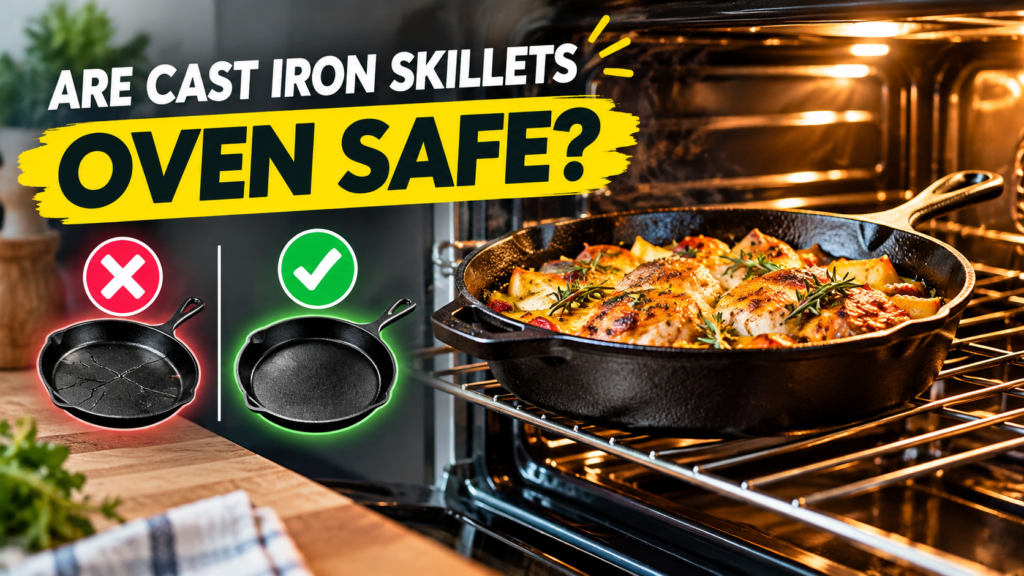
Quick Answer: Yes. A plain cast iron skillet with an all-metal handle is usually safe in a home oven, including under the broiler. Enameled pieces, wooden handles, plastic knobs, and glass lids can have lower limits, so check the manufacturer’s instructions before heating.
Cast iron moves easily from stovetop to oven to table. That is why so many American kitchens keep one close by. But a skillet is not always made of one material. So, are cast iron skillets oven safe in every case? Not always, and the answer usually depends on handles, lids, and coatings.
In this guide, you will learn which parts handle oven heat, which parts need a check, how to heat and handle a hot skillet safely, and what to do when something goes wrong.
Cast IronCookwareKitchen SafetyHome Cooking
This article is for general educational and buying-guidance purposes only. It does not replace the manufacturer’s official manual, food safety guidance, or professional advice. Materials, specifications, and care instructions can vary by product and should be confirmed with the manufacturer before purchase or use. For product defects, suspected food-safety issues, or injuries such as burns or cuts, contact the manufacturer, a qualified professional, or seek medical help as needed.
Are Cast Iron Skillets Oven Safe? The Short Version
A traditional cast iron skillet is one solid piece of iron. Iron handles oven heat very well. That is why people bake cornbread, finish steaks, and roast vegetables in it. Most home oven settings, including the broiler, are well within what a plain skillet can take.
Experienced home cooks notice that trouble rarely comes from the iron itself. It comes from add-ons. Wooden handles, plastic or phenolic knobs, silicone sleeves, and enamel coatings can all have lower limits than the metal.
Choose this if your skillet is one piece of bare metal. Check the manufacturer’s guidance if any part is not bare metal, or if you are not sure what a part is made of.
Oven Safety by Skillet Type
This comparison shows how each common type usually behaves in the oven and what to confirm first.
Parts That Can Limit Oven Use
The weakest part sets the limit. A strong iron body does not help if the knob on the lid softens first. So are cast iron skillets oven safe with lids? Only if every part of the lid, including the knob and any glass, is rated for the heat you plan to use.
Handles matter too. Metal handles are fine in the oven but get very hot. Wood and plastic handles can burn or warp. Enamel can chip if the pan takes a hard knock or a sudden temperature swing.
Note: Some skillets come with removable parts like sleeves, stands, or lids. Each piece may have a different rating, so check each one on its own.
This quick fit dashboard shows how each part of a skillet usually rates for oven use. It is a practical guide, not lab data.
Practical guide: Oven fit by part
Read this from top to bottom. Green means the part is usually fine, orange means look it up, and rose means skip the oven. When a part is not on the list, treat it as unknown and ask the maker.
How to Use a Cast Iron Skillet in the Oven
A common question is, are cast iron skillets oven safe at any temperature? The honest answer is that your own skillet’s instructions set the final limit. Once you have confirmed that, this simple routine works for most recipes.
- Read the label or manual. Confirm that every part, including the handle and lid, is rated for oven use.
- Remove add-ons. Take off silicone sleeves and any lid that has plastic or wood parts unless the maker says they are oven rated.
- Set the oven rack first. Leave room above the skillet and keep the handle easy to reach.
- Heat gradually. Avoid sudden extreme changes, such as a cold skillet on a blazing burner followed by a cold liquid splash.
- Use dry, thick mitts. Damp fabric can conduct heat quickly and cause a burn.
- Rest it on a trivet. Let the skillet cool on a heat-safe surface before you clean it.
Tip: After you take the skillet out, lay a dry oven mitt over the handle as a reminder that it is still hot. Many home cooks find this small habit prevents a second burn.
This flow sums up the routine at a glance.
Oven routine at a glance
Confirm every piece is oven rated.
Avoid sudden temperature shocks.
Dry and thick, every single time.
Clean only when it is safe to touch.
The first step is the one people skip most often, and it prevents the most surprises. The last step protects both your counters and your hands.
Common Oven Problems and Likely Causes
Problem vs Likely Cause
Most oven problems with cast iron are easy to fix once you know the cause. Use this table to match what you see with what is probably going on.
Warning: The handle gets as hot as the pan, and cast iron stays hot for a long time after it leaves the oven. Never grab it with a bare hand, and keep children and pets away from the stove until it has cooled.
Safe Habits vs Risky Habits
Recommended Practice vs Risky Practice
Small habits make the biggest difference. Compare these common choices before your next bake.
Not sure whether to go ahead? This decision path turns the question “are cast iron skillets oven safe” into a few quick checks.
Should this skillet go in the oven?
Yes: go to Q2. No: check the manufacturer first.
Yes: look up the temperature limit. No: go to Q3.
Yes: stop and contact the maker. No: go to Q4.
Yes: you are ready to bake. No: get them first.
Most skillets pass in under a minute. The checks matter most for older pans, gift sets, and anything with parts that are not metal.
Choosing Skillets and Tools for Oven Cooking
Tool and Material Fit
If you are shopping, match the item to how you cook. Ratings and materials vary by brand, so confirm the details with the seller or maker.
Aftercare, Mistakes, and Food Safety
Good oven habits include what you do afterward. Here is a short checklist for keeping your skillet in shape.
After-oven care checklist
Do this checklist each time and your skillet should be ready for the next bake. The inspection step is the one that catches safety problems early.
Mistake vs Better Choice
These are the slips that cause most oven trouble with cast iron.
Accuracy and Safety Note: Oven limits come from the maker, not from general rules. When you cook meat, poultry, or egg dishes in a skillet, use a food thermometer and check safe internal temperatures at FoodSafety.gov.
When to Contact the Manufacturer or a Professional: Reach out if enamel chips or cracks, a handle loosens, or a part smells like it is burning. If a product seems defective or causes an injury, you can also report it to the Consumer Product Safety Commission. For serious burns, seek medical help right away.
One last visual shows where to put your attention first. It is a practical guide, not scientific data.
Typical routine priority (practical guide, not statistics)
Longer bars mean higher priority. Checking parts and protecting your hands come first, and care for the finish matters but is less urgent.
Product Ideas for Oven Cooking
This article may contain affiliate links. If you buy through these links, we may earn a small commission at no extra cost to you. We only mention products that fit the topic and recommend checking current specs and care instructions directly with the manufacturer.
Pre-Seasoned Cast Iron Skillet
A one-piece skillet can make oven cooking simpler because there are fewer add-on parts to worry about. Many home cooks find this convenient for baking and roasting.
Cast Iron Handle Holder
A handle holder can add a layer of protection when you move a hot skillet. Confirm that the one you choose is rated for oven use, and still wear mitts.
Frequently Asked Questions
Are cast iron skillets oven safe for broiling?
A plain one-piece cast iron skillet generally is, since it is all metal. Enameled finishes, wooden handles, and plastic parts may not be, so check the manufacturer’s instructions first.
What temperature can a cast iron skillet go in the oven?
Bare cast iron usually handles normal home oven temperatures. Enameled pieces and added parts have limits set by the maker, so look up the number for your exact skillet.
Can I put an enameled cast iron skillet in the oven?
Often yes, up to a stated limit. Check the manual for the maximum temperature and for broiler guidance before you heat it.
Can a cast iron skillet with a wooden handle go in the oven?
It is usually not recommended. Wood can scorch, dry out, or crack in the oven, so follow the maker’s guidance.
Can I put a cold cast iron skillet into a hot oven?
Bare cast iron often tolerates it, but gradual heating is gentler. Enameled pieces are more sensitive to sudden changes, so follow the manufacturer’s advice.
Does using the oven damage the seasoning?
Normal baking usually does not. Too much oil can smoke or turn sticky, so wipe the surface well and keep the oil layer thin.
How do I handle a hot skillet safely after baking?
Use dry, thick mitts and set the skillet on a trivet. Mark the handle as hot and keep children away. For a serious burn, get medical help.
Final Thoughts
Most people asking whether cast iron skillets are oven safe will find that a plain, one-piece skillet works well. Always check the manufacturer’s instructions, confirm the material of every part, follow food-safety guidance, and seek professional or medical help for serious problems.
