
By Michael Hayes
Quick Answer: For most people, no. Cast iron skillets are generally considered safe when well maintained. They can add a little iron to food, and problems usually come from rust, flaking seasoning, burns, or very acidic long simmers. Check the manufacturer’s instructions.
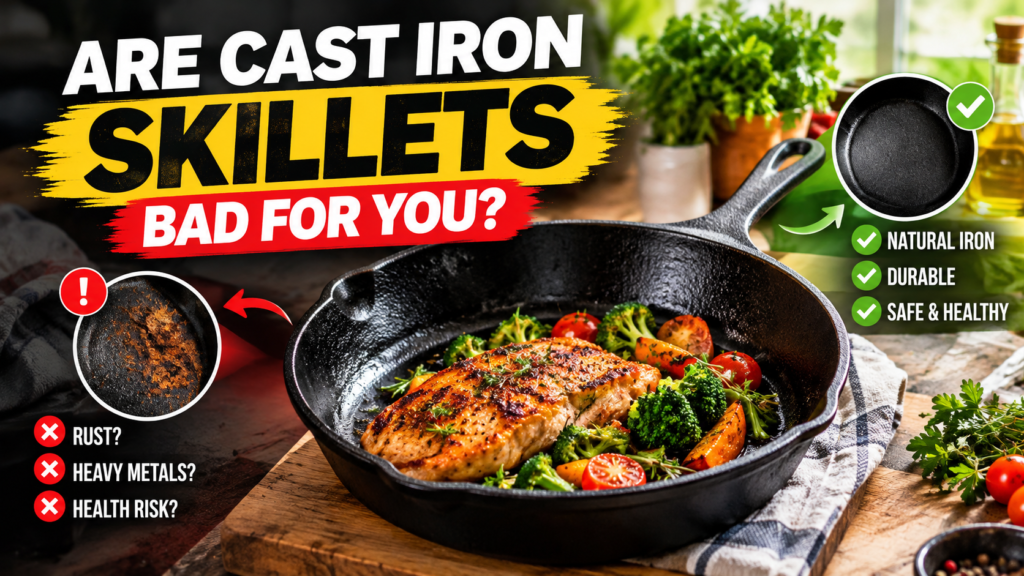
Cast iron has been used in American kitchens for generations, yet many people still ask: are cast iron skillets bad for you? The worry usually comes from three places: extra iron in food, rust, and flaking seasoning. This guide explains what is normal, what is worth fixing, and how to cook safely in your pan every day.
This article is for general educational and buying-guidance purposes only. It does not replace the manufacturer’s official manual, food safety guidance, or professional advice. Materials, specifications, and care instructions can vary by product and should be confirmed with the manufacturer before purchase or use. For product defects, suspected food-safety issues, or injuries such as burns or cuts, contact the manufacturer, a qualified professional, or seek medical help as needed.
Are Cast Iron Skillets Bad for You? The Short Answer
For most home cooks, a well-kept cast iron skillet is a safe, long-lasting pan. It is a heavy piece of iron, usually with a baked-on layer of oil called seasoning. It does not have a synthetic nonstick coating that can wear off. Still, safe depends on care. A rusty, cracked, or neglected pan needs attention, and a hot pan can burn you in seconds.
Choose cast iron if you enjoy searing, oven cooking, and a pan that can last for years. Avoid it if you cannot lift a heavy pan comfortably or do not want to hand-wash and dry cookware. Check the manufacturer’s guidance if your skillet has enamel, a special coating, or unusual markings.
Does Cast Iron Add Iron to Your Food?
It can. Small amounts of iron may move from the pan into food, especially during longer cooking with moist or acidic ingredients such as tomato sauce. When readers ask “are cast iron skillets bad for you,” iron intake is often the first worry. For many people it is not a concern, and some home cooks like the idea. The amount depends on the pan, the food, and the cooking time, so no single number fits every kitchen.
Note: Anyone who has been told by a doctor to limit iron should ask that doctor about cast iron cookware. This guide cannot give personal medical advice.
Cast Iron vs Other Common Pans
Rust, Flaking Seasoning, and Other Pan Problems
Most cast iron worries come from the pan’s surface. Seasoning is oil that has been heated until it bonds to the iron. Over time it can wear thin or flake, especially after burnt food or hard scraping. Small black flecks in food are usually bits of seasoning.
Rust looks orange or reddish-brown and feels rough. Light surface rust can usually be scrubbed off before re-seasoning. Deep pitting, cracks, or a pan that wobbles on the burner are good reasons to stop using it.
Common Skillet Problems and Likely Causes
Is My Pan Okay to Use? A Simple Decision Path
If you are unsure about a pan, follow this path from top to bottom.
This path is a practical guide, not a lab test. When a pan passes Step 1, it is usually fine for everyday cooking. At Step 3, replacing the pan is often safer than repairing it.
Acidic Foods, Metallic Taste, and Seasoning Wear
Tomato sauce, wine, and vinegar-based dishes can wear down seasoning when they simmer for a long time. They may also leave a metallic taste.
Experienced cooks often keep cast iron for searing and baking, then switch to stainless steel or enameled cookware for long acidic dishes. Choose cast iron for short acidic steps if your seasoning is in good shape. Avoid long simmers if you notice a metallic taste or dull patches.
Safer Habits vs Risky Habits
Burns, Heat, and Smoke: The Bigger Everyday Risks
Are cast iron skillets bad for you when a handle burns your hand? Not by design, but burns are a real risk. Cast iron is heavy and stays hot long after cooking. Handles can get very hot in the oven, and oil can smoke if the heat is too high. Keep a dry mitt close, turn on the vent fan, and place the pan on a heat-safe surface.
Warning: Never carry a hot skillet with a damp towel, and never pour water into a pan of hot oil. Steam and splatter can cause serious burns.
Safety Note: Cast iron products vary by brand, coating, and finish. The care sheet or manufacturer website comes first. For general food safety, visit FoodSafety.gov, and for product safety reports, see the CPSC.
Care and Safety Checklist
Use this checklist before and after you cook.
Keep a dry oven mitt within reach before the pan gets hot. Handles stay hot long after you turn off the burner.
Turn on your range hood when searing. This helps with smoke from hot oil.
Set a hot skillet on a trivet or heat-safe pad. A steady spot helps prevent spills and countertop damage.
Let the pan cool a little before washing it. Sudden temperature changes can stress the metal.
A Simple Care Routine That Keeps the Pan Safe
A short routine keeps rust away and helps the seasoning last.
→
→
→
→
Drying fully and adding a thin oil coat do the most to prevent rust.
Tip: After washing, dry the pan on a low burner for a minute. Then rub in a tiny amount of cooking oil and wipe off the excess so it does not turn sticky.
Choosing a Cast Iron Skillet You Can Trust
The question “are cast iron skillets bad for you” mostly comes down to the pan’s condition and your habits. A new, clean, well-made skillet is easier to trust than an unknown pan with a flaking surface.
Material and Finish Fit
Which Skillet Fits Your Kitchen?
Choose this if you want a classic pan for searing, baking, and frying. Plan on drying it after each wash.
Choose this if you cook acidic or saucy foods often. Check the manufacturer’s guidance on heat and utensils.
Fit depends on your cooking style more than price. Check current specifications and care instructions with the maker before buying.
When to Fix It Yourself and When to Get Help
Home Fixes vs Manufacturer or Medical Help
When to Contact a Professional or the Manufacturer: Contact the manufacturer if a new skillet arrives cracked, warped, or with a coating that peels. For serious burns, call a doctor or emergency services. You can also report unsafe products to the CPSC.
Which Care Habits Matter Most?
This chart shows a typical routine priority, not scientific data.
Practical guide: typical routine priority
Start with the first two habits, then add the rest.
This article may contain affiliate links. If you buy through these links, we may earn a small commission at no extra cost to you. We only mention products that fit the topic and recommend checking current specs and care instructions directly with the manufacturer.
Helpful Cast Iron Add-Ons
Pre-Seasoned Cast Iron Skillet
A pre-seasoned skillet can make daily cooking easier because it is ready after a quick wash. Many home cooks find it convenient for searing and baking.
Cast Iron Handle Cover
A handle cover can make a hot handle easier to manage. Check the maker’s heat guidance and confirm it fits your skillet size.
Frequently Asked Questions
Are cast iron skillets bad for you if you cook with one every day?
For most people, no. Daily use is common when the pan is dry, clean, and free of rust. People told to limit iron should ask their doctor.
Can cast iron make you sick?
A rusty or dirty pan may be unpleasant, and food left in any pan for hours can spoil. Clean, dry, and refrigerate leftovers promptly.
Is it safe to cook tomato sauce in cast iron?
Short cooking is usually fine. Long simmering can wear seasoning and add a metallic taste, so many cooks use stainless steel or enameled cookware instead.
Are black flakes from my skillet dangerous?
They are usually bits of seasoning. Wipe the pan and re-season it. If flaking is heavy on a new pan, contact the manufacturer.
Should I throw away a rusty cast iron skillet?
Not always. Light rust can often be scrubbed off and the pan re-seasoned. Deep pitting or cracks mean it is time to stop using it.
Is enameled cast iron safer than bare cast iron?
Each has different care needs. Enameled pieces suit acidic foods, but chips need attention. Follow the manufacturer’s instructions.
Final Thoughts
So, are cast iron skillets bad for you? Usually not, when the pan is cared for. Cast iron can be a practical, long-lasting pan when you keep it dry, lightly oiled, and free of rust. Pay attention to burns, since the heat is the bigger daily risk. Follow the manufacturer’s care instructions, use food-safety guidance for leftovers, and seek professional or medical help for serious problems.
