
By Michael Hayes
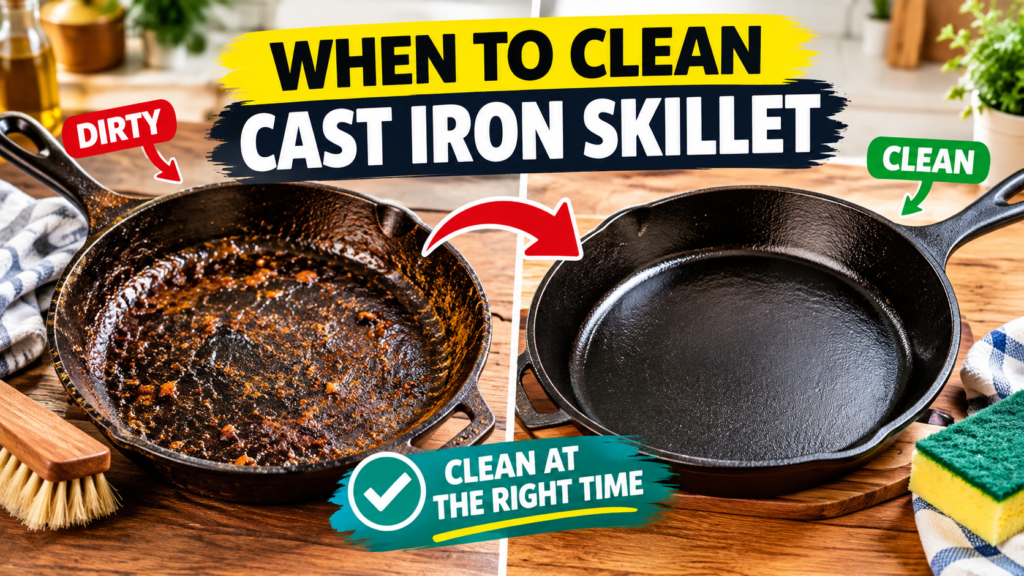
Quick Answer: Clean your cast iron skillet soon after cooking, once it is cool enough to handle but still slightly warm. Rinse, scrub gently, dry fully, and wipe on a thin layer of oil. Clean right away after raw meat, acidic sauces, or stuck food.
A cast iron skillet is tough, but timing matters. Leave food in it, let it soak, or put it away damp, and you may end up with rust, odors, or a sticky surface. Many beginners are unsure when to clean cast iron skillet pans: right away, later, or only when they look dirty?
This guide gives you simple timing rules for everyday cooking, plus what to do after raw meat, tomato sauce, burnt bits, or a pan that sat overnight. You will learn the best moment to clean, a basic routine, common mistakes, and when to check the manufacturer’s guidance.
Kitchen TipsCookwareCast Iron CareHome Cooking
This article is for general educational and buying-guidance purposes only. It does not replace the manufacturer’s official manual, food safety guidance, or professional advice. Materials, specifications, and care instructions can vary by product and should be confirmed with the manufacturer before purchase or use. For product defects, suspected food-safety issues, or injuries such as burns or cuts, contact the manufacturer, a qualified professional, or seek medical help as needed.
When to Clean Cast Iron Skillet After Cooking
For most meals, the best time is soon after you finish eating or serving. Let the pan cool until it is safe to touch, but clean it while it is still a little warm. Warm pans release food more easily, and moisture and smells have less time to settle in.
“Clean” here means rinse, scrub gently, dry, and lightly oil. It does not mean a deep scrub every time. Food left in the pan can harden and hold moisture, which may lead to rust spots. Acidic foods like tomato sauce may dull the seasoning if they sit for hours.
Experienced cooks often clean the pan while the plates are still on the table, and it takes about a minute. Choose same-day cleaning if the pan has food, pooled grease, or sauce. Check the manufacturer’s guidance if your skillet is enameled or has a special coating.
Cleaning Timing Comparison
Here is the basic routine at a glance. Each step takes only a short time.
Routine flow: five steps after cooking
until safe to touch
with hot water
gently with a brush
completely
a thin layer
Drying is the step most beginners skip. A damp pan can show rust within a day or so, even if it looked fine when you put it away.
When to Clean Cast Iron Skillet After Raw Meat or Messy Foods
Raw chicken, beef, pork, and fish call for extra care. Food safety guidance generally recommends washing cookware and utensils that touched raw meat, poultry, or seafood with hot, soapy water. Many manufacturers say a small amount of mild dish soap is fine on a well-seasoned pan, so do not skip it out of habit. Rinse well, dry right away, and oil lightly.
Messy foods like melted cheese, caramelized sugar, or sauces are easier to remove early. Do not leave leftovers sitting in the skillet to cool. Move cooked food to a storage container instead, since cooked food should not stay out for long.
Warning: Do not soak your skillet, run it through the dishwasher, or pour cold water into a very hot pan. Long water exposure may cause rust, and sudden temperature changes may cause cracking or warping.
Problem vs Likely Cause
Use this simple path when you are standing at the sink unsure what to do.
Decision path: what does my pan need?
Yes: wash with hot, soapy water, rinse, dry, and oil lightly.
Yes: scrub with coarse salt and a little water, or simmer water for a few minutes, then wash and dry.
Wipe out, rinse if needed, dry fully, and add a thin coat of oil.
If more than one answer applies, follow the one that is safest for food handling first.
Accuracy and Safety Note: Cast iron care advice varies by brand and finish. Bare, enameled, and vintage pans can need different handling, so follow your skillet’s manual when it differs from general tips. For general food-handling guidance, see FoodSafety.gov.
Quick Checks Before You Clean
Sometimes a pan needs only a wipe. Four quick checks help you decide when to clean cast iron skillet pans fully and when a light touch will do.
Check for stuck bits, pooled grease, or dull patches. Any of these means a full clean.
Run a paper towel over the surface. If it feels tacky or greasy, wash the pan rather than wiping.
A sour, fishy, or stale smell means old food remains. Wash it with hot water and a brush.
If raw meat touched the pan, always wash it. A quick wipe is not enough in that case.
Tip: Keep a brush and a dry towel next to the stove. When cleanup tools are within reach, you are more likely to clean the pan while it is still warm.
This checklist shows what a simple care schedule can look like.
Care checklist dashboard
✓ Rinse and scrub
✓ Dry completely
✓ Thin coat of oil
✓ Check for dull spots
✓ Look for early rust
✓ Refresh seasoning if needed
Most of the work happens after each meal. The “now and then” list takes a minute and catches small problems early.
Step-by-Step: How to Clean a Cast Iron Skillet
- Cool slightly. Wait until the handle and pan are safe to touch. Use a pot holder if needed.
- Scrape out food. Use a wooden or nylon scraper to push out leftovers.
- Rinse and scrub. Use hot water and a stiff brush. For stuck food, add a spoonful of coarse salt and scrub.
- Use soap if needed. After raw meat or greasy foods, wash quickly with a little mild soap, then rinse well.
- Dry right away. Wipe with a towel, then warm the pan on low heat for a minute or two until fully dry.
- Oil lightly. Rub in a few drops of cooking oil, then buff until the surface looks dry, not wet.
Safe Practice vs Risky Practice
Match the Method to Your Pan
Not every cast iron pan is cared for the same way. This dashboard shows a general starting point.
Pan fit dashboard
Routine in this guide works well. Mild soap is usually fine.
Follow the brand’s break-in advice. Cook with fat early on.
Use gentle tools. Check the manual for what the coating can handle.
Scrub off rust, dry fully, and oil. Reseason if the surface looks dull.
When your pan type is unclear, start with the gentlest method and check the brand’s care page.
Cleaning Tool Fit
Helpful Cleaning Tools
This article may contain affiliate links. If you buy through these links, we may earn a small commission at no extra cost to you. We only mention products that fit the topic and recommend checking current specs and care instructions directly with the manufacturer.
Stiff Cast Iron Brush
A sturdy brush can make daily cleanup quicker and helps you scrub without harsh pads. Many home cooks find it convenient to keep one near the sink.
Chainmail Scrubber
This tool may help loosen stuck-on food on bare cast iron without much effort. Check that it is suitable for your pan’s finish before using it.
Common Mistakes and Better Choices
Most problems come down to timing and moisture. Learning when to clean cast iron skillet pans, and drying them well, prevents most of the trouble beginners run into.
Mistake vs Better Choice
The bars below show a rough priority guide for your routine, not test results or statistics.
Practical guide: typical routine priority
Drying and prompt cleaning matter most day to day. Reseasoning is occasional and usually only needed when the surface turns dull or rusty.
Note: A dark, uneven surface is normal for a used cast iron skillet. It does not mean the pan is dirty. Look for rust, stickiness, or a bad smell instead.
When to Contact a Professional or Manufacturer: Reach out to the maker if your skillet is cracked, if an enameled coating chips or flakes, or if you suspect a product defect. For burns, seek medical help. If you think food from the pan made someone ill, see the FDA site for guidance and contact a healthcare provider as needed.
Frequently Asked Questions
When to clean cast iron skillet if it only has light residue?
Wipe it out while the pan is still slightly warm. If it looks clean, a quick rinse, thorough drying, and a thin coat of oil are usually enough. Do a fuller wash if you feel grease or smell old food.
Can I leave a cast iron skillet dirty overnight?
It is best not to. Leftover food can harden, hold moisture, and lead to rust or odors. If you are short on time, scrape out the food and wipe the pan, then finish a full clean as soon as you can.
Is it okay to use soap on cast iron?
Many manufacturers say a small amount of mild dish soap is fine on a well-seasoned pan. Rinse well, dry right away, and oil lightly. Check your skillet’s instructions, especially for vintage or specially coated pans.
Should I clean cast iron while it is hot?
Let it cool until it is safe to handle. Cold water on a very hot pan may cause cracking or warping, and hot cookware can cause burns. A slightly warm pan is easier to clean and safer to touch.
Can cast iron go in the dishwasher?
Dishwashers are generally not recommended. Long water exposure and strong detergent can strip seasoning and encourage rust. Hand wash the skillet, dry it well, and oil it lightly instead.
What if my cast iron skillet gets rusty?
Scrub off the rust with a stiff brush, wash, dry fully, and rub on a thin coat of oil. If rust keeps returning or the pan is deeply pitted, follow the manufacturer’s reseasoning guidance.
How do I clean cast iron after cooking raw chicken?
Wash it with hot, soapy water soon after cooking, scrub off residue, rinse, dry, and oil lightly. Food safety guidance recommends washing cookware that touched raw meat, poultry, or seafood with hot, soapy water.
Final Thoughts
The simplest rule for when to clean cast iron skillet pans is this: soon after cooking, while the pan is still a bit warm. Rinse, scrub, dry fully, and oil lightly. Always check the manufacturer’s instructions for your pan, follow food-safety guidance after raw meat, and seek professional or medical help for cracked cookware, defects, or burns.
