
By Michael Hayes
Quick Answer: Yes, a cast iron skillet can become naturally low-stick, but not perfectly slick like a coated pan. Thin, baked-on layers of oil build a smooth seasoning surface. Proper preheating, enough fat, and gentle regular care help food release more easily. Results vary by pan, food, and habits.
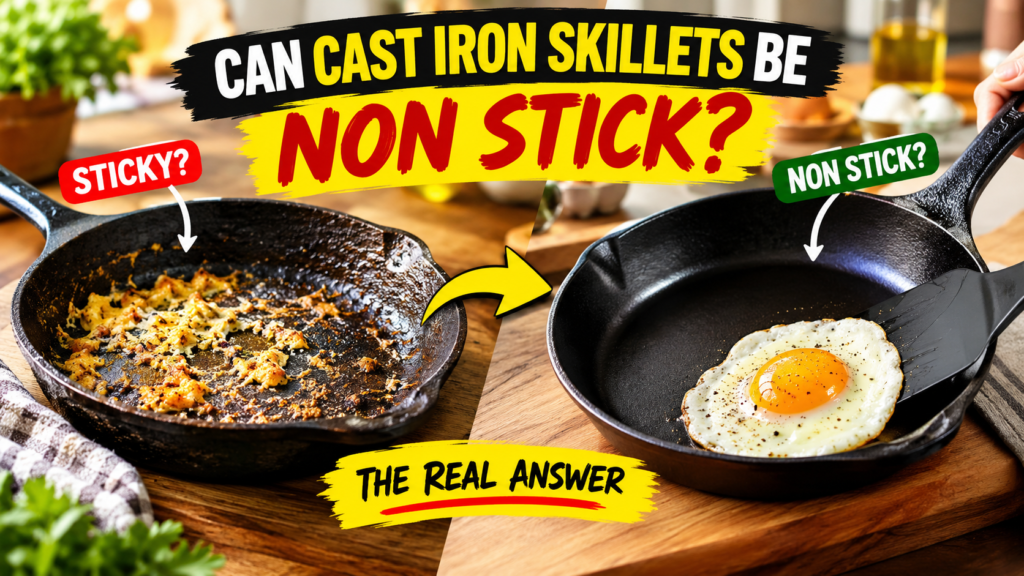
Many home cooks buy a cast iron pan, then watch their eggs weld to it. So can cast iron skillets be non stick in a real kitchen? Often yes, but the slick surface comes from seasoning and good habits, not a factory coating. This guide explains how seasoning works, how to build it, why food sticks, which foods are easiest, and how to care for the pan safely.
This article is for general educational and buying-guidance purposes only. It does not replace the manufacturer’s official manual, food safety guidance, or professional advice. Materials, specifications, and care instructions can vary by product and should be confirmed with the manufacturer before purchase or use. For product defects, suspected food-safety issues, or injuries such as burns or cuts, contact the manufacturer, a qualified professional, or seek medical help as needed.
Can Cast Iron Skillets Be Non Stick? The Honest Answer
Cast iron is bare metal. It does not come with a synthetic nonstick layer. Its slickness comes from seasoning, which is oil heated until it bonds to the metal as a thin, hard, dark film. Each layer fills tiny pits in the surface, so food has less to grab.
A good seasoning can release pancakes, fish, and fried eggs fairly well. Still, it needs fat, heat control, and patience. Think of it as “low-stick” that improves with use. Many experienced cooks notice the pan gets easier to use after weeks of regular cooking.
Note: Many new skillets are sold pre-seasoned. That factory layer is a starting point. Finishes differ between bare, pre-seasoned, and enameled pans, so follow your manufacturer’s instructions.
Seasoned Cast Iron vs Coated Nonstick vs Stainless Steel
Choose cast iron if you want one pan that sears, bakes, and improves with use. Choose a coated pan if easy cleanup for delicate eggs matters most.
How Seasoning Makes Cast Iron Slicker
Seasoning forms when a thin film of fat is heated past its smoke point and hardens on the metal. You do not need to remember the science. What matters is that thin layers bond well, while thick layers turn sticky and blotchy.
Picture two cooks. One wipes oil on the pan, then wipes nearly all of it off before baking. The pan comes out smooth. The other leaves a puddle of oil, and the pan comes out tacky with uneven spots.
Tip: After oiling, wipe the pan as if you want to remove every drop. A nearly dry film cures more evenly than a visible coat.
What Decides Whether Food Sticks
Preheating
Cast iron heats slowly and unevenly at first. Warm it over medium heat for a few minutes before adding fat.
Cooking Fat
Oil or butter fills the gap between food and metal. Too little invites sticking, while a modest layer helps release.
Type of Food
Bacon and burgers release their own fat. Eggs and lean fish have little fat and stick more easily.
Surface Condition
Dull, rough, or patchy seasoning gives food something to grip. A dark, smooth, semi-glossy surface releases better.
Patience helps too. Food often lets go by itself once a crust forms, so avoid forcing it with a spatula too early.
How to Build a Low-Stick Surface Step by Step
When people ask can cast iron skillets be non stick in everyday cooking, this routine is the best place to start.
- Wash and dry. Use hot water and a brush or non-metal scrubber. Dry fully right away, then warm it briefly on a burner to remove moisture.
- Add a thin oil layer. Rub a small amount of neutral, high-heat oil over every surface, including the handle. Wipe until the pan looks almost dry.
- Bake it upside down. Many guides suggest roughly 450°F to 500°F for about an hour. Follow your manufacturer’s guidance and the oil’s smoke point, and place foil on a lower rack to catch drips.
- Cool and repeat. Let the pan cool in the oven. Two or three rounds build a stronger base than one.
- Cook fatty foods first. Bacon, burgers, and vegetables sautéed in oil help deepen seasoning during normal cooking.
- Maintain after each use. Rinse, dry, and rub in a few drops of oil before storing.
Safety Note: Oven seasoning creates heat and smoke. Ventilate the kitchen, use oven mitts, and keep children and pets away. Never leave a smoking pan unattended. Cast iron handles stay hot long after cooking.
Here is the same routine as a quick visual you can screenshot for your kitchen.
Practical guide: seasoning routine flow
The flow shows that seasoning is a cycle, not a one-time task. Skipping the thin wipe-down step causes most beginner mistakes.
Sticking Problems and Their Likely Causes
If food still sticks, this decision path can help you find the fix quickly.
Practical guide: sticking troubleshooting path
Change one thing at a time. That makes it easy to see which habit was causing the problem.
Safe Habits vs Risky Habits
Cast iron is tough, but it is heavy and holds heat. For leftovers, federal guidance from FoodSafety.gov and the USDA covers safe cooling and storage.
Recommended Practice vs Risky Practice
Warning: Never pour water on a grease fire. Turn off the heat if it is safe to do so, cover the pan with a lid, and call 911 if the fire spreads.
A Simple Care Routine That Protects the Surface
Daily care keeps seasoning smooth. This dashboard shows what to do and how often.
Practical guide: care checklist
Rinse, dry well, and rub on a few drops of oil.
Look for dull patches, sticky spots, or orange rust.
Add a thin oven seasoning layer if the surface looks dry.
Strip and re-season only if seasoning is flaking or rusty.
Most pans only need the first row. The rest are checks, not chores.
Best Foods and Tools for a Slick Cast Iron Skillet
Another way to answer can cast iron skillets be non stick is to look at what you cook and which tools you use. Gentle tools protect new seasoning.
Tool and Material Fit for Cast Iron
Different skillets also have different learning curves. Pick the type that matches your patience level.
Practical guide: skillet type fit
Beginner-friendly. Ready to cook, then improves with use.
More work upfront. Needs several seasoning rounds first.
Often has a smoother cooking surface. Check for cracks and rust.
Uses a coating instead of seasoning. Follow the maker’s care steps.
Choose a pre-seasoned pan if you want the easiest start. Check the manufacturer’s guidance if you buy vintage or enameled cookware.
Some foods release more easily than others. This bar chart is a rough kitchen guide, not tested data.
Practical guide: relative difficulty by food
Start with bacon and burgers while the seasoning builds. Save eggs and fish for when the surface looks smooth and dark.
Common Mistakes and Better Choices
Searches like can cast iron skillets be non stick often come from frustration with a stuck egg. Most sticking traces back to a few habits.
Mistake vs Better Choice
When to Contact the Manufacturer or a Professional:
Contact the manufacturer if your skillet is cracked, warped, has a loose handle, or has a chipping enamel coating. You can also review product safety information at the U.S. Consumer Product Safety Commission. For serious burns, seek medical help right away.
This article may contain affiliate links. If you buy through these links, we may earn a small commission at no extra cost to you. We only mention products that fit the topic and recommend checking current specs and care instructions directly with the manufacturer.
Helpful Gear to Consider
Pre-Seasoned Cast Iron Skillet
Can make daily cooking easier by giving you a starting seasoning layer. Many home cooks find this convenient for beginners.
Chainmail Cast Iron Scrubber
May help lift stuck-on bits without harsh steel pads. Use light pressure and follow your skillet’s care instructions.
Frequently Asked Questions
Can cast iron skillets be non stick?
Yes, to a degree. A well-seasoned skillet can release many foods easily, but it works differently from a factory coating and still needs preheating and fat.
How long does it take for a cast iron skillet to become non stick?
It varies. Many cooks notice improvement after several weeks of regular cooking with fats and a few thin seasoning layers. Pan, oil, and habits all affect results.
Why does food stick to my cast iron skillet?
Common causes include a cold pan, too little fat, moving food too early, and a thin or patchy seasoning. Check the problem table above, then adjust one thing at a time.
Can I use soap on a seasoned cast iron skillet?
Many manufacturers say mild soap is fine on seasoned pans, but practices differ. Rinse well, dry right away, and check your brand’s care instructions.
Is a pre-seasoned skillet already non stick?
Not fully. Factory seasoning is a starting layer. Most pans improve as you cook with fat and add thin layers of oil, so expect gradual progress.
What oil is best for seasoning a cast iron skillet?
Many cooks use neutral oils labeled for high-heat cooking. A very thin, wiped-down layer matters more than the brand, so also check your manufacturer’s guidance.
Final Thoughts
So, can cast iron skillets be non stick? With thin seasoning layers, steady preheating, and gentle care, many home cooks get a smooth, low-stick pan. Always check your manufacturer’s instructions and material requirements, follow food-safety guidance for cooking and leftovers, and seek professional or medical help for serious burns, fires, or product defects.
