
By Michael Hayes
Quick Answer: A cast iron skillet usually rusts when moisture stays on thin or worn seasoning. Common causes are air drying, soaking, dishwashers, and damp storage. Dry the pan right away, warm it briefly on low heat, and wipe on a very thin layer of oil.
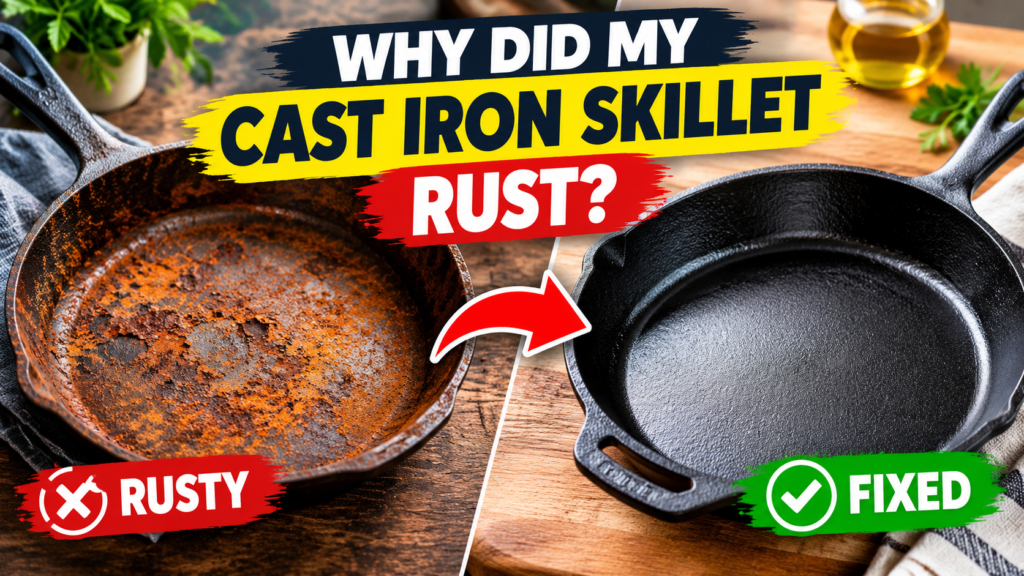
Orange spots on a favorite pan are frustrating, but the skillet is rarely ruined. When you ask why did my cast iron skillet rust, the answer usually comes down to water, time, and thin seasoning. This guide shows the common causes, how to remove rust safely, and how to keep it from returning.
Accuracy and Trust Notice
This article is for general educational and buying-guidance purposes only. It does not replace the manufacturer’s official manual, food safety guidance, or professional advice. Materials, specifications, and care instructions can vary by product and should be confirmed with the manufacturer before purchase or use. For product defects, suspected food-safety issues, or injuries such as burns or cuts, contact the manufacturer, a qualified professional, or seek medical help as needed.
Why Did My Cast Iron Skillet Rust? The Simple Explanation
Cast iron is mostly iron. When iron meets water and air, it can form rust. A good seasoning layer works like a thin shield, because baked-on oil helps keep water off the metal. When that layer is thin or scratched, rust can start within hours or days.
Beginner check: gray and dull usually means thin seasoning, while orange or reddish-brown means rust has formed. Experienced cooks often see rust first on the rim, handle, and outside bottom, since those spots get the least oil.
Note: In most cases, rust on cast iron is a surface problem. Light rust can often be cleaned and the pan reseasoned. Deep pits or cracks need a closer look.
Common Reasons Cast Iron Gets Rusty
Many home cooks ask, “Why did my cast iron skillet rust?” right after one forgotten night in the sink. These four habits are common causes.
Air Drying
A wet pan in the dish rack gives water time to sit on the iron. Thin seasoning gives little protection.
Soaking
Standing water in the sink can soften seasoning over time. That exposes more bare iron.
Dishwasher Cycles
Long wet cycles and strong detergent can strip seasoning. Many makers advise against it, so check your care guide.
Damp Storage
A humid cabinet or a tight lid can trap moisture. Storing the pan fully dry, with some airflow, is usually kinder.
Choose a towel dry plus a low-heat dry if you cook acidic foods or live in a humid area. Avoid air drying if your pan is new or lightly seasoned.
Drying Methods Compared
| Method | Rust Risk | Effort | Best For |
|---|---|---|---|
| Air dry in rack | Higher | Very low | Not advised for cast iron |
| Towel dry only | Moderate | Low | Quick cleanups on well-seasoned pans |
| Towel dry, then low heat | Lower | Low | Most home kitchens |
| Towel, heat, thin oil | Often lowest | Medium | New pans and humid climates |
Here is a five-minute after-cooking routine. Follow it from left to right.
Clean gently
Towel dry
Warm on low heat
Thin oil wipe
The heat step matters most because water can hide in tiny pores a towel cannot reach. The oil step leaves a thin protective film. If time is short, never skip the drying.
Reading the Clues: What Your Rust Pattern Means
Where the rust appears can point to the cause.
Why Did My Cast Iron Skillet Rust? Clues and Likely Causes
| What You See | Likely Cause |
|---|---|
| Orange spots after washing | Water left on thin or worn seasoning |
| Rust ring on rim or outside bottom | Missed oil on the outside or wet stacking |
| Rust after cooking tomato sauce or wine | Acidic food in a weakly seasoned pan |
| Rust after long storage | Humid cabinet or storing while slightly damp |
| Rust on a used pan | Old seasoning worn off or years of damp storage |
| Flaky black bits with orange underneath | Peeling seasoning exposing iron |
Experienced cooks often say rust that returns in the same spot points to thin seasoning there. Reseason that area a few times before blaming the pan.
If you still ask, “Why did my cast iron skillet rust?” use this path to decide what to do next.
Most light cases land on the surface-rust path. A pan with cracks, warping, or deep pits is a different problem, so pause and ask the manufacturer before cooking in it.
Tip: Keep paper towels and a small bottle of oil near the stove. When the supplies are easy to reach, the drying step is less likely to get skipped.
Safe Habits vs. Risky Habits
Safe Practice vs. Risky Practice
| Situation | Safer Choice | Riskier Choice |
|---|---|---|
| After washing | Dry with a towel, then low heat | Leave it wet in the rack |
| Oil | Thin coat, wiped nearly dry | Heavy coat that turns sticky |
| Storage | Dry cabinet with airflow | Lid on while damp |
| Cleaning | Soft brush, hand wash | Dishwasher or long soak |
| Acidic food | Short cooking in a well-seasoned pan | Long simmer in a new pan |
Warning: Hot cast iron can cause serious burns. Use dry oven mitts, and never put a hot pan in cold water, since it may crack. For a serious burn, get medical help.
How to Remove Rust and Reseason the Pan
This routine suits light to moderate surface rust. Work in a ventilated kitchen.
Accuracy and Safety: Do not cook in a pan with active or flaking rust. Oil can smoke while seasoning, so ventilate your kitchen and follow the manufacturer’s instructions. Care steps can differ by brand and finish.
Use this checklist as a weekly habit reminder.
Dry fully after every wash
Warm on the stove for a minute or two
Wipe a thin coat of oil on the cooking surface
Oil the outside and handle too
Store dry with some airflow
Check for dull or patchy spots monthly
Most of these habits take under a minute. Small steps add up, and the monthly check helps you catch dull spots before rust forms.
Choosing Tools That Help, Not Harm
The right scrubber depends on how much rust you are dealing with.
Cleaning Tool Fit
| Tool | Good For | Check First |
|---|---|---|
| Stiff brush | Daily cleaning and light rust | Replace when worn |
| Chain mail scrubber | Stuck-on food | Use gentle pressure; check the care guide |
| Coarse salt and paper towel | Light cleanup | Too mild for heavy rust |
| Steel wool | Heavier rust | May remove seasoning; always reseason |
| Mild dish soap | Occasional deep cleaning | Rinse well and dry at once |
This dashboard shows where each tool fits best.
Tool fit dashboard
Start with the gentlest tool that works. Move to stronger tools only when the rust does not budge, and reseason afterward.
When to Fix It Yourself
Most light rust is a home fix, but some problems are not.
DIY vs. Manufacturer or Professional Help
| Situation | DIY Care | When to Ask for Help |
|---|---|---|
| Light orange spots | Scrub, dry, reseason | Usually not needed |
| Rust across the pan | Possible with patience | Ask if it keeps returning |
| Deep pits or rough texture | Cooking surface may suffer | Contact the manufacturer |
| Cracks or warping | Stop using the pan | Contact the manufacturer |
| Chipped enamel | Different care rules | Follow the enamel maker’s guidance |
Contact the Manufacturer: If a new pan arrives rusted, cracked, or warped, contact the maker and keep your receipt. For product safety concerns, you can also visit the Consumer Product Safety Commission at cpsc.gov.
This chart shows which habits matter most in a typical routine.
Practical guide: Typical routine priority
Drying comes first, and oil comes second. This is a practical guide, not a lab measurement, so adjust it to your own pan and climate.
Helpful Cast Iron Care Products
This article may contain affiliate links. If you buy through these links, we may earn a small commission at no extra cost to you. We only mention products that fit the topic and recommend checking current specs and care instructions directly with the manufacturer.
Cast Iron Seasoning Oil
A ready-to-use oil can make the thin oil step easier. Check the label and your skillet maker’s advice before choosing one.
Cast Iron Scrub Brush
A stiff brush can help lift stuck food and light rust without harsh tools. Check that it suits your pan’s care guide.
Frequently Asked Questions
Why did my cast iron skillet rust overnight?
Overnight rust usually means water stayed on the pan or the seasoning is thin. Humid air can add to it. Dry the pan fully and wipe on a thin coat of oil.
Is it safe to cook on a rusty cast iron skillet?
Do not cook on active or flaking rust. Remove the rust, rinse, dry, and reseason first. If the pan is pitted or rust keeps returning, ask the manufacturer.
Can a rusted cast iron skillet be saved?
Often yes. Surface rust can usually be scrubbed off and the pan reseasoned. A pan with cracks or deep damage may need replacing.
Does soap make cast iron rust?
Mild dish soap is not usually the cause by itself. Leftover water is the bigger issue, so rinse well and dry right away. Follow your manufacturer’s care guide.
Can I put a cast iron skillet in the dishwasher?
Many makers advise against it. Long wet cycles can strip seasoning and invite rust. Check your manual first.
How often should I oil my cast iron skillet?
A thin wipe after each wash is a common habit. Reseason more fully when the surface looks dull, gray, or patchy.
Final Thoughts
The next time you ask, “Why did my cast iron skillet rust?” start by checking moisture. Dry fully, keep a thin layer of oil on the pan, and store it somewhere dry. Confirm care steps with your manufacturer, and seek medical help for serious burns or cuts.
