
By Michael Hayes
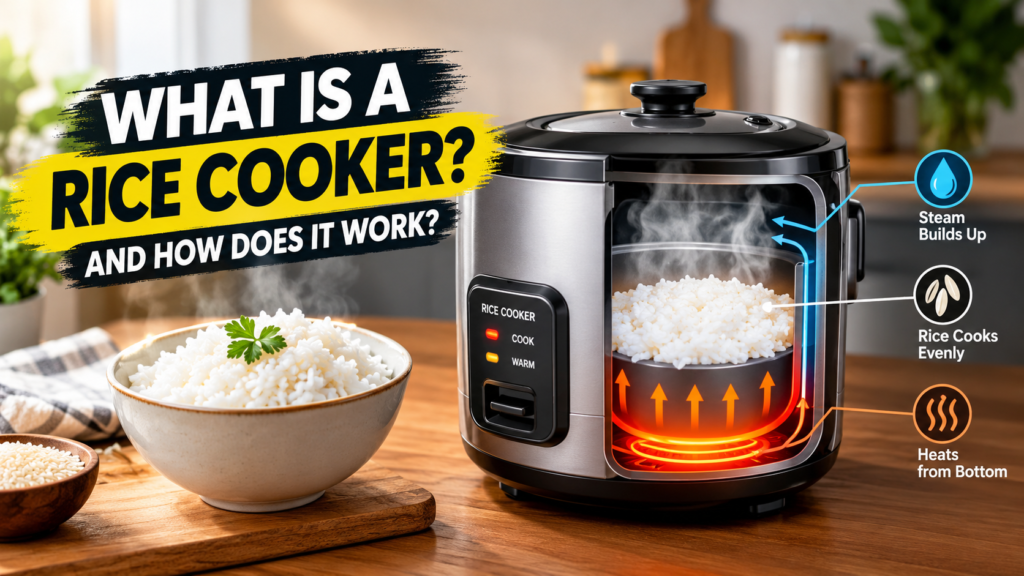
Quick Answer: A rice cooker is an electric kitchen appliance that cooks rice automatically. You add rice and water, then press start. A heating plate boils the water, the rice absorbs it, and a sensor notices the temperature rise and switches to keep-warm mode.
Rice cookers are common in American kitchens, but many people only use them for plain white rice. If you have ever asked what is a rice cooker and how does it work, this guide gives a clear, beginner-friendly answer. You will learn the parts, the cooking cycle, common types, a simple routine, cleaning, safety, and buying basics.
This article is for general educational and buying-guidance purposes only. It does not replace the manufacturer’s official manual, food safety guidance, or professional advice. Materials, specifications, and care instructions can vary by product and should be confirmed with the manufacturer before purchase or use. For product defects, suspected food-safety issues, or injuries such as burns or cuts, contact the manufacturer, a qualified professional, or seek medical help as needed.
What Is a Rice Cooker and How Does It Work?
A rice cooker is a small electric appliance built to cook rice with little effort. It has an inner pot, a heating plate under the pot, a temperature sensor, and a lid. You do not need to stir or watch the stove.
Most models work in two stages. First, the plate heats the water until it boils and the rice absorbs it. Once the water is gone, the pot temperature rises above the boiling point. The sensor notices this change and switches the cooker to a lower keep-warm setting.
Note: Controls differ by brand and model. A basic cooker may have one lever, while a digital model may offer timers and presets. Read your manual for exact steps.
Main Parts of a Rice Cooker
- Inner pot: holds the rice and water.
- Heating plate: warms the pot from below.
- Sensor or thermostat: detects the temperature jump.
- Lid and vent: hold in heat and release steam.
- Outer body: protects the electrical parts.
- Power cord: connects the cooker to an outlet.
This flow shows a typical cooking cycle. It is a practical guide, not a technical diagram.
Practical guide: Typical rice cooker cycle
Add rice and water
Close lid, press cook
Water heats and boils
Rice absorbs the water
Pot temperature rises
Cooker switches to warm
Most basic models react to temperature, not a fixed timer. That is why the rice-to-water ratio matters. Too little water often gives hard rice, and too much often gives mushy rice.
Rice Cooker vs Other Ways to Cook Rice
Who Needs a Rice Cooker?
Once you understand what is a rice cooker and how does it work, the next question is whether you need one. Choose one if you cook rice often or like to multitask. Avoid buying one if you rarely eat rice and have little storage space, because a regular pot can do the job. Many experienced home cooks also like freeing up a burner.
Types of Rice Cookers
The answer to what is a rice cooker and how does it work changes a little with each type.
Basic one-switch
Simple and easy to learn. Choose this if you want plain rice with few controls.
Digital with presets
Buttons for white rice, brown rice, or porridge, plus a timer on many models. Choose this if you cook different grains.
Fuzzy logic
A small chip adjusts heat and time during cooking. Many home cooks find this helpful for varied rice types.
Induction or pressure
These use more advanced heating and offer more settings. Avoid them if you want a very simple machine.
Common Rice Cooker Problems and Likely Causes
How to Use a Rice Cooker Step by Step
A short routine makes it easier to see what is a rice cooker and how does it work day to day.
- Measure rice. Use the cup that came with the cooker. It is often smaller than a standard US cup.
- Rinse if directed. Many cooks rinse until the water looks less cloudy, but follow the package.
- Add water. Use the pot’s water lines or the package ratio, then level the rice.
- Dry the pot bottom. Wipe it, place it in the cooker, and make sure it sits flat.
- Close the lid and start. Pick the right setting and avoid lifting the lid.
- Rest and fluff. Let the rice rest briefly, then fluff it with a plastic or wooden paddle.
Tip: Jot down your favorite water line for each rice type. Brands can differ, so adjust a little each time.
Use this quick path if your cooker seems off. It is a practical guide, not a repair manual.
Practical guide: Quick troubleshooting path
Look at the cord, plug, and body. If anything is damaged, stop and contact the manufacturer.
Make sure it sits flat and is dry underneath. Unplug and let it cool before adjusting.
Compare your water and rice to the pot lines. Adjust the next batch slightly.
Read the manual. If the problem continues, contact the manufacturer.
Start with the damage check, because that is the one problem you should never troubleshoot yourself. The other steps are quick and often explain uneven rice.
Safe Practices vs Risky Practices
Warning: Never use a cooker with a frayed cord, cracked housing, or loose plug. Do not repair electrical parts yourself. Stop using it and contact the manufacturer.
Safety Note: Federal food safety guidance generally says to refrigerate leftovers within two hours, or one hour in very hot weather, and reheat them to 165°F. Check your manual for keep-warm limits, and see FoodSafety.gov and USDA for more.
How to Clean a Rice Cooker
Unplug the cooker and let it cool. Wash the inner pot with a soft sponge and mild soap if the manual allows. Wipe the lid, vent, and heating plate with a damp cloth, then dry everything. Never put the base in water.
This checklist dashboard shows a simple care routine.
Practical guide: Care checklist
Unplug and let it cool. Wash removable parts as the manual allows.
Wipe the vent and lid area. Check that the heating plate is clean and dry.
Look over the cord and plug. Stop using the cooker if you see damage.
Let every part dry fully. Coil the cord loosely, without tight bends.
Short, regular habits beat rare deep cleans. A clean heating plate and pot bottom also help the cooker sit flat and heat evenly.
Which Rice Cooker Features Fit Your Kitchen
Use this dashboard as a buyer checklist before you shop.
Practical guide: Buyer checklist
Match the size to how much rice you cook. Check how the brand measures a cup.
Choose buttons or presets you will actually use. More features mean more to learn.
Check the pot material and care rules. Some pots are not dishwasher safe.
Removable lid parts can make cleanup easier. Look for clear care instructions.
Pick features you will use weekly, then confirm current specs with the manufacturer.
This bar chart shows typical routine priority. It is not lab data or statistics.
Practical guide: Typical routine priority (relative)
Accurate measuring sits at the top because it affects every batch. Cord checks happen less often, but they should never be skipped.
Common Mistakes vs Better Choices
When to Contact the Manufacturer or a Professional: Contact the manufacturer if the cord is damaged, the unit smells like burning plastic, or the pot coating flakes. Do not open the housing yourself. Call emergency services for a fire, and seek medical help for serious burns. See the CPSC site for product safety information.
Rice Cooker Options to Browse
This article may contain affiliate links. If you buy through these links, we may earn a small commission at no extra cost to you. We only mention products that fit the topic and recommend checking current specs and care instructions directly with the manufacturer.
Basic Rice Cooker
A basic cooker can make daily rice easier with fewer buttons to learn. Many home cooks find this style convenient for plain rice.
Digital Rice Cooker With Presets
Presets and timers may support more consistent results with different grains. Many home cooks find these helpful for brown rice.
Rice Cooker FAQs
What is a rice cooker and how does it work?
A rice cooker is an electric appliance that cooks rice automatically. A heating plate boils the water, the rice absorbs it, and a sensor switches to keep-warm mode.
Can you cook other foods in a rice cooker?
Many models can cook oatmeal, quinoa, or steamed vegetables. Check your manual for supported foods and amounts.
Do I need to rinse rice first?
It depends on the rice and package. Many cooks rinse for less sticky grains, but follow the package directions.
Is keep-warm safe for long periods?
Keep-warm is meant for short holding. Limits vary by model, so check the manual and refrigerate leftovers within two hours.
Can the inner pot go in the dishwasher?
Some can, but many cannot. Check the manual, and never put the base in water.
Why is my rice mushy or hard?
The cause is often the water amount, the wrong cup, or a lifted lid. Use the water lines and adjust slightly.
Final Thoughts
Now you know what is a rice cooker and how does it work, you can use one with more confidence. Follow the manufacturer’s instructions, confirm care needs for the inner pot, and use food-safety guidance for leftovers. For damaged parts, burns, or illness concerns, contact the manufacturer or seek professional help.
