
By Michael Hayes
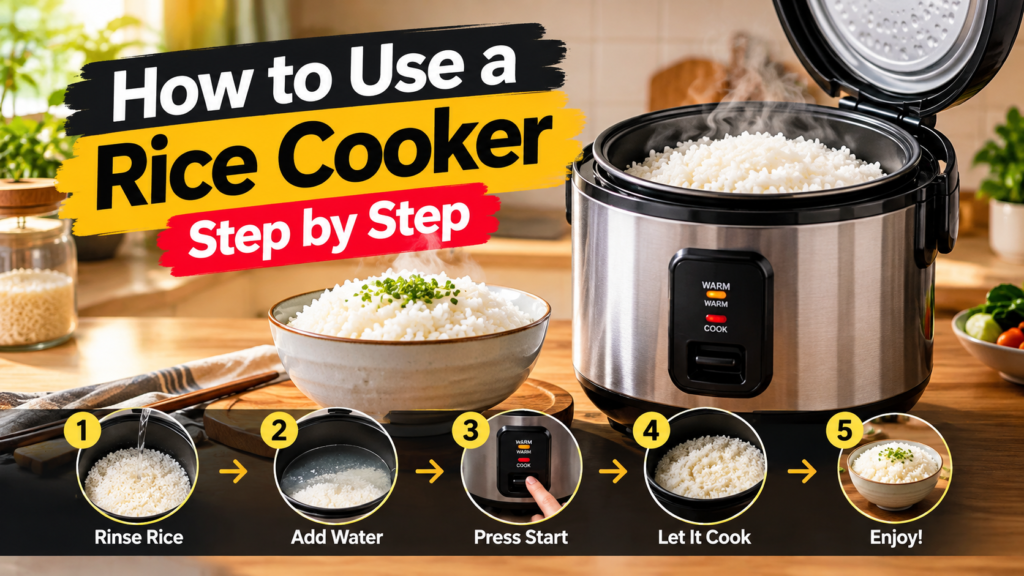
Quick Answer: Measure the rice, rinse it until the water looks mostly clear, and add it to the inner pot with water up to the matching line. Close the lid, press Cook, let the rice rest after the cooker switches to warm, then fluff gently. Check your manual for water ratios.
A rice cooker can take the guesswork out of cooking rice, but small setup habits still matter. If you want to learn how to use a rice cooker step by step, this guide covers measuring, rinsing, water lines, cooking, resting, safety, and cleaning. You will also see how to fix common problems.
This article is for general educational and buying-guidance purposes only. It does not replace the manufacturer’s official manual, food safety guidance, or professional advice. Materials, specifications, and care instructions can vary by product and should be confirmed with the manufacturer before purchase or use. For product defects, suspected food-safety issues, or injuries such as burns or cuts, contact the manufacturer, a qualified professional, or seek medical help as needed.
What a Rice Cooker Does and Why Beginners Like It
A rice cooker heats rice and water in a removable inner pot. Once the water is absorbed and the pot gets hotter, most models switch from cooking to a warming mode on their own. Many home cooks find this convenient because there is no pot to watch.
Rice Cooker vs Stovetop Pot: Quick Comparison
Choose a rice cooker if you cook rice often. Choose a stovetop pot if you cook rice rarely or have little counter space.
Get Your Rice Cooker Ready First
Most models have a base with a heating plate, a removable inner pot, a lid, and a power cord. Wipe the outside of the inner pot dry before setting it in the base, and make sure it sits flat.
Note: The measuring cup packed with many rice cookers is often smaller than a standard U.S. cup. If you use that cup, match the water lines in the pot. If you use a standard cup, follow the ratio in your manual.
How to Use a Rice Cooker Step by Step
This short flow shows the whole routine before we go into detail.
Practical guide: Rice cooker routine flow
Measure
Rinse
Add water
Cook
Rest
Fluff and store
Each stage prevents a different problem. Measuring and water lines set the texture, rinsing affects stickiness, and resting lets the steam settle.
Tip: Write down the amount of rice and water you used for your first batch. If the texture is off, change the water by a small amount next time.
Water Ratios and Rice Types
Different rice behaves differently in a cooker. Use this fit dashboard to pick a starting approach, then confirm details with the package and your manual.
Practical guide: Rice type fit dashboard
Often the easiest place to start. Use the white rice setting or standard Cook mode.
Often needs more water and a longer cook. Use a brown rice setting if your model has one.
Tends to cook soft and sticky. Rinse well and measure carefully.
May cook fluffier after a good rinse. Follow the package for water amounts.
These are starting points only. Choose the white rice routine if you are new. Check the manufacturer’s guidance if you plan to cook anything other than rice.
Fixing Common Rice Cooker Problems
Most beginners can fix rice problems quickly once they know how to use a rice cooker step by step. Start by matching the symptom to its likely cause.
Rice Cooker Problems and Likely Causes
Use this decision path when something looks or smells wrong.
Practical guide: Troubleshooting decision path
The first two are cooking fixes. The last two are safety issues, so do not keep using the cooker until the manufacturer has checked it.
Warning: Never use a rice cooker with a frayed cord, cracked plug, or damaged housing. Do not put the base in water, and keep the cord away from hot surfaces and counter edges.
Food and Electrical Safety Habits
Rice cookers are simple, but heat, steam, and electricity still need care. The Consumer Product Safety Commission shares appliance safety information, and your manual should always come first.
Safety Note: Do not leave cooked rice sitting out. Guidance from FoodSafety.gov generally says to refrigerate cooked food within 2 hours, or within 1 hour if the room is above 90°F. Reheat leftovers until steaming hot, and check your manual for how long warm mode is suitable.
Safer Habits vs Risky Habits
This chart shows which habits tend to matter most in a typical routine.
Practical guide: Typical routine priority (not scientific data)
Water amount and your manual set the foundation. Rinsing, resting, and cleaning improve results over time. Treat the bars as a general guide, not test results.
Cleaning and Caring for Your Rice Cooker
Clean the cooker after each use. Unplug it and let it cool first, because dried starch is harder to remove later. Use this checklist dashboard after each batch.
Practical guide: Care checklist dashboard
Wash with a soft sponge and mild soap. Skip abrasive pads unless the manual allows them.
Remove any removable parts and rinse away starch. Dry them fully before putting them back.
Wipe away crumbs once the cooker is cool and unplugged. Keep water out of the base.
Wipe the outside with a damp cloth. Check the cord for cracks or damage.
A short routine after each use is easier than a deep clean later. Follow the care steps in your manual for your exact model.
Inner Pot and Utensil Fit Guide
Common Beginner Mistakes and Better Choices
Most mistakes while learning how to use a rice cooker step by step come from skipping a small stage, not from the machine itself.
Mistake vs Better Choice
When to Contact the Manufacturer or a Professional: Contact the manufacturer if the cooker smells like burning plastic, sparks, has a damaged cord or plug, trips a breaker, or keeps shutting off. Do not try to repair internal wiring yourself. Seek medical help for serious burns, and contact a healthcare provider if you suspect food poisoning. The USDA website also offers food safety resources.
This article may contain affiliate links. If you buy through these links, we may earn a small commission at no extra cost to you. We only mention products that fit the topic and recommend checking current specs and care instructions directly with the manufacturer.
Tools That Can Make Rice Easier
Simple Electric Rice Cooker
A basic model can make daily rice easier, especially if you mostly cook white rice. Compare capacity and care instructions before buying.
Non-Scratch Rice Paddle
A softer paddle may help protect a coated inner pot when you fluff rice. Confirm that it fits your cooker’s care guidance.
Frequently Asked Questions
Is it hard to learn how to use a rice cooker step by step?
No. Most people get it right in one or two batches. Measure, rinse, add water to the line, close the lid, press Cook, and let the rice rest.
Do I need to rinse rice before using a rice cooker?
Many cooks rinse white rice to remove loose starch, which may reduce stickiness. Check the package first, because some enriched rice labels say not to rinse.
How much water do I put in a rice cooker?
Use the water lines in the pot or the ratio in your manual. Many white rice recipes use about 1 part rice to 1 to 1.25 parts water, but models differ and brown rice often needs more.
Can I leave rice in the cooker on the warm setting?
Check your manual first. Warm mode is meant for short holding, not long storage. Refrigerate leftover rice within 2 hours, or within 1 hour if the room is above 90°F.
How do I stop rice from sticking to the bottom?
Rinse the rice, use the right amount of water, and clean the pot soon after use with a soft sponge so dried starch does not build up.
Can I put the inner pot in the dishwasher?
Only if the manual says it is dishwasher-safe. Many nonstick-coated pots call for hand washing. Never put the heating base in water or the dishwasher.
Final Thoughts
Once you know how to use a rice cooker step by step, good rice becomes a simple routine: measure, rinse, add water, cook, rest, and clean. Always check the manufacturer’s instructions, confirm care needs for your inner pot, follow food-safety guidance for leftovers, and get professional or medical help for serious problems.
