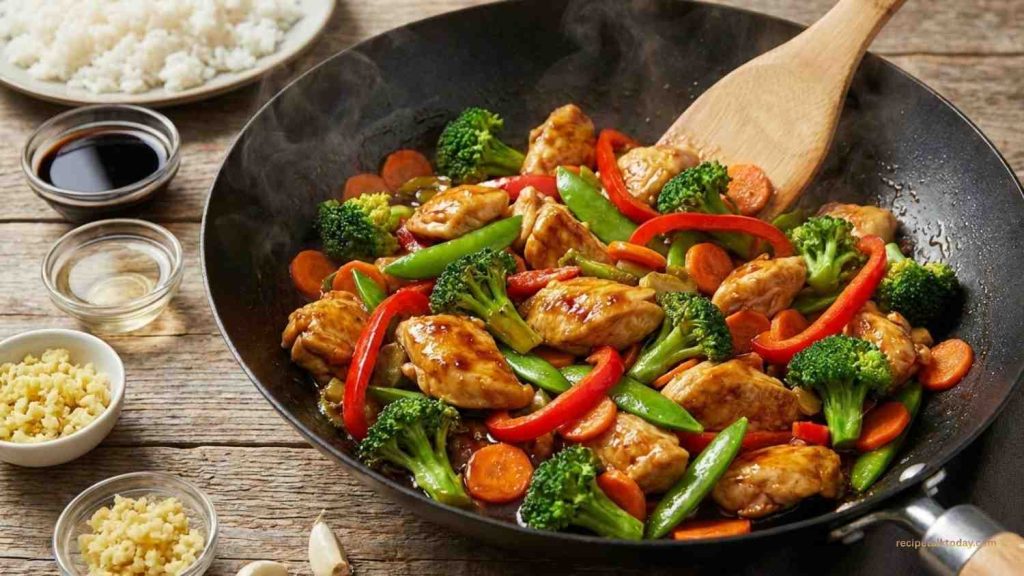
Forget the jar. This homemade chicken stir fry without oyster sauce tastes better than takeout. Crispy vegetables. Tender chicken. A sauce made with ingredients you already have. Ready in 25 minutes.
Why This Works
You don’t need oyster sauce to make incredible stir fry. That’s actually the whole point of this recipe. Oyster sauce adds umami, sure, but it’s not essential. What IS essential is understanding that good stir fry comes from three things: high heat, constant motion, and a balanced sauce made from pantry staples.
This chicken stir fry without oyster sauce uses soy sauce, rice vinegar, ginger, garlic, and a touch of honey to create a sauce that’s equally complex and delicious. Some might argue it’s even better because you taste each ingredient. No heavy umami from oyster sauce masking everything.
The technique is what matters here. A screaming hot wok or skillet. Oil that shimmers before the chicken hits. Protein and vegetables are cooked separately, so nothing gets steamed. Then everything comes together with a sauce that coats and clings beautifully.
When you master this basic stir-fry technique, you understand something fundamental about cooking. Speed and temperature create flavor. That applies everywhere—from making Garlic Butter Chicken in 15 Minutes in a skillet to creating beautiful Grilled Chicken in Pan with grill marks. High heat and quick motion are tools that work across dozens of recipes.
Ingredients
Serves 4 people (25 minutes total)
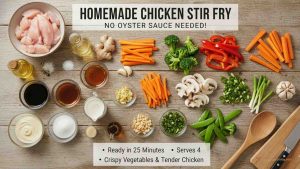
For the Chicken
- 600g (1.3 lbs / about 4 medium) boneless chicken breasts or thighs, sliced into thin strips (about 5mm / ¼ inch thick)
- 15 ml (1 tablespoon) neutral oil (vegetable, canola, or peanut)
- 3g (½ teaspoon) salt
- 1g (⅛ teaspoon) black pepper
For the Sauce (No Oyster Needed)
- 45 ml (3 tablespoons) low-sodium soy sauce
- 15 ml (1 tablespoon) rice vinegar (or apple cider vinegar)
- 15 ml (1 tablespoon) honey
- 10g (2 teaspoons) fresh ginger, minced
- 2 cloves garlic (6g / ¼ oz), minced
- 120 ml (½ cup) chicken broth or water
- 10g (2 tablespoons) cornstarch
- 10 ml (2 teaspoons) sesame oil
- Pinch of red pepper flakes (optional)
For the Vegetables (Pick 3-4)
- 2 cups broccoli florets, cut small
- 1 large carrot (100g / 3.5 oz), sliced thin or cut into matchsticks
- 1 red or yellow bell pepper (150g / 5 oz), sliced into strips
- 75g (1 cup) snap peas or snow peas
- 100g (1 cup) mushrooms, sliced
- 50g (½ cup) green onions, chopped
Equipment Needed
- 1 large wok or skillet (12-inch / 30cm ideal)
- 1 wooden spoon or spatula
- Knife and cutting board
- Small bowl for sauce
- Paper towels
Step-by-Step Instructions
Prep (5 minutes)
- Make the sauce: In a small bowl, whisk together soy sauce, rice vinegar, honey, ginger, garlic, chicken broth, cornstarch, and sesame oil. Stir until the cornstarch is mostly dissolved. Add red pepper flakes if using. Set aside.
- Slice the chicken: Cut the chicken against the grain into thin strips (about 5mm / ¼ inch thick). Thinner pieces cook faster and stay tender.
- Prepare vegetables: Cut broccoli into small florets, slice carrots thinly, cut peppers into strips, and chop green onions. Having everything cut and ready before you start cooking is crucial.
- Pat chicken dry: Use paper towels to dry chicken pieces. Drying is essential—moisture prevents browning. Skip this, and your stir-fry becomes steamed chicken. Not what we want.
Cook (20 minutes)
- Heat the wok: Place the wok or a large skillet over high heat. Let it get screaming hot (about 2 minutes). You’ll know it’s ready when a drop of water sizzles and disappears immediately.
- Add oil and chicken: Add 15 ml (1 tablespoon) oil. It should shimmer and smoke slightly. Immediately add chicken strips in a single layer. Don’t move them for 1-2 minutes—let them brown on one side.
- Stir and cook chicken (3-4 minutes): Stir constantly from this point forward. Cook until chicken is cooked through with no pink inside. Transfer to a plate.
- Cook vegetables (5-6 minutes): Add another 15 ml (1 tablespoon) of oil if needed. Add your hardest vegetables first (carrots, broccoli). Stir constantly and cook for 3-4 minutes. They should be tender-crisp, not soft. Add softer vegetables (peppers, snap peas) and cook 2 more minutes.
- Return chicken and add sauce: Push the vegetables to the side of the wok. Add chicken back to the pan along with all the sauce. Stir everything together constantly.
- Thicken and finish (1-2 minutes): Keep stirring as the sauce heats and thickens. The cornstarch will make it thick and glossy, coating all the chicken and vegetables beautifully. Cook until the sauce clings to everything.
- Taste and adjust: Add a pinch more salt or soy sauce if needed. Taste and make it your own.
Serve
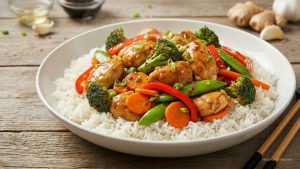
Plate immediately: Serve hot over rice or noodles. Don’t let it sit in the wok—serve right away while everything’s hot and crispy.
Real Tips for Perfect Stir Fry
- High heat is non-negotiable: Medium-high or high heat is what creates that beautiful browning and texture. Low heat = steamed stir fry. Not acceptable.
- Pat chicken completely dry: This matters more than you think. Moisture is the enemy of browning. Use lots of paper towels.
- Slice chicken thin: About 5mm (¼ inch) thickness. Thin pieces cook faster and stay tender. Thick chunks become tough or stay raw.
- Cut vegetables to consistent sizes: They cook at different rates, so cutting everything to a similar size helps them cook evenly.
- Keep everything moving: This is why it’s called “stir” fry. Constant motion means even cooking and prevents burning. Don’t walk away.
- Cook protein and vegetables separately: This is the secret most people miss. Cook chicken, remove it. Cook vegetables separately. Then combine with the sauce. This ensures nothing gets steamed or overcooked.
For lighter Asian dishes, try our Chicken Fried Rice Without Soy Sauce, which teaches similar high-heat cooking techniques, or explore Quick Chicken Curry Without Coconut Milk for another flavorful option that doesn’t rely on traditional Asian condiments.
Easy Variations
Same technique, different flavors:
- Ginger forward: Double the ginger (20g / 4 teaspoons) for more bite
- Garlic lover: Add 2 more cloves of garlic (total 4 cloves)
- Spicy version: Add ½ teaspoon cayenne or more red pepper flakes
- Sweeter stir fry: Add 1-2 extra teaspoons of honey
- Teriyaki-style: Replace rice vinegar with mirin
- Lime fresh: Add 15 ml (1 tablespoon) fresh lime juice instead of vinegar
- Extra umami: Add 5 ml (1 teaspoon) fish sauce (optional but amazing)
Simple Swaps
Don’t have exactly what you need? Use this:
| Need | Swap |
|---|---|
| Soy sauce | Tamari (gluten-free) or coconut aminos |
| Rice vinegar | Apple cider vinegar or white vinegar |
| Honey | Brown sugar or maple syrup |
| Sesame oil | Peanut oil (different flavor but works) |
| Chicken thighs | Chicken breasts (watch for overcooking) |
| Cornstarch | Arrowroot powder (same thickening) |
| Fresh ginger | ¼ teaspoon ground ginger |
Storage & Leftovers
Refrigerator
- Cool in the wok, then store in an airtight container
- Lasts 3-4 days
- Reheat in a wok over high heat for 2-3 minutes to restore crispiness
- Or microwave at 50% power for 1-2 minutes (less crispy but convenient)
Freezer
- Cool completely before freezing
- Freeze in an airtight container
- Lasts up to 1 month
- Thaw overnight in the fridge
- Reheat in a wok over high heat
Make-Ahead Sauce
Make a double batch of sauce and store in a jar. Lasts 2 weeks refrigerated. Use whenever you want stir fry—just cook protein and vegetables fresh.
FAQs:
Q: Why is my stir-fry soggy?
A: Either the heat wasn’t high enough, or the vegetables were cooked too long. High heat + constant motion = crispy texture. Low heat + sitting time = mushy stir fry.
Q: Can I use frozen vegetables?
A: Fresh is better, but frozen works. Thaw completely first and pat dry. Cook for slightly less time as they’re already partially cooked.
Q: My sauce is too thin.
A: The cornstarch didn’t thicken properly. Make sure the sauce actually simmers for 1-2 minutes once you add it. If still thin, mix 5g (1 teaspoon) of cornstarch with 15 ml (1 tablespoon) of cold water and stir it in.
Q: Can I make this without a wok?
A: Yes, use a large skillet instead. It won’t have the wok’s sloped sides, but the technique stays the same. Just use slightly lower heat so food doesn’t fly out.
Q: Should I pre-cook the vegetables?
A: No. Cook everything in the wok fresh. Pre-cooking makes them lose texture and flavor.
Final Thoughts
This chicken stir fry without oyster sauce proves that traditional Asian condiments aren’t the only way to make amazing food. What matters is understanding technique. High heat. Proper timing. Balanced seasoning.
Make this once. You’ll make it again. It becomes your go-to weeknight dinner because it’s fast, healthy, and genuinely delicious.
That’s real cooking.