
A frying pan can become an improvised weapon because its solid surface and handle can cause serious blunt-force injuries. A person should use a frying pan for self-defense only to escape an immediate threat, not to confront, chase, or punish anyone.
The legal outcome depends on local self-defense rules, the level of danger, and whether the response seemed reasonable. This article explains the pan’s physical limits, possible injuries, criminal and civil risks, safer ways to respond during conflict, and how proper storage can reduce household accidents.
Key Takeaways
- A frying pan can cause serious injuries.
- Self-defense must match the immediate threat.
- Escape and emergency help remain safer options.
Legal Definitions And Context
A frying pan has no fixed legal status as a weapon. Courts usually examine how someone used it, the harm it could cause, and the person’s intent, while local law determines the specific charge.
Improvised Objects And Intent
An object does not need a weapon-like design to support a weapons or assault charge. If someone swings a heavy frying pan at another person’s head, the court may treat it as a deadly or dangerous weapon because that use could cause serious injury or death.
Intent also matters. A person who accidentally drops a pan usually does not show the intent required for an assault charge. A person who picks it up during a fight and strikes, threatens, or tries to injure someone may face charges based on the conduct and resulting harm.
| Factor | Why it matters |
|---|---|
| How the pan was used | Striking or threatening someone can make it a dangerous weapon |
| Where it was aimed | Blows to the head or neck create a greater risk of serious injury |
| The person’s intent | Intent to threaten, injure, or kill can affect the charge |
| The injury caused | Serious harm may lead to more severe penalties |
Jurisdictional Differences
Legal definitions differ among states, territories, and countries. Some laws use terms such as deadly weapon, dangerous weapon, or blunt instrument, and each term may have a different meaning. One jurisdiction may focus on whether the object could cause death, while another may also require proof of the person’s intent or the way the object was used.
The same conduct may lead to different charges depending on local law. Police and prosecutors may consider assault, aggravated assault, attempted homicide, or weapons-related offenses. Courts also review facts such as self-defense, the severity of the threat, and whether the force was reasonable under the circumstances. A local attorney can explain the rules that apply to a specific incident.
Physical Characteristics Of A Frying Pan
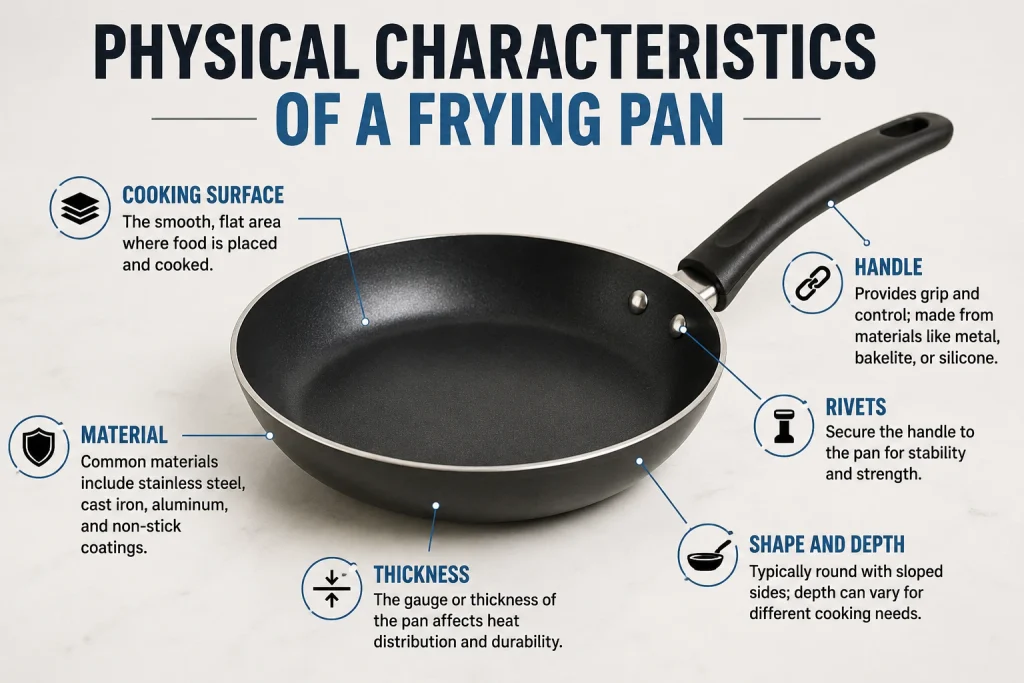
A frying pan’s weight, construction, handle, and reach affect how easily someone can control it. These features also influence the risk of serious injury if the pan is used during a physical confrontation.
Weight And Material
Frying pans commonly weigh between 1 and 6 pounds, depending on their size and material. Cast iron pans are the heaviest and can weigh several pounds before food is added. Stainless steel pans are usually lighter, while aluminum pans often weigh the least.
| Material | Typical traits | Safety concern |
|---|---|---|
| Cast iron | Heavy, thick, and durable | Difficult to control and may cause severe injury |
| Stainless steel | Moderate weight and rigid surface | Can become awkward during rapid movement |
| Aluminum | Light and easy to handle | May bend or dent more easily |
A pan’s weight is not a measure of its suitability for protection. A heavy object can strain the wrist, shoulder, or elbow, especially when someone grips it under stress. Its hard surface can also cause serious injuries, so physical contact should be avoided whenever possible.
Handle Design And Reach
Most frying pans have a handle about 6 to 10 inches long. The handle may be made from metal, wood, or heat-resistant plastic, and some designs include a smaller helper handle opposite the main one.
The handle gives the pan more reach than a person’s hand, but it can also make the pan harder to control in a narrow space. A smooth or hot handle may cause someone to lose their grip. Long handles can catch on furniture, doorways, or clothing.
A frying pan has no protective guard, secure grip, or purpose-built balance for defensive use. In an emergency, a person should create distance, leave the area, and contact emergency services rather than rely on the pan.
Potential For Injury
A frying pan can cause serious injury because its hard surface and handle can deliver strong blows. Heat adds a separate risk, since a hot pan can cause deep burns and may remain dangerous after it leaves the stove.
Blunt-Force Trauma
A pan can cause blunt-force trauma to the head, face, chest, hands, or limbs. Injuries may include cuts from broken skin, swelling, fractures, dental damage, concussion, or internal bleeding. A cast-iron pan usually weighs more than a thin aluminum pan, but any pan can injure someone when used with force.
| Injury | Possible result |
|---|---|
| Head impact | Concussion, skull fracture, or brain injury |
| Face impact | Broken nose, eye injury, or dental damage |
| Arm or hand impact | Bruising, nerve damage, or broken bones |
| Chest or abdomen impact | Rib fractures or internal injury |
The handle can also cause injury, especially if it strikes a person or catches on clothing. A person should avoid striking vulnerable areas and should not use a pan after the immediate danger has ended. In an emergency, moving away, creating distance, and contacting emergency services reduce the chance of further harm.
Burn And Heat Hazards
A hot frying pan can cause serious contact burns within seconds. The cooking surface, sides, handle, and lid may all hold heat, and a pan can stay hot long after the burner turns off. Oil or grease inside the pan creates added danger because it can spread, ignite, or cause deeper burns.
A person handling a hot pan may also drop it, spill its contents, or touch a heated handle by mistake. These actions can injure bystanders and start a kitchen fire. If hot grease catches fire, water should not be poured on it; the heat should be turned off if safe, and the pan should be covered with a metal lid. Medical care may be needed for large, deep, or facial burns.
Self-Defense Considerations
A frying pan may help someone create distance during an immediate attack, but it can cause serious injury and may be treated as a weapon under local law. The person using it must judge the danger, use only necessary force, and seek a safe escape as soon as possible.
Reasonable Force
Self-defense laws often allow force only when a person reasonably believes they face an immediate threat of injury. The response must match the danger. Striking someone with a pan after the threat ends, during an argument, or to protect property may lead to criminal or civil consequences.
A frying pan can cause severe head injuries, broken bones, or death. It should not be used to threaten, punish, or chase someone who is leaving. If escape is possible, the safer choice is to move away, lock a door, call emergency services, and attract attention.
| Situation | Safer response |
|---|---|
| Verbal conflict | Create distance and leave |
| Person blocks an exit | Call for help and move toward other people |
| Immediate physical attack | Use only enough force to escape |
| Threat has ended | Stop, leave, and contact emergency services |
Local laws differ, so legal advice from a qualified source can clarify the rules in a specific area.
Immediate Threat Assessment
The person should quickly assess whether the danger is immediate and whether a safe alternative exists. Important factors include the attacker’s actions, access to a weapon, the distance between them, available exits, and whether other people face danger.
A pan is heavy, awkward, and difficult to control in a confined space. Swinging it can injure bystanders, cause the person to lose balance, or escalate the attack. It also offers no reliable protection from a firearm or other weapon.
The priority should remain escape and protection, not confrontation. The person should move toward a public area, place solid barriers between them and the attacker, call emergency services, and provide clear details about the location and threat. Afterward, they should avoid touching evidence and explain the events accurately to responding officers.
Criminal And Civil Consequences
Using a frying pan to strike someone can lead to criminal charges, especially when it causes injury or involves threats. The person who used it may also face a civil claim for medical costs, lost income, and other losses.
Assault Charges
A frying pan may qualify as a dangerous or deadly weapon when a person uses it to cause serious injury or threatens someone with it. The legal result depends on factors such as the force used, the victim’s injuries, the person’s intent, and local law.
A minor incident might lead to a simple assault charge. Striking someone in the head, attacking repeatedly, or causing serious injury can support an aggravated assault charge, which usually carries harsher penalties. Prosecutors may also consider domestic violence, unlawful entry, threats, or other related offenses.
Self-defense can provide a legal defense when the person reasonably believes immediate force is necessary to stop an unlawful attack. The response must usually match the danger faced. Someone who continues attacking after the threat ends may lose that defense. Legal definitions vary by location; self-defense laws provide general background but do not replace local legal advice.
Liability For Damages
A person who injures someone with a frying pan may face a civil lawsuit even if criminal charges are dismissed or never filed. The injured person could seek compensation for hospital bills, rehabilitation, lost wages, pain and suffering, and property damage.
Civil courts usually examine whether the person acted intentionally, recklessly, or negligently. A self-defense claim may limit or defeat liability if the force was legally justified. If the response exceeded what the situation required, the court may still award damages.
The injured person generally must prove the other person caused the harm and that the losses were connected to the incident. Medical records, photographs, witness statements, surveillance footage, and police reports can affect the case. Homeowners’ or renters’ insurance may not cover intentional injuries, and the person found liable may have to pay personally.
Safe Alternatives During Conflict
Avoiding physical contact reduces the chance of injury, legal problems, and further escalation. Calm communication, a clear exit, and quick contact with emergency services usually offer safer options than using a frying pan or another household item.
De-Escalation
A person should keep their voice calm, use short statements, and avoid insults, threats, or sudden movements. They can say, “I do not want to fight,” while keeping several feet of space and placing a table, counter, or other solid object between themselves and the other person.
They should avoid arguing over minor details and should not block the other person’s path. If children, older adults, or other vulnerable people are present, they should move them toward a safer room or exit without provoking the aggressor.
A person should not reach for a frying pan, knife, or other object unless immediate action is necessary to escape a serious threat. They should also avoid trying to restrain or chase someone. In a public place, moving toward staff, security, or a well-lit area can bring help without increasing the conflict.
Leaving And Contacting Emergency Services
When possible, a person should leave through the nearest safe exit and move to a neighbor’s home, an open business, or another crowded location. They should avoid isolated areas, elevators, and rooms with weapons or limited exits, such as kitchens and garages.
Once safe, they should call the local emergency number. The caller should provide the exact address, describe the threat, identify any injuries or weapons, and follow the dispatcher’s instructions. If calling could increase danger, they can use a text-to-emergency service where available or ask a nearby person to call.
They should not return for belongings or confront the aggressor. After the danger ends, medical staff can document injuries, and authorities can explain reporting and protection options. In the United States, official emergency safety guidance also recommends planning exits and meeting places in advance.
Household Safety And Storage
Safe storage keeps cookware easy to use without making it a hazard. A pan should remain a kitchen tool, not an object placed for quick access during conflict. Clear walkways, stable storage, and careful handling reduce accidental injuries.
Keeping Cookware Accessible Yet Secure
Store frying pans in a sturdy cabinet, drawer, or rack designed to hold their weight. A pan should not sit on the edge of a counter, above a stove, or where it could fall when someone opens a door. Heavy cast-iron pans need lower storage because they can cause serious injury if they drop.
Keep handles turned inward and away from walkways. Use a rack or divider to prevent pans from sliding into other cookware. Children should not be able to pull down heavy pans or reach hot surfaces. If a household faces a safety concern, adults should store cookware behind a closed door and keep keys or access controls away from children.
Preventing Accidental Harm
Check the pan and its handle before each use. Loose handles, cracked surfaces, and damaged mounting points can cause the pan to fall or spill hot food. Replace damaged parts instead of trying to use the pan for another purpose.
Keep pans away from entrances, stairways, beds, and other areas where someone could trip or grab them during a sudden movement. Never leave a pan heated or unattended. If a person feels threatened, they should create distance, leave if possible, and contact emergency services rather than reaching for cookware. Guidance from self-defense resources can help explain why avoiding conflict and using only necessary force matters.
FAQS
Can a frying pan be used as a weapon?
A frying pan can cause serious injury if someone uses it to strike another person. Its weight, hard surface, and handle make it dangerous, but it remains a household tool rather than a purpose-built weapon.
Can a frying pan kill someone?
Yes. A forceful blow can cause severe head injuries or other fatal harm. Reports have documented criminal cases involving frying pans, but the outcome depends on factors such as the pan’s material, the force used, and where it strikes.
Does the type of pan matter?
Yes. A cast-iron pan usually weighs more than an aluminum or nonstick pan, so it may cause greater injury during an impact. Weight does not make any pan safe or reliable for self-defense.
Can a frying pan stop a bullet?
No. Ordinary frying pans do not provide dependable protection against firearms. They are not designed or tested as body armor, and a person should seek cover and contact emergency services instead.
What should someone do during an immediate threat?
They should leave if possible, create distance, lock a door, attract attention, and call emergency services. Using any object to strike another person can cause lasting harm and may create legal consequences, even when someone claims self-defense.
Conclusion
A frying pan can injure someone if used as an improvised weapon, but it was not designed for personal protection. Its weight, handle, and hard surface may cause serious harm, especially during a forceful strike.
Using one also creates legal and safety risks. Self-defense laws usually depend on whether the response was necessary and proportionate to the threat. A person who uses a pan after the danger has passed may face criminal or civil consequences.
A frying pan will not reliably stop a weapon, protect against gunfire, or replace a safe escape plan. If danger arises, the safest choices usually include leaving the area, creating distance, calling emergency services, and seeking help from others.
When no safer option exists, a person should focus on stopping the immediate threat and getting away rather than pursuing or punishing the other person. Afterward, they should contact emergency services and seek medical care for anyone who may be injured.
