
By Michael Hayes
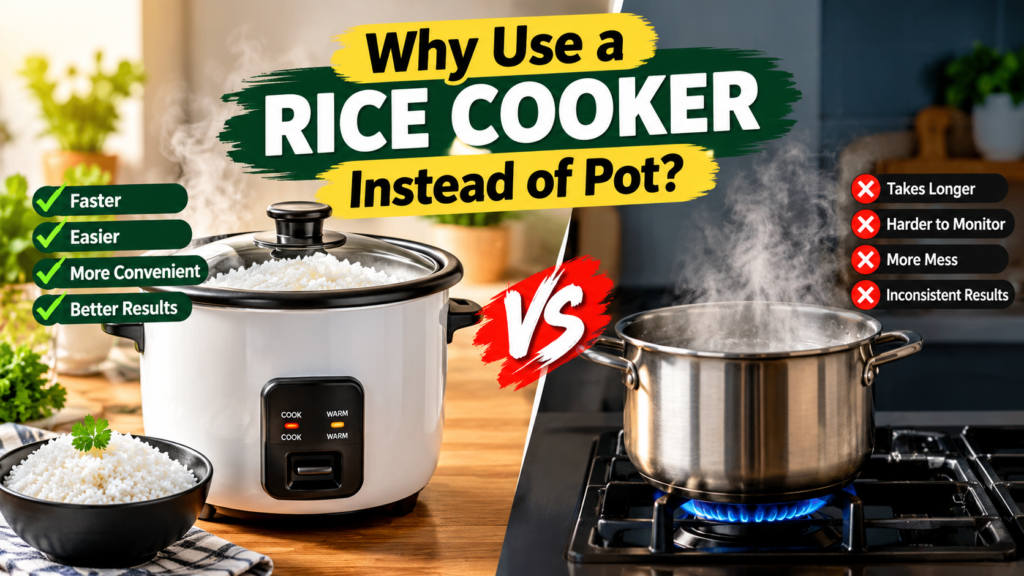
Quick Answer: Why use a rice cooker instead of pot? A rice cooker controls heat and timing for you, so rice is more consistent, less likely to burn, and easy to keep warm. A pot still works well, but needs more watching and practice.
Rice is simple, yet it can go wrong fast. Too much water makes it mushy, too little leaves it hard, and a hot burner can scorch the bottom. Many home cooks find a rice cooker takes most of that guesswork away. In this guide you will learn how each method works, where a rice cooker helps, where a pot is still fine, and how to use either one safely.
Kitchen Tips Appliances Home Cooking Rice Cooker Basics
This article is for general educational and buying-guidance purposes only. It does not replace the manufacturer’s official manual, food safety guidance, or professional advice. Materials, specifications, and care instructions can vary by product and should be confirmed with the manufacturer before purchase or use. For product defects, suspected food-safety issues, or injuries such as burns or cuts, contact the manufacturer, a qualified professional, or seek medical help as needed.
Why Use a Rice Cooker Instead of Pot? The Main Reasons
A rice cooker is built for one job: heat rice and water, then stop heating when the water is absorbed. Most models use a thermostat to sense that moment and switch to a keep-warm setting. On a stovetop, you are the thermostat. You decide when to lower the heat, when to lift the lid, and when to turn the burner off.
Four Everyday Benefits
Steadier results
Water and rice go in, and the machine handles timing. That can mean fewer mushy or crunchy batches.
Less scorching
The heating is controlled by the appliance, so the bottom layer is less likely to burn. Cleanup is often easier with a removable inner pot.
Hands-free time
You can start rice and work on the rest of dinner. There is no timer watching and no boil-over to catch.
Keep-warm convenience
Many models hold rice warm after cooking. Check the manual for how long that setting is meant to be used.
Rice Cooker vs Pot at a Glance
Choose a cooker if you cook rice often. Avoid one if you rarely cook rice and have little space.
When a Pot Still Makes Sense
A rice cooker is not always the better tool. If you make rice once a month, a heavy pot with a tight lid does the job. A pot also suits pilaf or risotto, where stirring and open heat matter.
That raises a fair question: why use a rice cooker instead of pot cooking when you already own a good saucepan? Mostly for consistency and convenience, not because a pot cannot work.
Choose a cooker if you eat rice weekly or want it ready while you finish dinner. Choose a pot if space is tight or you cook rice rarely. Check the manufacturer’s guidance before cooking anything besides plain rice in a cooker.
Note: Cup lines, keep-warm settings, and supported rice types differ by model, so follow the instructions that came with yours.
Texture, Consistency, and Cleanup
Texture is often the first thing people notice when they ask why use a rice cooker instead of pot cooking. Many models stop heating when the water is gone, so batches tend to come out alike. On the stove, a small change in burner heat or lid fit can change the result. A removable inner pot is also usually easier to wash than a scorched pot, so check your manual for care rules.
Common Rice Problems and Likely Causes
Here is what happens inside many cookers during one cycle.
Practical guide: Inside a rice cooker cycle
1. Heat up: Water and rice warm until the water boils.
2. Absorb: Rice takes in water while the pot stays near boiling.
3. Sense: When the water is gone, many models detect the temperature rise.
4. Switch: The cooker moves to keep-warm or shuts off.
Knowing this explains why opening the lid mid-cycle can change results.
How to Cook Rice in a Rice Cooker
1. Measure the rice: Use the cup that came with your cooker. It is often smaller than a standard US cup.
2. Rinse well: Swirl rice in cold water and drain until the water looks clearer. This helps remove loose surface starch.
3. Add water: Fill to the matching line inside the pot, or follow the package ratio. Level the rice so it cooks evenly.
4. Cook and wait: Close the lid and press start. Avoid opening it mid-cycle, because steam helps the rice finish.
5. Rest and fluff: Let rice sit a few minutes after the cycle ends, then fluff with a rice paddle or spoon that will not scratch the pot.
Tip: Brown, sushi, and jasmine rice often use different lines or settings, so check your manual before switching rice types.
Safety and Care Basics for Rice Cookers
Rice cookers are simple, but they still use electricity and heat. Keep the cooker on a dry, stable surface with space around it for steam. Never submerge the base, and stop using the unit if the cord or plug looks damaged. Rice also needs safe handling. Cool leftovers quickly and refrigerate them promptly; FoodSafety.gov explains safe storage and reheating. The CPSC lists product recalls, which are worth checking before you buy.
Warning: Do not leave cooked rice out for hours. Rice can carry bacteria that survive cooking, and warm, unrefrigerated rice may raise the risk of food poisoning.
Safety Note: Unplug the cooker and let it cool before cleaning. Never open or repair electrical parts yourself, and stop using any unit with a frayed cord.
Safer Habits vs Risky Habits
Use this quick path when a batch turns out wrong.
Practical guide: If rice goes wrong
Mushy? → Use less water next time and rinse rice first.
Hard or dry? → Add a little water next time and keep the lid closed.
Stuck on the bottom? → Soak the inner pot, then wash gently as the manual advises.
Burning smell or sparks? → Unplug it and contact the manufacturer.
Most rice issues are fixable; burning smells or sparks are not.
Quick Care Routine
A short routine keeps the cooker clean and safe.
Practical guide: Care checklist
☐ Unplug and cool before cleaning
☐ Wash the inner pot with a soft sponge
☐ Wipe the lid and steam vent
☐ Dry parts fully before storing
☐ Check the cord and plug now and then
Always follow the manual for your model.
Choosing the Right Rice Cooker
Inner Pot Materials and Who They Fit
Choose nonstick if cleanup speed matters most. Check the manufacturer’s guidance if the coating looks worn.
Match the cooker type to the way you cook.
Practical guide: Which type fits?
Basic rice cooker
Fits cooks who mainly make white or brown rice and want simple controls. It is often the easiest to learn.
Multi-function cooker
May steam vegetables or cook grains, depending on the model. Confirm supported functions with the manufacturer.
Start simple, then add features only if you will use them.
Common Mistakes to Avoid
Mistake vs Better Choice
This chart shows a rough order of habits, not measured data.
Typical routine priority
Practical guide, not lab data
Measure water
Clean after use
Rinse rice
Keep lid closed
Water and cleanup habits tend to matter most for everyday results.
When to Contact the Manufacturer or a Professional: Contact the manufacturer if the unit will not turn on, smells like burning, has a damaged cord, or has a peeling inner pot coating. Seek medical help for burns, and contact a doctor or local health provider for suspected food poisoning.
Rice Cooker Options Worth Considering
If you are weighing why use a rice cooker instead of pot cooking for your own kitchen, these two types are a good place to start.
This article may contain affiliate links. If you buy through these links, we may earn a small commission at no extra cost to you. We only mention products that fit the topic and recommend checking current specs and care instructions directly with the manufacturer.
Basic Electric Rice Cooker
Can make daily rice easier with simple controls. Check capacity and care instructions before you buy.
Multi-Function Rice Cooker
May suit cooks who want steaming or grain options. Confirm supported functions with the manufacturer.
Frequently Asked Questions
Why use a rice cooker instead of pot for everyday meals?
A rice cooker handles heat and timing for you, which many home cooks find more consistent and convenient. A pot works too, but needs more attention.
Is a rice cooker better than a pot for beginners?
Often yes, because there is less guesswork. Measure rice and water, press start, and follow the manual. Pots take more practice with heat.
Can I cook other foods in a rice cooker?
Some models can steam vegetables or cook grains and soups. Check the manufacturer’s instructions for what your model supports.
How do I stop rice from sticking in a rice cooker?
Rinse the rice, measure water carefully, and keep the inner pot clean. Fluff soon after resting, and follow care guidance for your pot’s coating.
Is it safe to leave rice on keep-warm?
Keep-warm is meant for short holding times, and limits vary. Check your manual, and refrigerate leftovers promptly.
Is a rice cooker worth the counter space?
It can be if you cook rice weekly or for a family. If you cook rice rarely, a pot with a tight lid is usually enough.
Final Thoughts
In the end, why use a rice cooker instead of pot cooking comes down to how often you make rice and how much you value steady results. Before you buy or cook, check the manufacturer’s instructions, confirm care needs for the inner pot, follow food-safety guidance for leftovers, and seek professional or medical help for serious problems such as burns.
