
By Michael Hayes
Quick Answer: Unplug the cooker and let it cool. Soak the removable inner pot in warm, soapy water for 20 to 30 minutes, then loosen the burnt layer with a soft sponge. Use a baking soda paste for stubborn spots. Avoid metal scrubbers, and never submerge the base.
Burnt Rice at the Bottom? Start Here
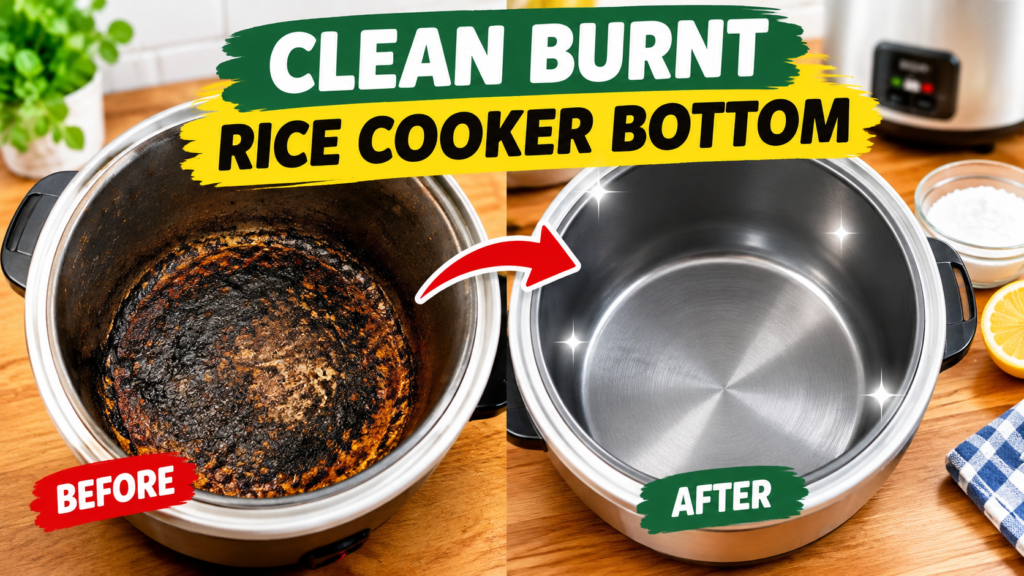
Burnt rice stuck to the pot happens to almost every home cook. Too little water or a long keep-warm stretch can leave a brown, stuck-on layer. Learning how to clean burnt rice cooker bottom gently matters because harsh scrubbing can damage the inner pot and shorten its life.
You will learn why rice scorches, what to check first, a six-step cleaning routine, how to treat the heating plate, and how to prevent a repeat.
This article is for general educational and buying-guidance purposes only. It does not replace the manufacturer’s official manual, food safety guidance, or professional advice. Materials, specifications, and care instructions can vary by product and should be confirmed with the manufacturer before purchase or use. For product defects, suspected food-safety issues, or injuries such as burns or cuts, contact the manufacturer, a qualified professional, or seek medical help as needed.
Why Rice Burns on the Bottom of a Cooker
Rice cookers heat from below. When the water is gone, the bottom layer of starch keeps heating, then browns and sticks. Common causes include too little water, unrinsed rice, and leaving cooked rice on keep-warm for hours.
Experienced home cooks often catch a toasty smell near the end of the cycle. That can be a hint to check your water amount next time.
Note: A light golden crust is sometimes wanted in certain rice dishes. This guide covers unwanted, burnt, stuck-on residue.
Table 1: Cleaning Methods Compared
Here is the basic routine at a glance.
Notice that scrubbing comes third. Soaking first does most of the work, so you use less force and protect the surface of the pot.
What to Check Before You Clean
Look at the pot material first. Many inner pots have a non-stick coating, while others are stainless steel. Your manual usually says which tools to avoid and whether the pot is dishwasher-safe. Check the manufacturer’s guidance if you are unsure.
Make sure the cooker is unplugged and cool. Only the removable inner pot should be soaked. The base, cord, and controls must stay dry.
Realistic example: you finish dinner and find a thin brown crust. Choose a simple soak if you have time. Choose a baking soda paste if the crust is thin but stubborn. Avoid scrubbing while the pot is hot or the coating looks worn.
Safety: Never submerge the cooker base, plug, or cord in water. If the cord or plug is damaged, stop using the cooker and contact the manufacturer.
How to Clean Burnt Rice Cooker Bottom Step by Step
This routine suits most removable inner pots. Follow your manual first.
Choose this routine if the inner pot is removable. Check the manufacturer’s guidance if your pot is fixed to the base or the manual gives different care steps.
Tip: If residue stays, soak again instead of scrubbing harder. Repeated soaking is gentler on the surface.
Table 2: Common Problems and Likely Causes
Many people searching how to clean burnt rice cooker bottom wonder when to stop. Use this decision path.
Stopping early protects the pot. Persistent damage is a question for the manufacturer, not a reason to scrub harder.
Care Tips by Pot Material
The right amount of pressure depends on the pot. A method that suits stainless steel may not suit a coated surface. For general consumer food-safety information, the U.S. Food and Drug Administration is a helpful starting point.
Use soft sponges and silicone tools. Avoid steel wool and sharp scrapers that may scratch the surface.
These often tolerate firmer cleaning. Still start gently and check the manual before using stronger tools.
Specialty finishes vary by brand. Follow the manufacturer’s care page for cleaning limits.
Check labels or search the model number. If unsure, treat the pot as coated and stay gentle.
Use this quick checklist after every cleaning.
If every box is ticked, the cooker is ready for the next batch. If one is missing, fix it before plugging in.
Cleaning the Heating Plate and Outside Bottom
Starch or grains can land on the heating plate inside the cooker. Once it is unplugged and cool, wipe the plate with a barely damp cloth or a dry soft brush. Wipe the outside of the inner pot dry before putting it back, as many manuals advise.
If your cooker has a removable lid or steam vent, wash the parts your manual lists as removable. Starchy residue can collect there and cause lingering smells.
Warning: Do not use a knife, metal scraper, or wire brush on the heating plate, and never pour water into the base.
Table 3: Safer Practices vs Risky Practices
Tools and Cleaners That Fit the Job
No special products are needed. However you approach how to clean burnt rice cooker bottom, soaking first and scrubbing second is the safest order. Most homes already have mild dish soap, baking soda, and a soft sponge.
Table 4: Tool and Material Fit
Match the tool to your pot.
When in doubt, choose the gentler tool. You can always step up later, but you cannot undo a scratch.
How to Prevent Burnt Rice Next Time
Once you know how to clean burnt rice cooker bottom, prevention is the easier half. Rinse rice until the water looks clearer, use the measuring cup and water lines that came with your cooker, and stay under the max line.
Do not leave rice on keep-warm longer than the manual allows. Refrigerate leftovers promptly in a shallow container, and see FoodSafety.gov for general leftover guidance.
Wash the pot soon after serving. Fresh starch rinses off far more easily than dried starch. If you cook rice often, a quick wipe of the cool heating plate area can keep buildup small.
Table 5: Mistakes and Better Choices
This bar chart is a practical guide, not scientific data.
Soaking and gentle tools lead the routine, while rinsing the rice helps prevent the next mess.
When to Contact the Manufacturer or a Professional
Contact the manufacturer if the coating flakes, the heating plate looks damaged, or the cord or plug is damaged. Do not repair electrical parts yourself. Seek medical help for burns, and follow emergency procedures for smoke or fire. You can also review product safety information from the U.S. Consumer Product Safety Commission.
This article may contain affiliate links. If you buy through these links, we may earn a small commission at no extra cost to you. We only mention products that fit the topic and recommend checking current specs and care instructions directly with the manufacturer.
Gentle Tools That May Help
Many home cooks find this convenient for loosening softened residue without metal tools. Confirm it is labeled safe for your pot’s surface.
These can make everyday pot cleaning easier after a soak. Check the care guidance for your cooker before use.
Frequently Asked Questions
How to clean burnt rice cooker bottom without scratching it?
Soak the removable inner pot in warm soapy water, then use a soft sponge or baking soda paste. Avoid steel wool and sharp scrapers.
Can I use baking soda on a rice cooker pot?
Often yes, as a mild paste on the removable inner pot. Check the manual first, especially for coated pots.
Is it safe to keep using a pot with a burnt bottom?
Remove burnt residue first. If the coating is flaking or peeling, stop using the pot and contact the manufacturer.
Can the inner pot go in the dishwasher?
Some are labeled dishwasher-safe and some are not. Check the manual, since heat and detergent may wear certain coatings.
How do I remove a burnt smell from my rice cooker?
Wash the inner pot and removable parts, wipe the cool heating plate, and dry everything fully. A baking soda soak may help lingering odors.
Is vinegar safe for cleaning a rice cooker pot?
Diluted white vinegar may help with cloudy mineral marks. Rinse well, check the manual first, and never mix it with bleach.
How often should I clean my rice cooker?
Wash the inner pot after each use and wipe the heating plate when it is cool and unplugged. Clean other removable parts as your manual suggests.
Final Thoughts
Now that you know how to clean burnt rice cooker bottom safely, remember the basics: soak first, use soft tools, and keep the base dry. Check your manufacturer’s instructions for material and care rules, follow food-safety guidance for leftovers, and seek professional or medical help for serious problems.
