
By Olivia Bennett
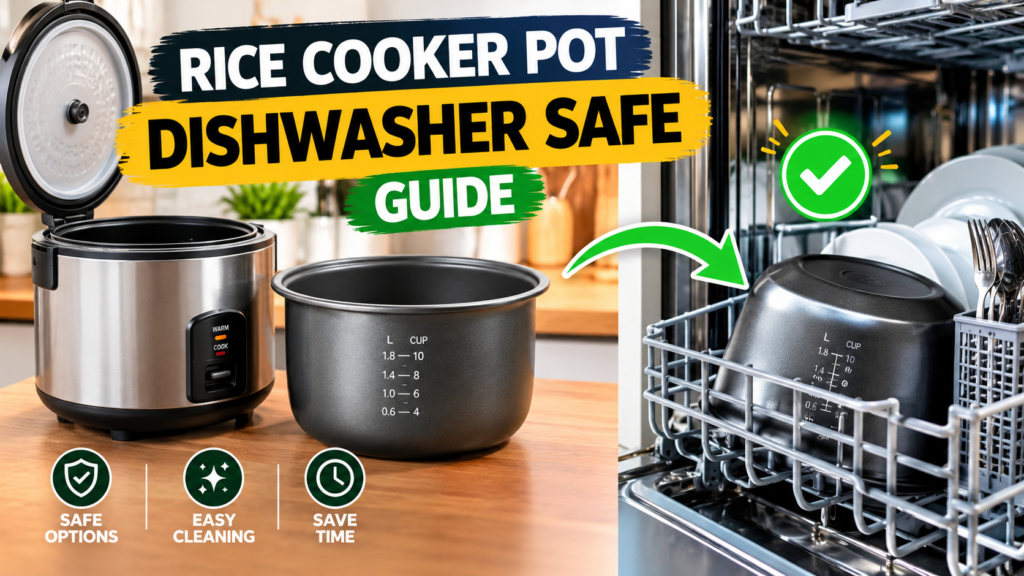
Quick Answer: Some rice cooker pots are dishwasher safe, but not all. Check your manual or the label first. Coated pots often last longer with gentle hand washing, and the cooker base should never go in water or the dishwasher.
Rice Cooker Pot Dishwasher Safe Guide for Everyday Cooks
A rice cooker makes dinner easier, but cleanup can leave people guessing. Tossing the inner pot in the dishwasher feels simple, yet the wrong cycle or detergent may dull a surface or wear a coating. Here you will learn what dishwasher safe really means, how to check your pot, and how to clean it safely. You will also see which parts need extra care and when to ask the maker for help.
Accuracy and Safety Disclaimer: This article is for general educational and buying-guidance purposes only. It does not replace the manufacturer’s official manual, food safety guidance, or professional advice. Materials, specifications, and care instructions can vary by product and should be confirmed with the manufacturer before purchase or use. For product defects, suspected food-safety issues, or injuries such as burns or cuts, contact the manufacturer, a qualified professional, or seek medical help as needed.
What Dishwasher Safe Means for a Rice Cooker Pot
Dishwasher safe means the maker says a part can handle the heat, water pressure, and detergent in a home dishwasher. It does not promise the part will look new forever. Many inner pots have a coating, and coatings can wear faster with harsh cycles. A pot can be safe to wash and still last longer when you wash it by hand.
Designs vary. Some pots are coated aluminum, while others are stainless steel or ceramic-style. The label on the pot and your manual matter more than guesses.
Choose the dishwasher if the manual clearly allows it and you want faster cleanup. Choose hand washing if the pot is coated, the label has worn off, or you cannot find the manual.
Note: A dishwasher-safe pot is not the same as a dishwasher-safe cooker. The base, heating plate, and cord should stay out of water.
How to Use This Rice Cooker Pot Dishwasher Safe Guide
Before you load the rack, run through a quick check. This routine fits most home kitchens.
Practical guide: Pot check routine
If the wording is unclear, hand washing is the lower-risk choice. Check the manufacturer’s guidance if your pot is a replacement part, since another brand’s pot may follow different rules.
Common Inner Pot Types Compared
Rice Cooker Parts That Need Different Care
The inner pot gets the most attention, but other parts collect residue too. A good rice cooker pot dishwasher safe guide should also cover the lid, vent cap, condensation collector, measuring cup, and rice paddle. Each may have its own rule, so check the manual for every removable part.
Warning: Never submerge the cooker base or cord. Unplug the unit and let it cool before cleaning. If the cord is frayed or the base looks damaged, stop using it and contact the manufacturer.
Example: after sticky sushi rice, a cook might soak the pot, rinse the paddle, and hand wash the lid parts because small vents hold starch.
Common Problems and Likely Causes
Step-by-Step: How to Clean a Rice Cooker Pot Safely
Follow these steps whether or not your manual allows the dishwasher.
- Unplug and cool. Unplug the cooker and wait until the pot is cool to the touch. Hot metal can burn skin.
- Store the leftovers. Move leftover cooked rice to a clean container and refrigerate it within two hours, as FoodSafety.gov advises.
- Soak if needed. Add warm water and a drop of mild dish soap. Let it sit 10 to 20 minutes.
- Wash gently. Use a soft sponge. Skip steel wool, scouring powder, and metal tools.
- Pick your method. If the manual says the pot is dishwasher safe, follow its rack advice. Otherwise rinse by hand until the water runs clear.
- Dry and store. Dry the pot and lid parts fully. Wipe the base with a damp cloth and store with the lid slightly open.
Tip: Rinse the pot soon after serving. Starch is easier to remove while it is still soft.
Dishwasher or Hand Washing: Which Fits Your Pot?
Dishwashers save time. Hand washing gives you more control over heat, detergent, and scrubbing. For coated pots, many home cooks find hand washing gentler. For sturdy pots with clear dishwasher-safe wording, the dishwasher may work well. In any rice cooker pot dishwasher safe guide, the manual should have the final say.
Safe Practice vs Risky Practice
Use this checklist after each wash.
Care checklist dashboard
A quick scan each week can catch small problems early, before they turn into worn coatings.
When to Stop Using a Rice Cooker Pot
Sometimes the safest choice is to stop and ask the maker. Use this path when something looks wrong.
Safety path
Flaking coating, deep scratches, and cracks deserve attention. Simple stains are less urgent, but they are a cue to review your routine.
Safety Note: Do not use a cooker with a damaged cord, a cracked pot, a burning smell, or exposed wiring. Unplug it if it is safe to do so. Do not attempt electrical repairs yourself.
Replacement Parts and Care Tools Worth Considering
If your pot is worn, a matching replacement or gentler tools may help, and this rice cooker pot dishwasher safe guide includes two optional ideas. Use the table to match each item to the problem.
Care Tool and Part Fit
This chart shows relative fit, not test results.
Practical guide: Tool fit by situation
Match the tool to the problem. A new sponge rarely fixes a flaking coating.
This article may contain affiliate links. If you buy through these links, we may earn a small commission at no extra cost to you. We only mention products that fit the topic and recommend checking current specs and care instructions directly with the manufacturer.
Replacement Rice Cooker Inner Pot
A worn or warped pot can sometimes be replaced instead of the whole cooker. Match your model number with the manufacturer, and avoid unknown sellers.
Soft Sponges for Coated Cookware
A soft sponge may help lift starch with less scrubbing pressure. Check the product description to confirm it suits nonstick surfaces.
Mistakes to Avoid and Better Choices
Mistake vs Better Choice
This bar chart shows typical routine priority, not scientific data.
Practical guide: Typical routine priority
Relative guide only
Manual checks and drying matter most for daily care. Everything else supports those two habits.
When to Contact the Manufacturer or a Professional: Reach out if the coating flakes, the pot warps, the cord is damaged, or the cooker trips a breaker or smells like burning.
If this rice cooker pot dishwasher safe guide and your manual disagree, follow the manual. For product hazards, you can also review CPSC resources. For burns or cuts, seek medical help.
Frequently Asked Questions
Is a rice cooker pot dishwasher safe?
Sometimes. It depends on the model and material. Check the manual or label, and hand wash with mild soap if you are unsure.
Can I put a nonstick rice cooker pot in the dishwasher?
Only if the manufacturer says so. Many makers suggest gentle hand washing to protect the coating.
Is the rice cooker lid dishwasher safe?
Some removable lid parts are, and others are not. Check the manual, and never submerge the cooker base or cord.
How do I remove stuck rice from the pot?
Soak with warm water and mild soap for 10 to 20 minutes. Then use a soft sponge and avoid metal tools.
When should I replace a rice cooker inner pot?
Consider replacing it if the coating flakes or peels, deep scratches appear, or the pot warps or cracks. Ask the manufacturer for a matching part.
Why does my rice cooker pot look cloudy after washing?
Cloudiness can come from mineral residue or detergent film. Rinse well, dry fully, and check the manual for gentle cleaning advice.
Final Thoughts
Use this rice cooker pot dishwasher safe guide as a starting point, then confirm details in your manual. Check the material and care rules for your exact model, follow food-safety guidance for leftover rice, and keep the cooker base dry. For flaking coatings, damaged cords, burns, or cuts, contact the manufacturer or seek medical help.
