
By Michael Hayes
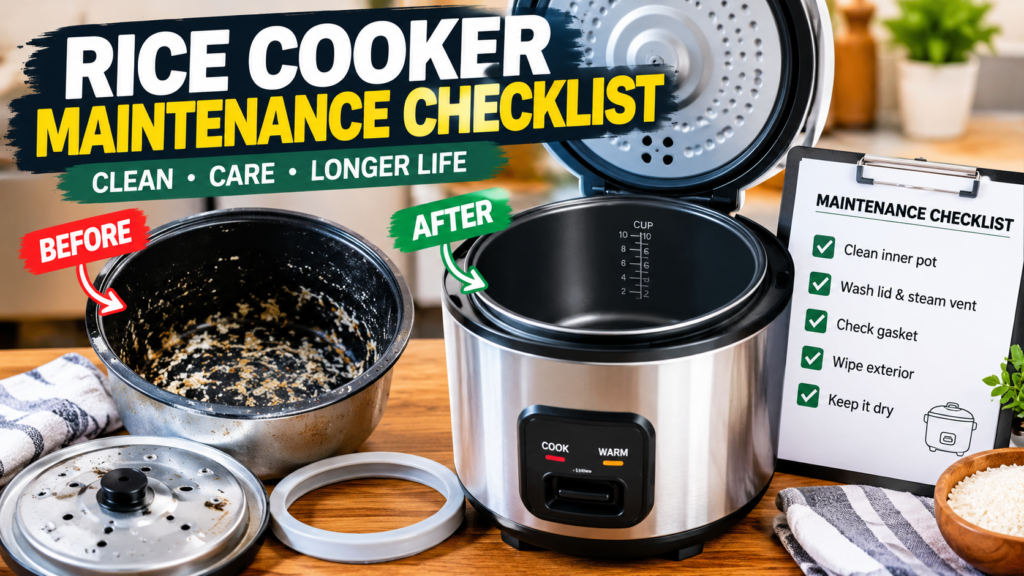
Quick Answer: A simple rice cooker maintenance checklist is to unplug and cool the cooker, wash the inner pot and lid parts after each use, wipe the base and rim, clear the steam vent weekly, check the cord, and dry everything fully. Follow your manual first.
Why Rice Cooker Care Is Worth Two Minutes
Every batch of rice sends starch, steam, and moisture through the same pot, lid, and vent. Without regular care, you may notice sticky residue, stale smells, or rice that clings to the pot. This rice cooker maintenance checklist explains what to clean, how often to do it, and when to stop and ask the manufacturer for help.
You will learn how to clean each part safely, spot common problems, and decide when a repair or replacement makes sense.
This article is for general educational and buying-guidance purposes only. It does not replace the manufacturer’s official manual, food safety guidance, or professional advice. Materials, specifications, and care instructions can vary by product and should be confirmed with the manufacturer before purchase or use. For product defects, suspected food-safety issues, or injuries such as burns or cuts, contact the manufacturer, a qualified professional, or seek medical help as needed.
Why a Rice Cooker Maintenance Checklist Matters
Rice releases starch and steam every time it cooks. Over time, that can leave a film on the pot, clog the steam vent, and trap odors in the lid. Good care may also help rice cook more evenly. Beginners can check this by looking for cloudy residue or a sour smell. Experienced cooks often notice the lid feels sticky before anything else looks wrong.
For example, if you made rice with butter and broth on a busy weeknight, wash the pot that night instead of letting it sit. Choose a quick rinse and wipe after plain rice. Choose a deeper clean after sauces, oil, or add-ins. Check the manufacturer’s guidance if you are unsure which parts are dishwasher safe.
Know the Four Parts That Need Care
Most models share the same basic parts. Your manual shows which ones are removable.
Inner Pot
This is where rice touches the surface. Many pots have a nonstick coating, so a soft sponge is usually the safer choice.
Lid and Inner Lid
Steam and starch collect here. Remove detachable pieces if the manual allows it, and wash them gently.
Steam Vent and Condensation Cup
Small openings clog easily. Clear them with a soft brush so steam can escape as designed.
Base, Heating Plate, and Cord
These parts never go in water. Wipe them with a damp cloth while unplugged, and check the cord for damage.
Daily, Weekly, and Monthly Care Schedule
Spreading tasks out keeps each one short. Here is a practical schedule many home cooks find easy to follow.
Care Schedule Comparison
This dashboard turns the schedule into a quick visual reminder.
Care Checklist Dashboard
Wash the pot and lid parts. Wipe the rim and let everything dry.
Clear the vent and condensation cup. Look for rice grains in corners.
Deep clean the lid area. Inspect the cord and plug.
Check the pot coating for wear. Confirm the lid still fits well.
Use this as a reminder, not a strict rule. Heavy users may need to clean more often.
Step-by-Step Cleaning After Each Use
Follow this routine every time. It is the heart of any rice cooker maintenance checklist.
Here is the after-cooking routine at a glance.
Routine Process Flow
Most of the time is cooling and drying, so the active work is short.
- Unplug and cool. Unplug the cooker and let it cool before touching any parts.
- Remove parts. Take out the inner pot and any detachable lid pieces.
- Wash gently. Use warm water, mild dish soap, and a soft sponge.
- Wipe the base. Use a barely damp cloth on the rim and exterior. Never pour water into the base.
- Check the vent. Look for rice grains or film and wipe them away.
- Dry fully. Air dry parts before reassembling to limit moisture and odors.
Deep Cleaning the Lid, Vent, and Heating Plate
Once a month, give hidden spots extra attention. Wipe the inner lid, gasket area, and vent with a soft cloth, and use a cotton swab for tight corners. If the heating plate has stuck-on grains, wait until it is cool and unplugged, then wipe it with a lightly damp cloth.
Tip: If your manual allows it, a short soak in warm water with mild dish soap loosens dried starch better than hard scrubbing. Avoid steel wool and scouring powder on coated surfaces.
Part-by-Part Care Fit
Not every cleaning tool suits every part. This dashboard shows how common tools tend to fit.
Cleaning Tool Fit Dashboard
Works for most pots and lids. Replace it when it wears down.
Reaches vent edges and corners. It is gentle on small parts.
Many manuals recommend non-metal paddles. Check yours first.
It can scratch coatings. Scratches may make rice stick more.
When in doubt, pick the softest tool that still removes the residue.
Safety Rules for Daily Use
Rice cookers use electricity and release hot steam, so a few habits reduce risk. Always unplug before cleaning, keep the cord dry, and never use a cooker with a cracked housing or damaged plug. Check the manufacturer’s guidance if your model has special care rules.
Safe Practice vs Risky Practice
Safety Note: Never submerge the base, and never repair the cord or internal wiring yourself. Electrical problems need the manufacturer or a qualified technician.
Warning: Hot steam can cause burns. Keep your face and hands away from the vent when opening the lid.
Troubleshooting Common Rice Cooker Problems
Many issues start with buildup rather than a broken cooker. Troubleshooting is a natural part of any good rice cooker maintenance checklist, so start with the simple checks below.
Problem vs Likely Cause
Use this path when something seems off.
Safety Decision Path
When in doubt, stop first and ask later.
Cooked Rice Safety and Keep-Warm Habits
Cleaning is only half the story. Cooked rice can cause food poisoning if it sits out too long. Refrigerate leftovers promptly, generally within about two hours, and reheat until steaming hot. For current guidance, see FoodSafety.gov and the USDA.
Note: Keep-warm is meant for short holding, not storage. Check your manual for its recommended limits.
Not every task carries the same weight. This chart ranks them as a simple practical guide.
Typical Routine Priority
Practical guide only, not scientific or lab-tested data.
Longer bars mean more frequent attention. The cord check is quick but still matters for safety.
Repair, Replace, or Call the Manufacturer
Cleaning cannot fix everything. If the coating peels, the lid no longer seals, or the cooker trips a breaker, it may be time for help. Check your warranty and contact support. You can also find product safety information at CPSC.gov.
DIY vs Manufacturer Help
When to Contact the Manufacturer: Reach out if you see a damaged cord, hear unusual buzzing, smell burning, or notice the cooker not heating. For burns or suspected food-safety issues, seek medical help or professional guidance as needed.
Frequently Asked Questions
What should a rice cooker maintenance checklist include?
It should include unplugging and cooling the cooker, washing the inner pot and lid parts, wiping the base, clearing the steam vent, checking the cord, and drying everything. Always follow your manual.
How often should I clean my rice cooker?
Wash removable parts after each use. Clear the vent weekly and deep clean the lid area monthly, or sooner if you cook sticky or oily dishes.
Can I put the inner pot in the dishwasher?
Some pots are dishwasher safe and some are not. Check the manual, because heat and strong detergents can wear down coatings.
How do I remove rice smell from my cooker?
Wash all removable parts, wipe the vent and lid area, and air dry fully. If your manual allows it, a mild soap soak may help.
Is it safe to leave cooked rice on keep-warm?
Cooked rice should not sit for long. Follow your manual’s guidance, refrigerate leftovers promptly, and reheat until steaming hot.
When should I replace my rice cooker?
Consider replacing it if the cord is damaged, the pot coating is peeling, or it no longer heats reliably. Contact the manufacturer first.
Final Thoughts
A short routine keeps your cooker cleaner, safer, and easier to use. Keep this rice cooker maintenance checklist handy, confirm care rules in your manual, and follow food-safety guidance for leftovers. If you notice a damaged cord, burns, or a serious product problem, stop using the cooker and contact the manufacturer or seek medical help.
