By Michael Hayes — RecipeTalkToday
A frying pan is one of the most-used tools in any kitchen, which also means it takes the most daily wear. Learning how to care for a frying pan properly can help it perform better for longer, whether you’re working with a nonstick skillet, a stainless steel sauté pan, or a cast iron classic. This guide walks through cleaning, drying, storage, and the small daily habits that make the biggest difference.
Frying Pan Care
Nonstick Cookware
Cast Iron Maintenance
Kitchen Cleaning Tips
Cookware Storage
Why Frying Pan Care Actually Matters
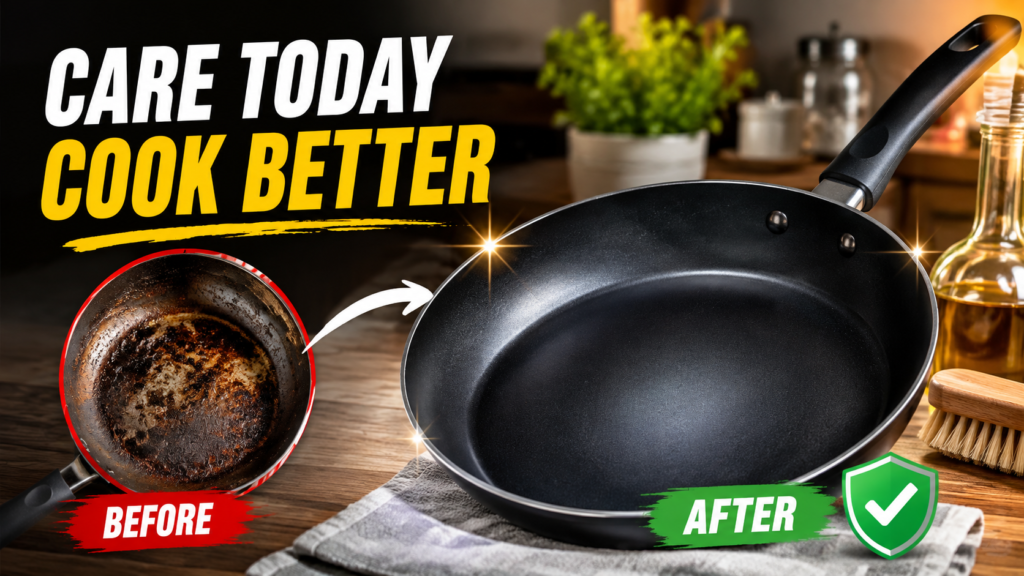
Most people only think about how to care for a frying pan after it starts sticking, warping, or losing its finish. By then, some of the damage is already done. Regular care protects the cooking surface, keeps food from picking up off-flavors, and helps the pan heat evenly. In daily cooking, I usually notice that pans which get rinsed and dried right away tend to keep their surface looking newer for much longer than pans left to soak overnight.
Ignoring basic care can lead to a few common problems: nonstick coatings that flake or lose their release properties, stainless steel that develops stubborn burnt-on spots, and cast iron or carbon steel that rusts. None of these problems happen instantly — they build up from small habits repeated over weeks and months.
How Pan Material Changes the Way You Care for It
There isn’t one universal answer for how to care for a frying pan, because the right approach depends heavily on what the pan is made from. Nonstick, stainless steel, cast iron, and carbon steel all react differently to heat, soap, and metal tools.
Frying Pan Material Comparison
Daily Care Routine at a Glance
This five-step routine applies to most pan types and takes just a few extra minutes after cooking.
Step-by-Step: How to Care for a Frying Pan After Cooking
Let the pan cool for a few minutes before touching it with cold water. A sudden temperature change can warp some pans and is a common cause of surface stress over time.
Scrape out loose food with a soft spatula rather than a metal one, especially on nonstick and coated surfaces.
Wash with warm water and a mild dish soap using a soft sponge. Check the manufacturer’s guidance if you’re unsure whether your pan is dishwasher safe.
Dry the pan completely with a towel right after washing. Air-drying alone can leave moisture in corners and rivets, which is often where rust starts on iron and carbon steel pans.
For cast iron or carbon steel, apply a very thin layer of cooking oil after drying to help protect the surface between uses.
Store the pan so nothing heavy rests directly on the cooking surface. A towel, pan protector, or hanging rack can help prevent scratches.
Safety and Hygiene Checks
Always let a hot pan cool before washing to reduce the risk of steam burns or cracked cookware from thermal shock. Never use a frying pan with a badly damaged handle, deep coating scratches you suspect may be flaking into food, or visible warping, since these can affect both safety and cooking performance. If you notice persistent flaking, an unusual odor that doesn’t go away after washing, or a handle that feels loose, stop using the pan and check the manufacturer’s guidance before cooking with it again.
Common Problems and Likely Causes
Safe vs. Risky Cleaning Practices
Cleaning Practice Comparison
Troubleshooting Decision Path
Common Mistakes When Caring for a Frying Pan
Mistake vs. Better Choice
What Experienced Home Cooks Check That Beginners Miss
Experienced cooks check that screws or rivets are tight and that no moisture is trapped around them, since this is a common spot for hidden rust or looseness over time.
Watching how evenly a pan heats can reveal early warping before it becomes obvious, which helps you adjust care habits sooner.
Many home cooks find that switching to soft utensils across all pans, not just nonstick ones, reduces scratches and extends the life of coatings.
Giving pans a little breathing room in storage, rather than tightly nesting them, can help prevent surface-to-surface scratching.
Weekly and Monthly Maintenance Checklist
This is a general routine — always check the manufacturer’s guidance for your specific pan.
Choosing the Right Cleaning Tools for Your Pan
Tool Fit by Pan Material
Relative Priority of Care Habits
This reflects a typical routine priority for daily care, not a lab-tested ranking.
Helpful Tools for Everyday Pan Care
A soft, heat-resistant utensil set can help protect nonstick and coated surfaces from scratches during everyday cooking.
Absorbent microfiber towels can make it easier to dry a pan fully right after washing, which many home cooks find convenient for reducing rust risk on iron and carbon steel.
Placing a felt protector between stacked pans can help reduce surface scratching in cabinets and drawers during daily storage.
When to Contact a Professional or the Manufacturer
Reach out to the manufacturer if your pan is under warranty and shows unexpected coating failure, persistent warping, or a handle that has loosened despite normal use. Contact a qualified professional or seek medical help right away for any burn or cut that seems deep, won’t stop bleeding, or shows signs of infection. If you suspect a food-safety issue tied to a damaged or flaking cooking surface, stop using the pan and check current guidance from the manufacturer or a food safety resource before cooking with it again.
Trusted Sources for Further Reading
For general food safety and consumer product guidance related to cookware, you can review resources from FoodSafety.gov and the Consumer Product Safety Commission, and always check your pan’s official manual for material-specific care instructions.
Frequently Asked Questions
How often should I re-season a cast iron frying pan?
Many home cooks re-oil lightly after most uses and do a fuller seasoning a few times a year, depending on how often the pan is used and how it’s stored.
Is it safe to put a nonstick frying pan in the dishwasher?
This depends on the specific product. Some nonstick pans are labeled dishwasher safe while others aren’t, so check the manufacturer’s care instructions before assuming either way.
Why is my frying pan sticking even though I clean it regularly?
Sticking often points to a worn coating, missing seasoning, or not preheating the pan enough before adding food, rather than a cleaning problem.
Can I use metal utensils on a stainless steel frying pan?
Stainless steel generally tolerates metal utensils better than nonstick coatings do, but softer utensils can still help reduce scratches over time.
How do I remove light rust from a carbon steel frying pan?
Light rust can often be gently scrubbed off with a stiff brush or coarse salt, followed by drying and a thin layer of oil. For heavier rust, check the manufacturer’s restoration guidance.
How should I store frying pans to keep them in good condition?
Storing pans with a cloth or protector between them, or hanging them individually, can help prevent scratches compared with stacking them directly on top of each other.
When should I replace a frying pan instead of continuing to care for it?
If a coating is flaking noticeably, the pan is significantly warped, or the handle stays loose after tightening, it’s worth checking with the manufacturer about whether continued use is appropriate.
Learning how to care for a frying pan doesn’t require anything complicated — cooling it before washing, cleaning it gently, drying it fully, and storing it thoughtfully covers most of what keeps cookware performing well. Always confirm specific care instructions with your pan’s manufacturer, and seek professional or medical help for any injury, persistent product issue, or food-safety concern.
— RecipeTalkToday