
By Michael Hayes — RecipeTalkToday
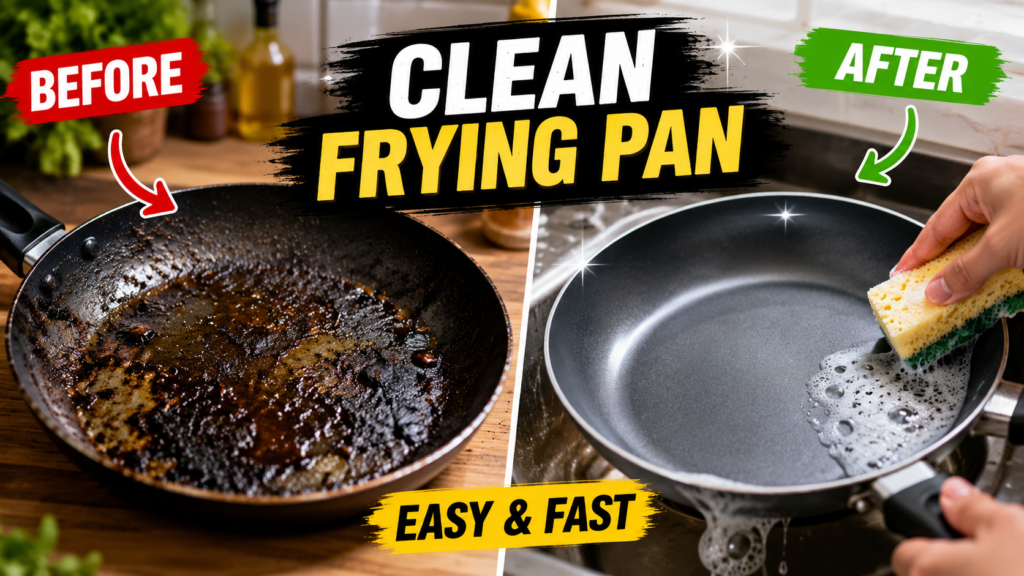
Most home cooks learn how to clean frying pan after use through trial and error — usually after scrubbing off a nonstick coating or watching stainless steel discolor. This guide walks through a routine that works for common pan materials, plus the mistakes that quietly shorten a pan’s life.
Nonstick Care
Stainless Steel
Cast Iron
Kitchen Cleaning
Cookware Safety
Why Cleaning Habits Matter for Every Pan
The way you clean a pan affects how long it lasts and how food tastes the next time you cook. Leftover oil that turns sticky, food residue that hardens, or moisture trapped under a lid can all lead to rust, uneven cooking, or a coating that wears out faster than it should. In daily cooking, I usually notice that the pans that last longest are the ones cleaned the same day, not left to sit overnight.
Skipping a proper cleaning routine doesn’t just look messy. Built-up grease can smoke the next time the pan heats up, and trapped moisture on cast iron or carbon steel can start rust within a day. A short cleaning step after each meal prevents most of these problems before they start.
How Pan Material Changes the Right Method
There isn’t one universal answer for how to clean frying pan after use, because nonstick, stainless steel, and cast iron respond differently to heat, water, and scrubbing. Using the same method on all three is one of the most common ways cookware gets damaged early.
Nonstick Pans
Nonstick coatings are the most sensitive to heat shock and abrasive scrubbing. Let the pan cool before washing, and use a soft sponge with warm, soapy water. Avoid metal scouring pads, which can scratch the coating over time.
Stainless Steel Pans
Stainless steel can handle more scrubbing but still benefits from cooling slightly before contact with cold water, which can warp thinner pans. A mix of warm water and dish soap, plus a non-scratch scrub pad for stuck-on food, usually works well.
Cast Iron Pans
Cast iron generally should not sit in water or go through a dishwasher. A quick rinse, a soft brush, and a full dry (often on low heat) followed by a thin layer of oil helps prevent rust and keeps the seasoning intact.
Typical after-meal routine:
This basic flow applies to most pans, though timing and tools shift depending on the surface.
Step-by-Step: A Practical Routine
Here’s a general step-by-step approach for how to clean frying pan after use, useful as a starting checklist before adjusting for your specific pan material.
Let the pan cool for a few minutes off the heat. Plunging a hot pan into cold water can warp metal or crack a hot coating.
Scrape out loose food with a spatula before washing, so less residue reaches the sponge or drain.
Choose warm, soapy water for most materials, or a soft brush and hot water for cast iron.
For stuck-on residue, soak briefly in warm water rather than scraping hard with a metal tool.
Rinse thoroughly to remove soap residue, which can affect the taste of the next dish if left behind.
Dry the pan completely with a towel, since leftover moisture is a common cause of rust and spotting.
Store the pan somewhere it won’t get scratched by stacking, and add a light oil coat if it’s cast iron or carbon steel.
Comparing Cleaning Approaches by Material
Common Problems and What They Usually Mean
If a pan looks discolored, sticky, or starts to smell after washing, something in the routine likely needs adjusting rather than the pan being at the end of its life.
Problem vs Likely Cause
Common Mistakes That Shorten a Pan’s Life
Most damage happens gradually. These habits are worth noticing if you want your cookware to last several years instead of a few months.
Cold water on a hot pan can warp thin metal and stress nonstick coatings. Letting the pan cool for a few minutes avoids this.
Abrasive pads scratch coatings quickly. A soft sponge and a longer soak handle stuck food more safely.
Air-drying alone leaves moisture in corners and rivets, which is a common cause of rust on iron and steel pans.
Metal-on-metal contact in a cabinet can scratch surfaces over time. A towel or pan protector between pans helps.
Safety and Hygiene Checks
Beyond appearance, a pan needs to be genuinely clean before it touches the next meal. Food residue left in ridges or handles can harbor bacteria, and leftover soap can affect food safety if not rinsed properly.
Quick decision path if a pan looks off:
This is a general guide, not a substitute for checking your specific pan’s manual.
Safe vs Risky Cleaning Practices
What Experienced Home Cooks Notice
Beginners often stop at “looks clean,” while more experienced cooks check for residue in rivets, along the rim, and around the handle joint, since these spots are where grease and bacteria tend to build up unnoticed. Checking the pan’s underside is also worth doing occasionally, since burnt-on drips there can flake into future meals if never addressed.
You’re cleaning nonstick or lightly used stainless steel with minimal stuck food.
The pan is still hot — wait before washing to avoid warping or coating stress.
Tools That Can Make the Routine Easier
A non-scratch sponge can make daily cleanup easier on nonstick and coated pans without risking scratches.
A chainmail scrubber may support easier cleanup on cast iron without stripping seasoning the way harsher tools can.
Pan-and-Cleaning-Tool Fit
Typical routine priority (relative guide, not lab-tested data):
These are practical guides based on common cookware care habits, not scientific measurements.
Mistake vs Better Choice
Weekly care checklist dashboard:
Running through this list weekly helps catch small issues early, before they turn into bigger cookware problems.
Frequently Asked Questions
Do I need to wash a frying pan after every single use?
Yes, in most cases. Leaving oil or food residue on a pan between uses can lead to sticky buildup, off flavors, and in some cases bacterial growth if food particles remain.
Can I put my frying pan straight into cold water after cooking?
It’s better to let it cool for a few minutes first. Sudden temperature changes can warp thin metal pans and stress nonstick coatings over time.
Is it safe to use steel wool on any frying pan?
No. Steel wool is too abrasive for nonstick coatings and can scratch many stainless steel finishes. It’s generally reserved for uncoated cast iron.
Why does my cast iron pan rust even though I wash it?
Rust usually forms when moisture is left on the surface after washing. Drying fully, sometimes with brief low heat, and adding a thin oil layer helps prevent this.
Can I put my frying pan in the dishwasher?
It depends on the material and manufacturer guidance. Many nonstick and cast iron pans are not dishwasher-safe, so check the care label or manual before assuming it’s fine.
What should I do if my nonstick coating starts flaking?
Stop using the pan for cooking and check the manufacturer’s guidance on replacement, since flaking coating shouldn’t be consumed or reheated with food.
How long should I let a hot pan cool before cleaning it?
A few minutes off the heat is usually enough to avoid warping or coating stress, though it depends on how hot the pan got during cooking.
A consistent routine is really what how to clean frying pan after use comes down to: cool it, wash it in a way that fits the material, dry it completely, and store it carefully. Small habits like these add years to a pan’s usable life. Always confirm specific care instructions with your pan’s manufacturer, and seek professional or medical help for injuries, product defects, or ongoing food-safety concerns.
— RecipeTalkToday
