
By Emma Hayes — RecipeTalkToday
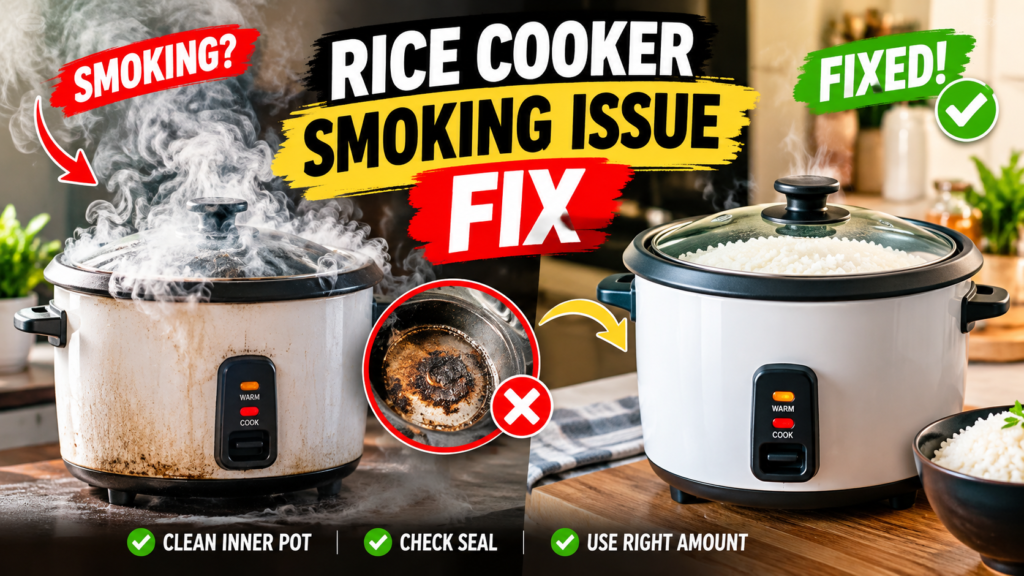
A little steam is normal, but real smoke from your rice cooker is a sign something needs attention. This guide walks through a practical rice cooker smoking issue fix, from quick checks beginners can do today to signs that call for professional help.
Rice Cooker Safety
Kitchen Appliance Care
Troubleshooting
Home Cooking
What Causes a Rice Cooker to Smoke?
Most home cooks notice smoke coming from the vent, the base, or around the lid. In daily cooking, I usually notice this happens after rice water boils over, or when starch builds up on the heating plate over time. A rice cooker smoking issue fix often starts with identifying which of these it is, since the cause changes what you should do next.
Common causes include overflow from too much water or rice, food residue burning on the heating element, a dirty or damaged power cord, or a worn internal thermostat. Some causes are simple cleaning fixes. Others may mean it’s time to check with the manufacturer.
Why This Matters for Kitchen Safety
A smoking appliance near an open kitchen isn’t just annoying — it can be an early warning sign. Ignoring it can lead to a damaged inner pot, a tripped breaker, or in rare cases, a small electrical fire. Many home cooks find that catching the issue early, rather than continuing to use the cooker, protects both the appliance and the kitchen.
How Rice Cookers Work — Where the Smoke Comes From
A rice cooker heats a metal plate under the inner pot to a set temperature, then holds or cycles heat once the water is absorbed. Smoke usually forms when something other than rice and water — like starch, oil, or spilled liquid — touches that hot plate and burns. Checking this area is often the fastest way home cooks resolve a rice cooker smoking issue fix on their own.
Before You Troubleshoot: What to Check First
Before opening up or unplugging anything, confirm three basics: the outlet and cord look intact, the smoke is coming from the cooker and not the stovetop nearby, and the unit has had a chance to cool down. Beginners can check this visually in under a minute. More experienced home cooks also check whether the smell is “burnt starch” (harmless once cleaned) versus “burning plastic or rubber” (a signal to stop using the unit).
Step-by-Step: How to Fix a Rice Cooker Smoking Issue
Unplug the rice cooker immediately and move it to a well-ventilated spot away from curtains or paper.
Let the unit cool for at least 20–30 minutes before touching the heating plate or base.
Remove the inner pot and check the heating plate for dried rice water, starch film, or burnt residue.
Wipe the plate gently with a soft, barely damp cloth. Avoid soaking the base, since it houses electrical parts.
Inspect the power cord and plug for fraying, discoloration, or a burning smell at the cord itself.
Once dry and clean, do a short water-only test cycle before cooking rice again.
If smoke returns with a clean, dry unit, stop use and check the manufacturer’s manual for next steps.
Comparison: Rice Cooker Types and Typical Smoke Triggers
Routine check flow — a practical order for a first-time rice cooker smoking issue fix:
In practice, most rice cooker smoking issue fix cases are resolved by the time you finish step 3, since burnt starch is the most frequent cause.
Common Problems and Likely Causes
Safety and Hygiene Checks
Decision path when smoke appears:
Safe vs. Risky Practices
Material Fit: Choosing Parts That Reduce Smoke Risk
Care and maintenance checklist (practical guide, not lab-tested data):
What Experienced Home Cooks Check That Beginners Miss
Condensation and starch can collect here and drip onto the plate. Wiping this area is often skipped by beginners.
A blocked vent can push steam and smoke back toward the base instead of releasing it safely.
Tightly wrapping the cord around the base over time can stress the insulation near the plug.
A brief odor on a brand-new unit is common, but it should fade after the first one or two cycles.
Fit dashboard — which kitchen setup suits which cooker style:
Matching your typical cooking routine to the cooker style can reduce the chance of overflow-related smoke.
Typical routine priority for checking a smoking rice cooker (relative guide, not scientific data):
Check for spills/overflow
Inspect cord/plug
Check vent/gasket
Consider professional check
When to DIY vs. When to Contact the Manufacturer
Soft microfiber cloths like these can make daily cooking easier by helping you wipe down the heating plate without scratching it, which many home cooks find convenient for routine maintenance.
If your inner pot’s coating is worn, a manufacturer-matched replacement pot may support more consistent results and can reduce the chance of residue burning onto the heating plate. Always confirm compatibility with your model before buying.
Frequently Asked Questions
Is it normal for a rice cooker to smoke a little on the first use?
A brief odor or light haze can happen as manufacturing residue burns off. It should fade after a cycle or two; if it doesn’t, check the manufacturer’s guidance.
What’s the fastest rice cooker smoking issue fix for burnt rice smell?
Unplug, let it cool, remove the pot, and gently wipe the heating plate. This resolves most cases caused by boil-over or spilled rice water.
Can I clean the heating plate with water?
Use a barely damp cloth only. Avoid pouring water directly onto the base, since it houses electrical components.
Why does my rice cooker smoke every time I use the sauté or multi-function mode?
This often points to oil or sauce residue on the plate from a previous cycle. Clean thoroughly after any non-rice function before your next use.
Is a smoking rice cooker a fire risk?
It can be, especially if the smoke smells like burning plastic or comes from the cord. Unplug it and keep it away from flammable materials until it’s checked.
Should I keep using my rice cooker if smoke happens occasionally?
Occasional light smoke tied to a spill is usually manageable with cleaning. Repeated or unexplained smoke is a signal to stop and contact the manufacturer.
Where can I find official safety information about kitchen appliances?
The Consumer Product Safety Commission and FoodSafety.gov both publish general kitchen appliance safety guidance you can check alongside your manufacturer’s manual.
Helpful references: U.S. Consumer Product Safety Commission and FoodSafety.gov for general kitchen appliance and food-safety guidance.
A rice cooker smoking issue fix is usually simple: unplug, cool, clean, and retest. But always confirm care instructions and part compatibility with your manufacturer, and seek professional or medical help right away for persistent smoke, product defects, or any burns or injuries. — RecipeTalkToday
