
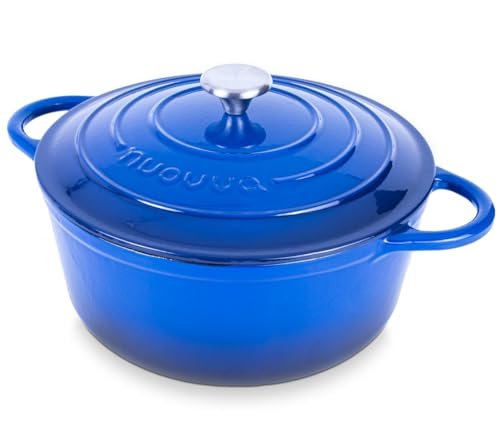

Is a Dutch Oven Good?
Yes. A Dutch oven is one of the most useful pieces of heavy cookware you can own. Its deep shape gives you space for soups, chili, stew, beans, pasta sauce, and large roasts. It also works well for slow cooking because the thick walls hold heat for a long time.
I like the Dutch oven most when dinner needs to stretch. A pot of chili can feed a family and still leave lunch for tomorrow. On a cold weekend, I can also use it for a slow beef stew or a loaf of crusty bread. It feels like a kitchen workhorse. The main trade-off is its height. It does not give you the same broad surface for browning as a braiser.
What Makes It Stand Out / Key Features
- Deep BodyThe tall sides hold a lot of food and liquid, which helps with soups, stews, beans, and large batches.
- Heat RetentionHeavy cast iron holds heat well and helps keep food at a steady cooking temperature.
- One Pot CookingYou can sear, simmer, braise, bake, and serve from the same pot.
- Large CapacityThe deep design works well for family meals, meal prep, and recipes with plenty of liquid.
- Oven FriendlyMany Dutch ovens are built for both stovetop and oven cooking, though the exact heat limit depends on the model.
- Bread BakingThe enclosed shape can trap steam, which helps create a crisp crust when baking bread.
My Recommendation
Consider a Dutch oven if you want one main pot for many jobs. It is especially useful for families, meal prep, soups, stews, chili, braises, and bread.
| Best For | Why |
|---|---|
| Families | The deep body gives you plenty of room for large meals. |
| Soup and Stew Fans | The tall walls hold liquid and food with ease. |
| Home Bread Bakers | The covered pot can create a moist baking environment. |
Is a Braiser Good?
It depends on how you cook. A braiser is a strong choice when you want a wide surface for browning meat and vegetables before adding liquid. Its low sides make it easy to see, turn, and move food. It also works well for shallow braises, chicken, pork, fish, vegetables, and skillet-style meals.
For weeknight cooking, I like the braiser when the meal starts with a good sear. Chicken thighs are a great example. I can brown them without crowding the pan, add vegetables and a little liquid, then cover the dish and let it finish slowly. The wide base is the star. The trade-off is capacity. A braiser usually cannot match the deep volume of a Dutch oven.
What Makes It Stand Out / Key Features
- Wide BaseThe broad cooking surface gives meat and vegetables more room to brown.
- Low SidesShorter walls make it easier to see, turn, and arrange food.
- Strong SearingThe wide surface helps reduce crowding when browning several pieces of food.
- Covered CookingThe lid traps moisture after searing, which helps with slow and gentle cooking.
- Easy ServingThe broad shape makes it simple to bring a finished dish from oven to table.
- Shallow BraisingThe shape works especially well for dishes where food sits in a modest amount of liquid.
My Recommendation
Consider a braiser if you often cook meat and vegetables that need a good sear first. It is also a great fit for shallow braises and attractive oven-to-table meals.
| Best For | Why |
|---|---|
| Searing Meat | The wide base gives food more room to brown. |
| Weeknight Meals | It moves easily from searing to covered cooking. |
| Table Service | The wide shape looks natural as a serving dish. |
Dutch Oven vs Braiser: Side-by-Side Test
Dutch Oven vs Braiser is less about which pan is good and more about which shape fits your meals. Both can sear, simmer, and braise. Their strengths show up when you look at depth and surface area.
Think of the Dutch oven as a deep bucket with a strong lid. Think of the braiser as a wide stage. One gives you depth. The other gives you room to spread food out.
Cooking Functions: Which Does More?
Both pans can handle many jobs, but the Dutch oven covers more types of cooking.
| Feature | Product 1 | Product 2 |
|---|---|---|
| Soups and stews | Excellent | Good for smaller batches |
| Braising | Excellent | Excellent |
| Searing | Very good | Excellent |
| Bread baking | Excellent | Limited |
⭐ Product A – 9/10 | Product B – 8/10
The Dutch oven has the edge for all-around cooking range.
Searing: Which Browns Better?
Searing needs surface space. This is where the braiser shape has a clear practical benefit.
| Feature | Product 1 | Product 2 |
|---|---|---|
| Cooking surface | Deep and narrower | Wide and open |
| Turning food | Good | Very easy |
| Crowding control | Good | Excellent |
⭐ Product A – 8/10 | Product B – 9/10
The braiser has the edge when browning several pieces of food.
Soups and Stews: Which Wins?
Liquid-heavy meals favor depth, so the Dutch oven feels more natural here.
| Feature | Product 1 | Product 2 |
|---|---|---|
| Liquid capacity | High | Moderate |
| Deep ingredients | Excellent | Fair |
| Large batches | Excellent | Good |
⭐ Product A – 10/10 | Product B – 7/10
The Dutch oven has the edge for soups, chili, and deep stews.
Braising: Which Fits Best?
Both pans are made for slow, covered cooking, but they approach it from different angles.
| Feature | Product 1 | Product 2 |
|---|---|---|
| Deep braises | Excellent | Good |
| Shallow braises | Very good | Excellent |
| Large cuts | Excellent | Very good |
| Easy food access | Good | Excellent |
⭐ Product A – 9/10 | Product B – 9/10
This round is close: the Dutch oven favors depth, while the braiser favors access and surface area.
Weeknight Use: Which Is Easier?
For busy nights, shape can matter as much as capacity.
| Feature | Product 1 | Product 2 |
|---|---|---|
| Fast prep | Very good | Excellent |
| Food visibility | Good | Excellent |
| One-pot meals | Excellent | Excellent |
| Serving from pan | Very good | Excellent |
⭐ Product A – 9/10 | Product B – 9/10
The two are closely matched, with the braiser feeling easier for shallow, fast meals.
Capacity: Which Holds More?
When you cook for a crowd, depth becomes a major advantage.
| Feature | Product 1 | Product 2 |
|---|---|---|
| Liquid volume | Usually higher | Usually lower |
| Tall ingredients | Excellent | Limited |
| Family-size meals | Excellent | Very good |
⭐ Product A – 10/10 | Product B – 8/10
The Dutch oven has the edge when you need depth and volume.
Storage and Handling: Which Is Easier?
Neither pan is light, so storage and handling deserve a close look.
| Feature | Product 1 | Product 2 |
|---|---|---|
| Vertical storage | Needs more shelf height | Usually easier |
| Lifting when full | Can be demanding | Can be demanding |
| Counter space | Compact footprint | Wider footprint |
⭐ Product A – 8/10 | Product B – 8/10
Storage is a draw because each shape creates a different space challenge.
Final Verdict: Which Should You Buy?
The Dutch Oven vs Braiser choice comes down to your cooking style. Pick the Dutch oven if you want one deep, flexible pot for soups, stews, chili, large braises, and bread. Its depth makes it a true all-rounder.
Pick the braiser if you cook more shallow dishes and want a wide surface for searing. It is especially handy for chicken, pork, vegetables, and meals that move from stovetop to oven. In simple terms, the Dutch oven is the broader tool. The braiser is the more focused tool. If you only want one piece of heavy cookware, the Dutch oven gives you more ways to use it.