
By Emma Hayes — RecipeTalkToday
Quick Answer: Juicing usually can’t fully replace meals long-term. Most juices strip out fiber and protein, so juicing can help as an occasional snack or supplement, but relying on it as a meal replacement for more than a day or two can leave you low on energy and key nutrients. Check with a doctor or dietitian before any extended juice-only plan.
Juicing has become a popular kitchen habit, and it’s easy to see why. A fresh glass of juice feels light, colorful, and refreshing. But when a busy morning turns into “I’ll just have juice instead of breakfast,” it’s worth understanding what your body actually gets — and doesn’t get — from that glass. This guide looks at what juicing does well, where it falls short as a meal replacement, and how to build a juicing routine that supports your day instead of leaving you running on empty.
Fiber & protein gaps
Kitchen setup tips
Safe daily routine
This article on RecipeTalkToday is for general educational and buying-guidance purposes only. It does not replace the manufacturer’s official manual, food safety guidance, or professional advice. Materials, specifications, and care instructions can vary by product and should be confirmed with the manufacturer before purchase or use. For product defects, suspected food-safety issues, or injuries such as burns or cuts, contact the manufacturer, a qualified professional, or seek medical help as needed.
What Happens When You Juice a Fruit or Vegetable
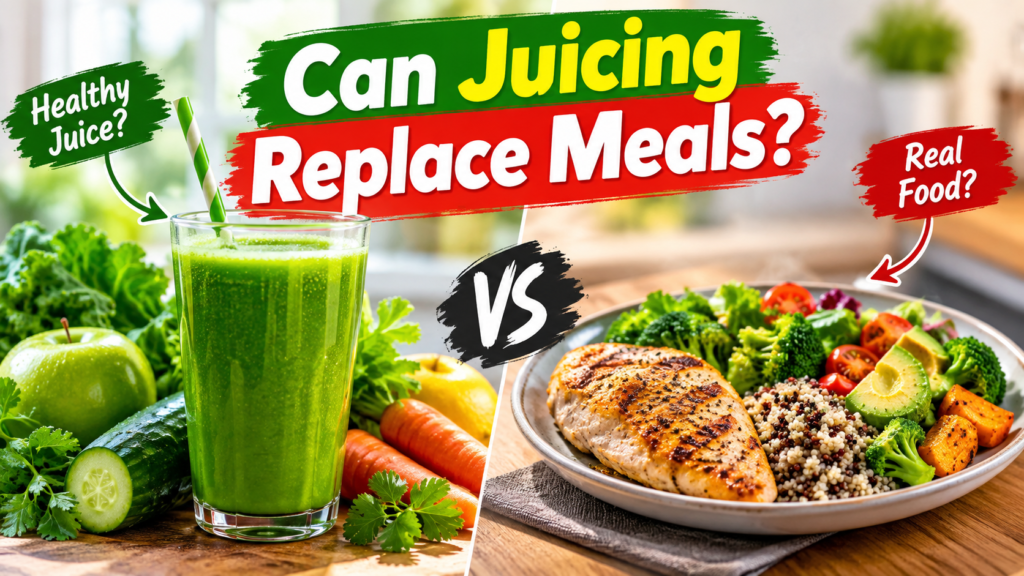
Juicing separates the liquid from a fruit or vegetable and leaves most of the solid fiber behind, either in a strainer basket or in pulp that gets pushed out separately. What’s left in your glass is mostly water, natural sugars, and some vitamins and minerals that dissolve into the liquid. This is different from blending a smoothie, which keeps the whole fruit or vegetable — fiber included — in the final drink.
Understanding this difference matters because it’s the fiber that helps you feel full, slows down sugar absorption, and supports digestion. When you ask whether juicing can replace meals, the honest answer starts with this trade-off: you’re drinking the “watery” part of the produce, not the whole food.
Comparison Table: Juicing vs Whole Food Meals vs Smoothies
Why Juicing Alone Struggles to Replace Meals
Meals do more than deliver calories. They provide protein for muscle repair, fat for hormone function and satiety, and fiber that keeps digestion steady and blood sugar more stable. A typical glass of juice concentrates natural sugar from several pieces of fruit or vegetables into one drink, without the fiber that would normally slow that sugar down. Many people notice a quick burst of energy after juicing, followed by a dip in energy an hour or two later, since there’s little left to keep blood sugar steady.
This is the core reason nutrition-focused sources generally caution against relying on juicing as a full meal replacement for more than a very short stretch. Occasional use — a glass with breakfast, or a snack between meals — is a very different question than replacing lunch and dinner with juice every day.
Typical daily routine flow when juicing is used as a supplement, not a meal replacement:
Regular breakfast with protein and fiber
Fresh juice as a mid-morning snack, not a meal swap
Balanced lunch with a protein source
Dinner as usual, with juice reserved as an extra rather than a substitute
Practical takeaway: many home cooks find this pattern keeps energy steadier than juicing in place of full meals.
Before You Try a Juicing Routine: What to Consider
Your goal
Are you juicing to add extra vegetables to your day, or hoping to skip meals entirely? These call for very different routines and different expectations.
Health background
People managing blood sugar, on certain medications, or with digestive conditions should check with a doctor before any juice-focused eating pattern.
Kitchen equipment
A juicer that fits your counter space and is easy to disassemble for cleaning will make daily use realistic instead of a chore.
Time commitment
Juicing and cleanup take real time daily. Consider whether that fits your routine before building a habit around it.
Problem vs Likely Cause Table
Safety and Hygiene Checks for Home Juicing
Fresh juice is a perishable food. Because it skips the cooking step that would otherwise reduce bacteria, it needs careful handling from produce washing through storage.
Safety check: Wash produce thoroughly before juicing, refrigerate fresh juice promptly, and drink it within a day or two. If juice smells off, looks unusually cloudy for its type, or has been left at room temperature for several hours, it’s safer to discard it than risk food-safety issues.
Safe vs Risky Practice Table
Common Mistakes and Better Choices
Mistake vs Better Choice Table
Simple decision path if you’re wondering whether to juice or eat a full meal right now:
Feeling generally hungry and needing sustained energy? → Choose a full meal with protein and fiber.
Just want extra vegetables alongside a meal you’ve already planned? → Juice can work well as a side.
Considering a juice-only stretch of more than a day? → Check with a doctor or dietitian first.
Practical takeaway: this is a general guide, not a medical rule — individual needs vary.
Pro Tips and What Experienced Home Cooks Check
Tip: Experienced juicers often rotate a mix of leafy greens, cucumber, and a small amount of fruit, rather than fruit-only blends. This keeps sugar content lower and gives a more balanced nutrient mix, though it still won’t fully replace fiber and protein from whole meals.
Common beginner mistake: Assuming that “fresh” and “healthy” automatically mean “filling.” A large glass of fruit juice can have a similar sugar load to several pieces of fruit, without the fiber that would normally come with eating them whole.
Product/Tool Fit Table: Choosing Equipment for a Sensible Juicing Routine
Relative priority guide for a balanced juicing routine (practical guide, not lab-tested data):
Pairing juice with a protein source
Washing produce before juicing
Rotating vegetables into blends
Saving pulp for other recipes
Practical takeaway: prioritize protein pairing and produce washing first; other habits are helpful but optional.
When to contact a professional or manufacturer: If you experience persistent lightheadedness, unusual fatigue, digestive issues, or other symptoms during a juice-focused routine, stop and check with a doctor. If your juicer malfunctions, produces unusual smells, or shows signs of damage, contact the manufacturer rather than continuing to use it. For suspected food-safety issues with juice you’ve made, when in doubt, throw it out.
This article may contain affiliate links. If you buy through these links, RecipeTalkToday may earn a small commission at no extra cost to you. We only mention products that fit the topic and recommend checking current specs and care instructions directly with the manufacturer.
Compact Masticating Juicer
Many home cooks find a slow juicer convenient for including leafy greens in a rotation, with easier cleanup than juicing by hand. Always confirm capacity and care instructions with the manufacturer before buying.
Frequently Asked Questions
Can juicing replace meals for weight loss?
Juicing alone usually isn’t a sustainable way to replace meals for weight loss, since it lacks the fiber and protein that help control hunger. Many people regain the weight quickly once regular eating resumes. A doctor or dietitian can help design a safer, more sustainable approach.
Is a juice cleanse safe to do for several days?
Multi-day juice-only cleanses can leave you short on protein and calories, and aren’t appropriate for everyone. Check with a doctor before starting one, especially if you have a health condition or take medication.
What’s the difference between juicing and blending for meal replacement?
Blending keeps the fiber from the whole fruit or vegetable, which tends to be more filling than juice. A well-planned smoothie with added protein can work better as an occasional light meal than juice alone.
How long can fresh juice sit before it’s unsafe to drink?
Fresh juice is best refrigerated right away and consumed within a day or two. If it’s been left at room temperature for several hours, or smells or looks off, it’s safer to discard it.
Can I add protein to juice to make it more of a meal?
Adding a protein source alongside juice, like nuts, yogurt, or a protein add-in, can help make it more filling. This still doesn’t fully replace the fiber and balance of a whole-food meal, so it’s best used as a supplement, not a full replacement.
What juicer type is best for a daily juicing routine?
Masticating (slow) juicers are often preferred for daily use and leafy greens, while centrifugal juicers are faster for occasional juicing. Check the manufacturer’s guidance on capacity, noise level, and cleaning before buying.
When should I talk to a doctor before changing my eating routine to include more juicing?
If you have diabetes, a digestive condition, take regular medication, are pregnant, or are considering replacing meals with juice for more than a day, check with a doctor or dietitian first.
Juicing can be a genuinely useful addition to a kitchen routine — an easy way to work in extra vegetables or enjoy a refreshing drink. But juicing can’t fully replace balanced meals for most people over the long run, mainly because it leaves behind the fiber and protein that keep you steady through the day. Use it as a supplement, pair it with real food, and check with a doctor or dietitian before any extended juice-focused plan. Always confirm your juicer’s care instructions with the manufacturer, and seek medical help for any injuries or ongoing health concerns.
— RecipeTalkToday
