
By Michael Hayes
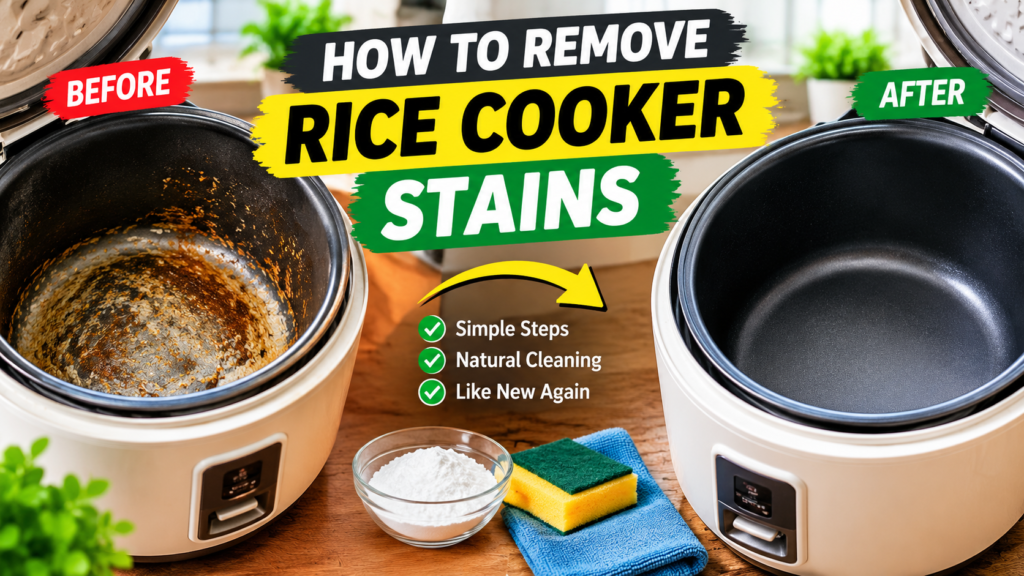
Quick Answer: The safest way to learn how to remove rice cooker stains is to unplug the cooker, let it cool, soak the inner pot in warm soapy water, and use a baking soda paste with a soft sponge. Check your manual before using vinegar or a dishwasher.
A Cleaner Rice Cooker Starts Here
If you are searching for how to remove rice cooker stains, you are not alone. Rice leaves starch, minerals, and tiny burnt bits that can cloud the pot over time. Most marks are cosmetic, but a clean pot also helps rice taste fresh and keeps the cooker easy to use. This guide covers what causes stains, which cleaners are gentle, how to care for the lid and vent, and when to contact the maker.
Kitchen Tips Appliance Care Rice Cooker Cleaning Home Cooking
This article is for general educational and buying-guidance purposes only. It does not replace the manufacturer’s official manual, food safety guidance, or professional advice. Materials, specifications, and care instructions can vary by product and should be confirmed with the manufacturer before purchase or use. For product defects, suspected food-safety issues, or injuries such as burns or cuts, contact the manufacturer, a qualified professional, or seek medical help as needed.
Why Rice Cookers Get Stained
Rice releases starch as it cooks. That starch can dry into a cloudy film, and tiny burnt bits can cling to the bottom of the inner pot. Tap water adds minerals, and steam can leave marks on the lid. Most stains are cosmetic, but built-up residue can change how the pot looks and smells. Matching the stain to its likely cause helps you pick a gentler fix.
Common Stain Problems and Likely Causes
Safety First: Prep Before Cleaning
Always unplug the cooker and let it cool fully before you clean it. The heating plate and power cord must never go into water. Wash only the removable parts, such as the inner pot, lid, and steam cap, and wipe the base with a barely damp cloth. If the cord is damaged or the pot is cracked, stop using the cooker.
Safety Note: Never pour water into the base or submerge the cooker. Electrical parts and water do not mix. If the cord, plug, or heating plate looks damaged, do not use the cooker and do not try to repair it yourself. For product safety information, visit the U.S. Consumer Product Safety Commission.
Safe Cleaning Habits vs Risky Shortcuts
Use this quick path to decide your next move before you reach for a sponge.
No: wait. Yes: continue.
Yes: soft sponge only. No: check the manual.
Yes: dry the parts.
Repeat a gentle soak or ask the maker.
When in doubt, choose the gentler route first. You can repeat a soak, but you cannot undo a scratched coating.
How to Remove Rice Cooker Stains Step by Step
These steps suit most removable inner pots. Compare them with your manual first.
Tip: Patience beats force. A longer, gentle soak usually works better than hard scrubbing, and it helps protect the pot’s surface.
Here is how to remove rice cooker stains at a glance.
Scrubbing comes late in the routine. Soaking does most of the work, so rushing past it often leads to scratches.
Different Stains Need Different Care
Starch Film
This looks like a cloudy layer that feels slightly slick. Warm soapy water and a soft sponge usually loosen it.
Brown Tint
This often comes from rice sugars on the surface. A baking soda paste may lift it without harsh scrubbing.
Mineral Haze
Hard water can leave a chalky look. A diluted vinegar soak may help, but check the manual first, especially for coated or aluminum pots.
Lid and Vent Residue
Steam leaves a sticky film on the lid and steam cap. Remove detachable parts, wash them by hand, and dry them well.
Cleaning Methods Compared
Warning: Skip steel wool, abrasive powders, and bleach on the inner pot. Scratches and worn coatings can make stains cling more. Never mix cleaners, because some combinations can release harmful fumes.
Choosing the Right Cleaning Tools
A few soft tools handle most jobs, and knowing how to remove rice cooker stains includes knowing when to stop scrubbing. Choose a soft sponge if your pot has a nonstick coating. Avoid scrapers if the surface looks worn. Check the manufacturer’s guidance if you are unsure what your pot is made of.
Which Tool Fits Which Surface
This quick dashboard shows the simple supplies most home cooks need.
Everyday pot cleaning
Lid, vent, and base
Gentle stain lifting
Daily soaking
Soft, simple supplies cover almost every job here. Specialty products are rarely needed.
Prevent Stains and Keep the Pot Fresh
The easiest stain is the one that never sets. Rinse rice until the water looks less cloudy, measure water with the cooker’s cup, and wash the pot soon after use. The best advice on how to remove rice cooker stains is to clean lightly and often, so buildup stays small.
Common Mistakes and Better Choices
Use this weekly care checklist to keep stains from returning.
☐ Soak and rinse the pot
☐ Wipe the lid and vent
☐ Dry all parts
☐ Hand wash the steam cap
☐ Check the cord and plug
☐ Inspect the pot surface
Short, regular habits take only minutes. They also reveal coating wear or damage early.
Note: Cooker designs vary. Some inner pots are coated, some are not, and some parts are dishwasher-safe while others are not. Your manual is the best guide for your model.
This practical guide shows which habits tend to matter most. It is not laboratory data.
Practical guide: Typical routine priority
Daily habits come first. Special treatments are only for stains that remain after soaking.
When to Contact the Manufacturer: Reach out if the nonstick coating is flaking, the pot has deep scratches or dents, the cord or plug is damaged, the cooker smells like burning plastic, or stains return right after cleaning. Do not attempt electrical repairs yourself. For burns, seek medical help.
Frequently Asked Questions
Can I use vinegar to clean my rice cooker pot?
Sometimes. Diluted white vinegar may help with cloudy mineral marks, but some coatings and metals do not do well with acid. Check the manual first, keep soaks short, and rinse well.
Is baking soda safe for a nonstick inner pot?
Many home cooks use a mild baking soda paste with a soft sponge. Rub gently, rinse well, and stop if you see the coating wearing.
Can the rice cooker pot go in the dishwasher?
Only if the manual says it is dishwasher-safe. Some makers recommend hand washing to protect the coating.
How do I clean burnt rice from the bottom?
Soak the pot in warm soapy water for 15 to 30 minutes, then lift the rice gently with a soft sponge or wooden spoon. Do not use metal tools.
How often should I clean the lid and steam vent?
Wipe them after each use and wash removable parts by hand regularly. This helps stop sticky starch and odors from building up.
When should I replace the inner pot?
Consider replacing it if the coating is flaking, the pot is dented, or stains will not come off safely. Ask the manufacturer for a compatible replacement.
Final Thoughts
Once you know how to remove rice cooker stains, a quick soak and gentle wipe can keep your cooker looking fresh. Check the manufacturer’s instructions, confirm your pot’s material, follow food-safety guidance for leftovers, and seek help for damaged parts or injuries.
