
By Michael Hayes — RecipeTalkToday
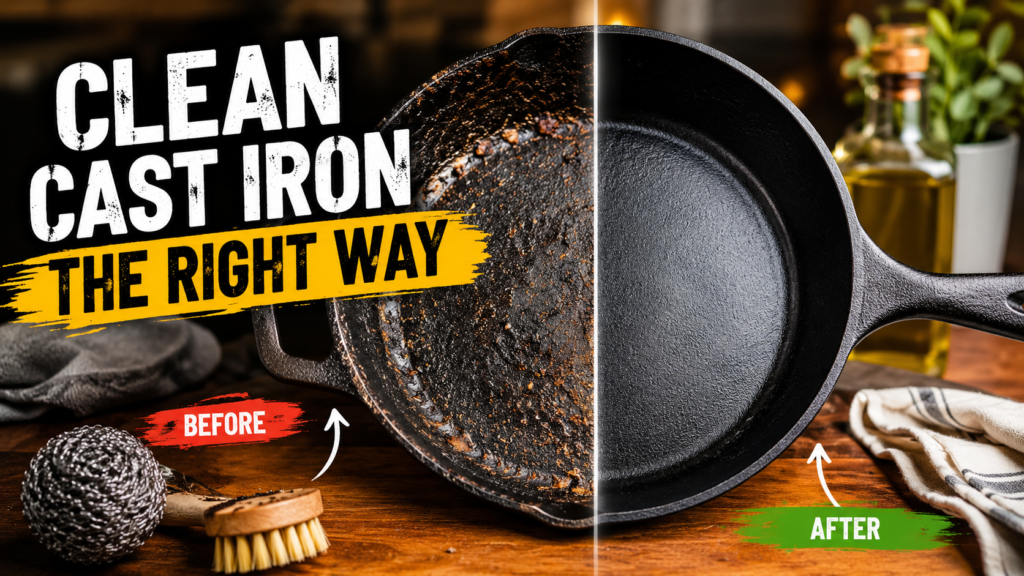
Quick Answer: To clean a cast iron frying pan, rinse it while still warm, scrub gently with a stiff brush or coarse salt (avoid harsh soap or soaking), dry it completely on the stove, then rub in a thin layer of oil before storing. This routine helps protect the seasoning and prevents rust.
Cast iron cookware can last for decades in a home kitchen, but only if it’s cleaned and dried the right way after every use. Knowing how to clean a cast iron frying pan properly protects the seasoning layer that keeps food from sticking and keeps rust from forming. This guide walks through the full routine, common mistakes, and what to do when something goes wrong.
Cast Iron Care
Seasoning
Rust Prevention
Kitchen Cleaning
Cookware Maintenance
This article on RecipeTalkToday is for general educational and buying-guidance purposes only. It does not replace the manufacturer’s official manual, food safety guidance, or professional advice. Materials, specifications, and care instructions can vary by product and should be confirmed with the manufacturer before purchase or use. For product defects, suspected food-safety issues, or injuries such as burns or cuts, contact the manufacturer, a qualified professional, or seek medical help as needed.
Why Cleaning Cast Iron the Right Way Matters
Cast iron is different from nonstick or stainless steel. It relies on a seasoning layer — a thin coating of baked-on oil — to create a naturally low-stick surface. Knowing how to clean a cast iron frying pan without stripping that layer is the single biggest factor in how well the pan performs over time.
If the pan is cleaned incorrectly, two things usually happen: the seasoning wears thin, so food starts sticking again, or moisture gets left behind and the pan starts to rust. Neither issue is permanent, but both are avoidable with a consistent routine.
Tip: Clean the pan while it is still warm from cooking. Warm iron releases stuck food much more easily than a cold pan, which often means you can skip heavy scrubbing altogether.
What Cast Iron Cleaning Actually Involves
Cleaning cast iron isn’t about scrubbing away every trace of oil — it’s about removing food residue while preserving the seasoning underneath. The process has three parts: loosening and removing food, drying the pan completely, and applying a light protective coat of oil.
What Beginners Often Miss
New cast iron owners often assume dish soap will ruin the seasoning instantly, or that the pan should never touch water. In daily cooking, a small amount of mild soap is generally fine for occasional use — what actually damages seasoning is prolonged soaking, harsh abrasive scrubbers, or letting the pan air-dry with moisture still on the surface.
What Experienced Home Cooks Check
More experienced cooks tend to check the pan’s surface sheen after drying — a dull, dry patch usually means it needs a thin oil rub before storage. They also avoid stacking other cookware directly on top of a freshly cleaned pan, since that can scratch the seasoning before it fully sets.
Step-by-Step: How to Clean a Cast Iron Frying Pan
Rinse while warm. Right after cooking, rinse the pan under warm water. Food loosens much faster while the pan retains heat.
Scrub with a stiff brush. Use a stiff-bristle brush, a chainmail scrubber, or coarse salt with a paper towel for stuck-on bits. Avoid steel wool or metal scouring pads unless you’re intentionally re-seasoning the pan.
Use a small amount of soap if needed. A few drops of mild dish soap can help with greasy residue. This won’t strip a well-established seasoning layer with occasional use.
Rinse and dry immediately. Towel-dry the pan, then place it on the stove over low heat for a minute or two to evaporate any remaining moisture.
Apply a thin oil coat. While the pan is still slightly warm, rub in a very thin layer of neutral cooking oil with a paper towel, covering the inside and handle.
Store it properly. Store the pan in a dry area. If stacking cookware, place a paper towel or cloth between pieces to protect the surface.
Visual guide: the cleaning routine flow
In practice, this whole routine usually takes about five minutes once it becomes a habit after cooking.
Safe vs. Risky Cleaning Practices
Not every cleaning habit is equally safe for cast iron. The table below compares common practices side by side.
Practice Comparison
Common Problems and What They Usually Mean
If cleaning a cast iron frying pan isn’t going smoothly, the pan is often trying to tell you something. The table below maps common problems to their likely causes.
Problem vs. Likely Cause
Decision path: rust spotted on the pan
Common Mistakes to Avoid
Letting it air-dry
Water left in the pores of the metal is the most common cause of rust. Always towel-dry, then finish with brief stovetop heat.
Skipping the oil step
Even a clean, dry pan benefits from a thin oil layer before storage — it helps protect the surface between cooking sessions.
Using too much oil
A heavy coating can turn sticky over time. A very thin, wiped-off layer works better than a thick pour.
Storing it damp or stacked
Stacking wet cookware traps moisture against the surface. Separate pieces with a cloth and confirm the pan is fully dry first.
Note: Many home cooks find that a consistent after-meal routine — rinse, scrub, dry, oil — prevents most cast iron problems before they start.
Choosing the Right Cleaning Tools
The tools used to clean a cast iron frying pan matter almost as much as the technique. The table below breaks down common options by fit.
Tool Fit Guide
Maintenance checklist dashboard
Mistake vs. Better Choice
Quick Reference
Relative cleaning difficulty (practical guide)
Everyday rinse and scrub
Removing sticky residue
Removing light rust
Full re-seasoning
This is a typical routine priority guide, not a scientific measurement — actual time needed varies by pan and cooking habits.
When to Contact a Professional or the Manufacturer
Most cast iron issues can be handled at home, but check the manufacturer’s guidance if you notice deep pitting, cracking, warping, or flaking metal, since these can affect how the pan performs on heat. If a pan causes a burn, deep cut, or you suspect a food-safety issue tied to cookware use, contact a qualified professional or seek medical help as needed rather than continuing to use the pan.
This article may contain affiliate links. If you buy through these links, RecipeTalkToday may earn a small commission at no extra cost to you. We only mention products that fit the topic and recommend checking current specs and care instructions directly with the manufacturer.
Helpful Tools for Cast Iron Care
Chainmail Cast Iron Scrubber
A chainmail scrubber can make daily cooking easier by loosening stuck food without scratching the seasoning layer. Many home cooks find this convenient for routine cleanups after cooking.
Cast Iron Conditioning Oil
A dedicated conditioning oil may support more consistent seasoning results compared to using whatever oil happens to be nearby. Always confirm care instructions with your pan’s manufacturer first.
Frequently Asked Questions
Can I use soap to clean a cast iron frying pan?
Yes, a small amount of mild dish soap is generally fine for occasional use. It won’t strip a well-seasoned pan. What matters more is avoiding long soaking and drying the pan fully afterward.
Why does my cast iron pan keep rusting?
Rust usually forms when moisture is left on the surface after cleaning. Make sure to towel-dry the pan and heat it briefly on the stove before storing it in a dry area.
Can I put a cast iron frying pan in the dishwasher?
This is generally not recommended. Dishwashers combine prolonged water exposure with harsh detergent, which can strip seasoning and encourage rust.
How often should I re-season a cast iron pan?
There’s no fixed schedule — many home cooks re-season a few times a year, or whenever food starts sticking more than usual or dull patches appear after cleaning.
Is it safe to cook acidic foods like tomato sauce in cast iron?
A well-seasoned pan can generally handle occasional acidic cooking, but frequent or prolonged contact with acidic foods can wear down the seasoning faster, so check your pan’s condition afterward.
What should I do if my cast iron pan has deep rust or pitting?
Light surface rust can usually be scrubbed off and re-seasoned at home. For deep pitting, cracking, or flaking metal, check with the manufacturer before continuing to use the pan.
Do I need a special tool to clean a cast iron frying pan?
Not necessarily. A stiff brush or coarse salt works well for most everyday cleaning. Specialized tools like chainmail scrubbers can help with stuck-on food but aren’t required.
Learning how to clean a cast iron frying pan comes down to a simple, repeatable routine: rinse while warm, scrub gently, dry completely, and finish with a thin layer of oil. Stick with this after most meals, and the pan should stay reliable for years. Always confirm specific care instructions with your pan’s manufacturer, and seek professional or medical help for injuries, product defects, or ongoing food-safety concerns. — RecipeTalkToday
