
By Michael Hayes
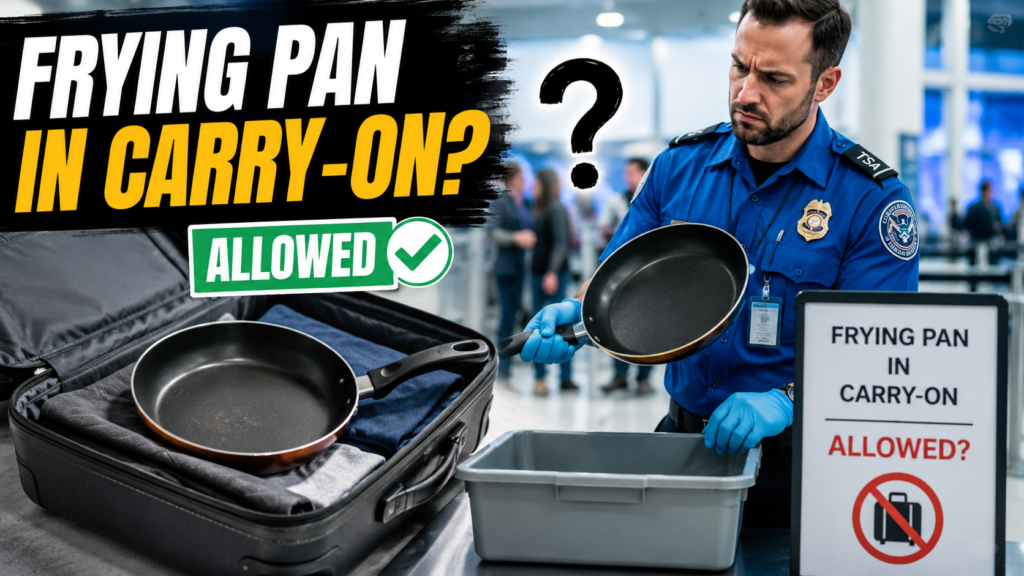
If you’re packing for a trip to a rental kitchen, a family visit, or a long stay somewhere without a full set of cookware, it’s natural to ask can I bring a frying pan in my carry on before you head to the airport. The short version is that most pans are fine, but the material of your pan changes the answer. This guide walks through what’s allowed, what typically gets flagged, and how to pack a pan so it survives the trip.
Carry-on packing
Cast iron exception
Cookware for travel
What the TSA Actually Says About Pans
The question can I bring a frying pan in my carry on comes up a lot, especially around holidays and long stays away from home. According to the TSA’s own guidance, pots and pans are generally allowed in both carry-on and checked bags. That covers most nonstick, stainless steel, and aluminum frying pans.
The one clear exception is cast iron. Cast iron skillets are not permitted in carry-on bags and need to go in checked baggage instead. This is mainly because of the weight and shape of cast iron, which can look concerning on an X-ray image and could be used to cause harm.
Beyond that baseline rule, a checkpoint officer always has final discretion. A pan that’s unusually large, has a sharp edge, or clutters the X-ray image can still get a second look, even if it’s a material that’s normally fine.
Why Material Matters More Than the Rule Itself
Many home cooks assume the pan itself is the issue, when really it’s the material and weight that change how screening staff react. A lightweight nonstick pan reads very differently on a scanner than a dense cast iron skillet. If you’re asking can I bring a frying pan in my carry on for a specific pan, start by checking what it’s made of before you check the size.
Comparing Common Pan Materials for Air Travel
Not every frying pan travels the same way. This table compares how common materials tend to fare at security and in transit.
Pan Material Comparison for Carry-On Travel
What to Check Before You Pack a Pan in Your Carry-On
Before you decide can I bring a frying pan in my carry on for a specific trip, it helps to run through a few practical checks. This isn’t about the rule alone — it’s about whether the pan makes sense as a carry-on item at all.
Pre-Flight Pan Checklist Dashboard
A quick way to see whether your pan is carry-on ready before you head out.
In daily travel, I usually notice that pans checked off against this list clear security with far less fuss than pans packed at the last minute.
Size and Airline Rules
TSA rules are only half the picture. Your airline sets its own carry-on size and weight limits, and a heavy pan can eat into that allowance quickly. If your carry-on is already close to the limit, a checked bag may be the simpler route for cookware, even when the pan itself is allowed.
How to Pack a Frying Pan for a Flight
Once you’ve confirmed can I bring a frying pan in my carry on for your specific pan, packing it well matters just as much as the rule itself. A poorly packed pan can shift during handling, scratch other items, or look cluttered on a scanner.
Packing Routine Flow
Here’s how the packing steps above flow together in practice.
Following this order can help your pan arrive undamaged and move through screening with less back-and-forth.
Common Problems and What Usually Causes Them
If you’ve packed a pan before and had it flagged or damaged, it’s usually one of a handful of causes. This table breaks down common issues home cooks report and the likely reason behind them.
Problem vs. Likely Cause
Safe Practices vs. Risky Habits When Packing Cookware
Some packing habits make screening smoother, while others tend to slow things down or risk damaging your pan. Here’s a side-by-side look.
Recommended vs. Risky Packing Practices
Common Mistakes Travelers Make
Travelers often assume any frying pan will pass through carry-on screening. This isn’t accurate for cast iron, so it’s worth double-checking your specific pan before you leave for the airport.
A pan can quietly push a carry-on over the airline’s weight limit. Weigh your bag at home so you’re not repacking at the counter.
Leftover grease or food residue can make the item harder to read on an X-ray and increases the chance of a manual bag check.
Nonstick and ceramic coatings can chip against zippers or hard items. A towel wrap goes a long way toward preventing that.
What Experienced Travelers Check That Beginners Miss
Frequent flyers who travel with cookware tend to check a few extra details beyond the basic can I bring a frying pan in my carry on question. They look at the handle shape, since long or pointed handles can draw more attention than a compact design. They also weigh the bag before leaving home, rather than at the airport, and they keep the pan near the top of the bag so it’s easy to pull out if an officer wants a closer look. In daily cooking and travel, I usually notice that this small amount of prep saves the most time at the checkpoint.
Choosing a Travel-Friendly Pan
If you travel often and want a dedicated travel pan, fit matters as much as material. Use this table to match a pan type to your typical trip.
Pan Fit Guide by Travel Style
Travel Pan Priority Meter
A practical guide to what matters most when choosing a pan for carry-on travel.
Weight priority
Ease of cleaning before packing
Typical durability for travel use
Space taken in a carry-on
This is a practical routine guide, not lab-tested data. Use it as a starting point, not a guarantee of performance.
Travel-Friendly Pans Worth Considering
A lightweight nonstick pan can make packing and unpacking easier for short trips, since it’s easy to wrap and doesn’t add much weight to a carry-on bag.
A packable cover or wrap can help keep a coated pan’s surface protected inside a bag, which many home cooks find convenient for repeated trips.
Safety Notes for Packing and Handling Cookware
Beyond screening rules, handle any pan carefully once you’re cooking with it at your destination. A hot pan handle, a slippery grip, or a pan left unattended on a burner are common causes of kitchen burns, and these risks apply just as much to a travel pan as to one you use at home.
When to Contact a Professional or Manufacturer
Frequently Asked Questions
Can I bring a frying pan in my carry on if it’s nonstick?
Yes. Nonstick frying pans are generally allowed in carry-on bags. Make sure the pan is clean, dry, and fits within your airline’s carry-on size limits.
Is a cast iron skillet ever allowed in a carry-on bag?
Generally no. Cast iron skillets are prohibited in carry-on bags and must be placed in checked baggage due to their weight and shape.
Do I need to clean my pan before packing it?
Yes. A clean, dry pan is easier to read on an X-ray scanner and less likely to be pulled for a manual check than a pan with food residue on it.
Will a frying pan always pass through security without questions?
Not always. Screening officers have final discretion, and an unusual shape, size, or weight can lead to extra screening even for an allowed material.
Is it better to check a pan instead of carrying it on?
For cast iron, checking is required. For other materials, checking can simply save space and weight in your carry-on if you’re already close to your limit.
Do international flights follow the same pan rules?
Rules can vary by country and airline. It’s a good idea to check with your specific airline and the security agency at your departure airport before an international trip.
What should I do if my pan is confiscated at the checkpoint?
Stay calm and ask the officer for the specific reason. If you believe the decision was incorrect, you can follow up through the TSA’s official customer service channels afterward.
Helpful Resources
For the most current rules, check the official TSA guidance on pots and pans and the broader TSA “What Can I Bring?” tool before you travel.
In most cases, the answer to can I bring a frying pan in my carry on is yes, as long as it isn’t cast iron and it fits your bag’s size and weight limits. Clean it, pad it, and pack it near the top of your bag to make screening simple. Since rules can change, always confirm current guidance with the TSA before you fly, and check the manufacturer’s care instructions for your specific pan. If you’re ever injured while cooking or notice a product defect, contact a qualified professional or the manufacturer, or seek medical help if needed.
