By Michael Hayes
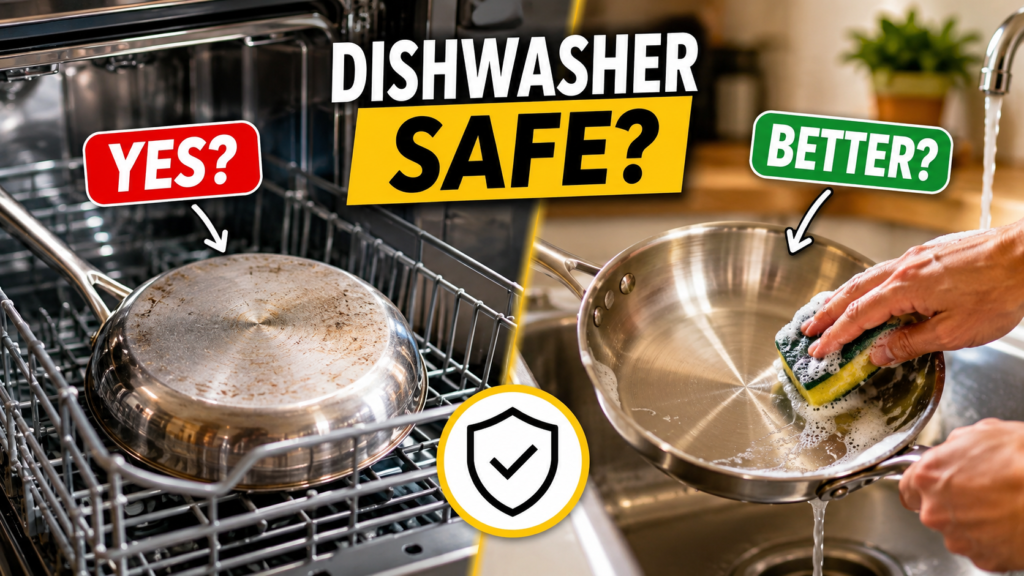
If you’ve ever loaded a pan into the dishwasher and then paused to wonder whether that was a good idea, you’re not alone. Stainless steel is one of the toughest materials used in cookware, but “tough” and “dishwasher friendly” are not always the same thing. In this guide, we’ll walk through what actually happens to a stainless steel pan in a dishwasher, when it’s reasonably safe, and when hand washing is the smarter choice for your kitchen setup.
Stainless Steel
Dishwasher Safety
Kitchen Cleaning
Pan Longevity
What “Dishwasher Safe” Really Means for Stainless Steel Pans
When a manufacturer labels a pan “dishwasher safe,” it usually means the base material and finish can handle the water temperature, spray pressure, and detergent used in a typical cycle without immediate damage. It does not always mean the pan will look brand new after years of repeated washes. This is why the question of whether a stainless steel frying pan can go in the dishwasher comes up so often — the honest answer depends on the specific pan, the handle material, and how it’s used over time.
In daily cooking, I usually notice that pans with riveted all-metal handles tend to hold up better in a dishwasher than pans with plastic, wood, or soft-touch handles, since those materials can loosen or degrade with repeated heat exposure.
Why This Matters
Getting this wrong can shorten the life of an otherwise good pan. A pan that develops rainbow-like discoloration, cloudy spots, or a rough texture after repeated dishwasher cycles is still usually safe to cook with, but it may lose the smooth, easy-release surface that made it enjoyable to use in the first place.
Here’s a simple flow of what typically happens inside a dishwasher cycle that affects stainless steel cookware:
In practical terms, this is the stage where most of the visible spotting or dulling that people associate with dishwashing stainless steel pans actually happens.
How Stainless Steel Reacts Compared to Other Cookware Materials
Stainless steel is generally more dishwasher-tolerant than nonstick, cast iron, or carbon steel pans, but it is not indestructible. Understanding how it compares can help you decide how to treat your specific pan.
What to Check Before You Put a Stainless Steel Pan in the Dishwasher
Before deciding whether your stainless steel frying pan can go in the dishwasher, take a few minutes to check these details. It’s a small step that can prevent an avoidable disappointment.
Check the box, sticker, or manufacturer website for a specific “dishwasher safe” statement. Some brands only certify certain lines for dishwasher use.
All-metal, riveted handles generally tolerate heat and moisture better than handles with plastic inserts or soft-touch coatings.
Older pans with existing scratches or thin spots may show wear faster from repeated dishwasher cycles than newer cookware.
Homes with hard water often see more spotting and film buildup on stainless cookware after dishwasher cycles.
Step-by-Step: How to Hand Wash a Stainless Steel Frying Pan
Many home cooks find hand washing gives more consistent results and helps the pan keep its original shine longer. Here’s a simple, practical routine.
Safety and Hygiene Checks for Stainless Steel Cookware
Beyond appearance, hygiene matters too. Stainless steel itself is a naturally easy-to-clean, non-porous surface, which is one reason it’s common in professional kitchens. Whether you hand wash or use a dishwasher, the main hygiene goal is the same: remove food residue and grease completely, and dry the pan so moisture doesn’t sit trapped near the handle rivets.
Use this simple decision path when you’re unsure whether a specific pan should go in the dishwasher today:
Reasonably fine to use the dishwasher occasionally.
Hand wash to be safe, or check the manufacturer’s site.
Hand washing is generally the safer routine.
Hand wash going forward and check handle rivets.
This is a practical guide, not a lab-tested rule — it’s meant to help you make a quick, sensible call in daily kitchen use.
Common Mistakes Home Cooks Make
A few small habits are behind most of the damage people blame on the dishwasher itself.
Pro Tips From Experienced Home Cooks
People who cook often with stainless steel tend to check a few extra details that beginners often miss.
A quick maintenance checklist dashboard for stainless steel pans:
Prevents warping from sudden temperature change.
Reduces spotting and moisture near handle rivets.
Confirms current care guidance hasn’t changed with wear.
Loose rivets are an early sign of wear worth addressing.
This checklist is a practical daily-use guide, not a certified maintenance standard.
Helpful Tools for Cleaning and Maintaining Stainless Steel Pans
Soft sponges with a gentle scrub side can help lift stuck-on food without scratching the finish, which many home cooks find convenient for daily cleanup.
A dedicated stainless steel cleaner can help reduce cloudy spots and restore some shine between washes, though results vary by pan and water quality.
Which Cleaning Tool Fits Which Job
A relative priority meter for stainless steel pan care, based on typical home routines:
This is a practical routine guide based on common home-cooking habits, not a scientific ranking.
Safe vs Risky Dishwasher Habits
When to Contact the Manufacturer or a Professional
Frequently Asked Questions
Can stainless steel frying pan go in dishwasher every day?
It’s often possible if the label confirms dishwasher safety, but many home cooks find hand washing daily helps the pan keep its shine longer and reduces wear on handles.
Why does my stainless steel pan look dull after the dishwasher?
This is usually caused by detergent residue, mineral deposits from hard water, or a heated dry cycle. Switching to air drying or hand drying can often help.
Is it safe to put a stainless steel pan with a plastic handle in the dishwasher?
Check the manufacturer’s care guidance first. Plastic or soft-touch handles are generally more sensitive to repeated heat than all-metal riveted handles.
How do I remove white spots from a stainless steel pan?
A light rinse with white vinegar and water can often help with mineral spotting. Rinse and dry the pan fully afterward.
Does the dishwasher damage the nonstick-like slickness of a stainless steel pan?
Stainless steel doesn’t have a nonstick coating, but repeated harsh detergent exposure can dull the surface finish over time, which may affect food release slightly.
Should I use the heated dry setting for stainless steel pans?
Many home cooks skip the heated dry setting for stainless steel pans since it can increase spotting. Air drying or a quick towel dry is often a gentler routine.
When should I contact the manufacturer about my stainless steel pan?
Reach out if the care label is unclear, if damage appears soon after purchase while under warranty, or if you notice a defect that seems unrelated to normal wear.
Helpful Authority Resources
For general kitchen cleaning and food-contact surface guidance, you can review resources from FoodSafety.gov, and for general consumer product safety information, the U.S. Consumer Product Safety Commission is a useful reference. Standards and testing organizations like NSF International also publish general information relevant to kitchen equipment materials.
Whether a stainless steel frying pan can go in the dishwasher usually comes down to the specific pan, its handle, and your household’s water conditions. Hand washing is often the gentler routine for keeping cookware looking newer for longer, but a dishwasher-safe label does mean occasional use is generally reasonable. Always confirm care instructions and materials with the manufacturer, and seek professional or medical help for injuries, product defects, or persistent food-safety concerns.