
By Emma Hayes — RecipeTalkToday
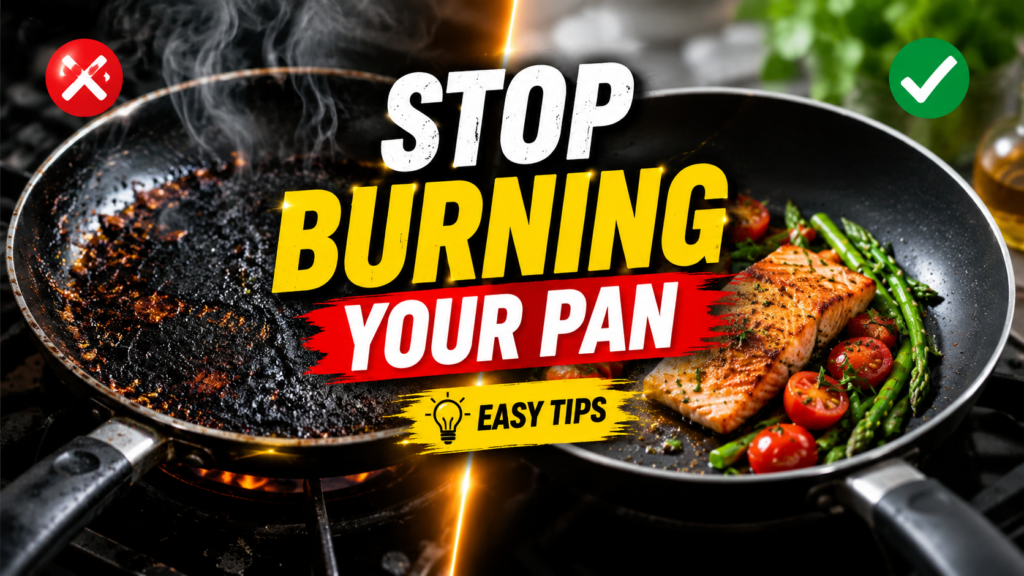
Almost every home cook has walked away from the stove for “just a minute” and come back to smoke. Figuring out how to avoid burning frying pan food isn’t about being a professional chef — it’s about understanding heat, oil, and timing. This guide walks through the practical, everyday reasons pans scorch food and what actually helps.
Heat Control
Cookware Care
Cooking Technique
Kitchen Safety
Why Food Burns in a Frying Pan
Burning usually happens because the pan gets hotter than the food or oil can handle before enough moisture cooks off evenly. A cold pan with high heat added too fast creates hot spots, while too little oil means direct metal-to-food contact instead of an even heat buffer. In daily cooking, I usually notice that burnt spots cluster near the center of the pan, where heat concentrates first on most stovetops.
This matters because scorched food isn’t just unpleasant — it can also mean wasted ingredients, a harder cleanup, and in some cases damage to nonstick coatings if they’re repeatedly overheated. Many home cooks find that once they understand this cause-and-effect, other kitchen tools and habits make more sense.
Comparing Common Pan Materials
How Heat, Oil, and Timing Work Together
A frying pan transfers heat from the burner through the metal into the oil and then into the food. When any one of these steps happens unevenly — a burner set too high, oil that’s too thin a layer, or food left too long without checking — burning becomes more likely. This is why timing matters as much as temperature.
A Simple Preheating Routine
Practical takeaway: rushing this routine is one of the most common reasons food burns before it even finishes cooking through.
What to Check Before You Start Cooking
Before turning on the burner, it helps to check that the pan is fully dry, the right size for the amount of food, and matched to the burner size. A pan much smaller than the burner heats unevenly, with the center getting far hotter than the edges. This is a small detail beginners often miss, while more experienced cooks tend to glance at burner-to-pan fit automatically.
Problem vs. Likely Cause
Step-by-Step: How to Avoid Burning Frying Pan Meals
Following these steps consistently is one of the most reliable ways to solve how to avoid burning frying pan problems long-term, rather than reacting after food has already scorched.
Troubleshooting Decision Path
Smell burning? → Lower the heat immediately and move the pan off the burner briefly.
Food sticking badly? → Add a little more oil or a splash of liquid, don’t force it.
Smoke building steadily? → Turn off heat, let the pan cool before continuing.
Coating looks damaged? → Stop using high heat on it and check manufacturer care guidance.
Practical guide only — always prioritize immediate safety over finishing a dish.
Safety and Hygiene Checks
Overheated oil can reach its smoke point and, in rare cases, ignite. Keep a lid nearby that fits the pan, since smothering a small grease fire is safer than trying to move the pan. Never pour water on a grease fire. Loose sleeves and pot holders too close to the burner are also common, avoidable risks.
Safe vs. Risky Practice
Common Mistakes That Cause Burning
The most frequent mistake is judging heat by time rather than by what the pan and oil actually look like. Every stove runs a little differently, so relying on “medium heat for five minutes” as a fixed rule ignores real variation. Another common mistake is adding cold food straight from the fridge into a very hot pan, which cooks the outside far faster than the inside.
Weekly Maintenance Checklist
✔ Wipe pan dry fully before storing
✔ Check nonstick coating for scratches monthly
✔ Reseason cast iron if food starts sticking
✔ Confirm burner flame or coil is even, not lopsided
A pan that’s well maintained heats more evenly, which directly reduces burning over time.
A steady, gentle sizzle usually means good heat. A loud, sharp sizzle right after adding food often signals the pan is too hot.
Excess surface moisture can cause oil to spatter and heat unevenly, raising the chance of hot spots forming.
If bits start darkening on the pan bottom, adding a splash of liquid early can prevent them from turning into burnt residue.
Delicate items like eggs do better in nonstick, while searing benefits from stainless steel or cast iron.
Product/Tool Fit by Cooking Style
Many home cooks find a heavier stainless steel pan can make daily cooking easier since it holds heat more evenly once preheated properly.
A nonstick skillet with a cooler-touch handle may support more consistent results for lower-heat foods like eggs and pancakes.
Relative Priority Meter for Reducing Burning
Heat control
Enough oil/fat
Pan/burner size match
Pan material choice
Typical routine priority, not lab-tested data — heat control matters most in daily practice.
Mistake vs. Better Choice
When to Contact a Professional or Manufacturer
For further reference, general food handling guidance is available through FoodSafety.gov, and general product safety information is available through the U.S. Consumer Product Safety Commission. Cookware certification background can be found through NSF International.
Frequently Asked Questions
What’s the fastest way to learn how to avoid burning frying pan food?
Start with medium heat, preheat before adding oil, and check the pan often instead of relying on a fixed cooking time.
Does more oil always prevent burning?
Not always — enough oil to coat the pan helps, but oil itself can overheat and smoke if the burner is set too high.
Why does my nonstick pan still burn food?
Nonstick coatings work best at lower heat; high heat can affect both cooking results and coating condition over time.
Is it safe to cook on high heat if I’m watching closely?
Watching helps, but high heat still raises burn risk and fire risk; medium heat with attentive checking is generally safer.
How do I clean a pan after food has burned onto it?
Let the pan cool, then soak with warm water before scrubbing; check the manufacturer’s care guidance for abrasive-cleaner limits.
Should I switch pans if burning keeps happening?
If heat and timing adjustments don’t help, checking whether the pan size fits your burner or trying a different material can be worthwhile.
When should I contact the manufacturer about my pan?
Contact them if coating is peeling or bubbling, or if the pan warps, since continued use may not be safe or effective.
Most burning problems come down to heat, oil, and attention — small habits that add up over time. Always confirm care instructions and material details with your pan’s manufacturer, and seek professional or medical help for injuries, product defects, or ongoing food-safety concerns.
— RecipeTalkToday
