
By Michael Hayes
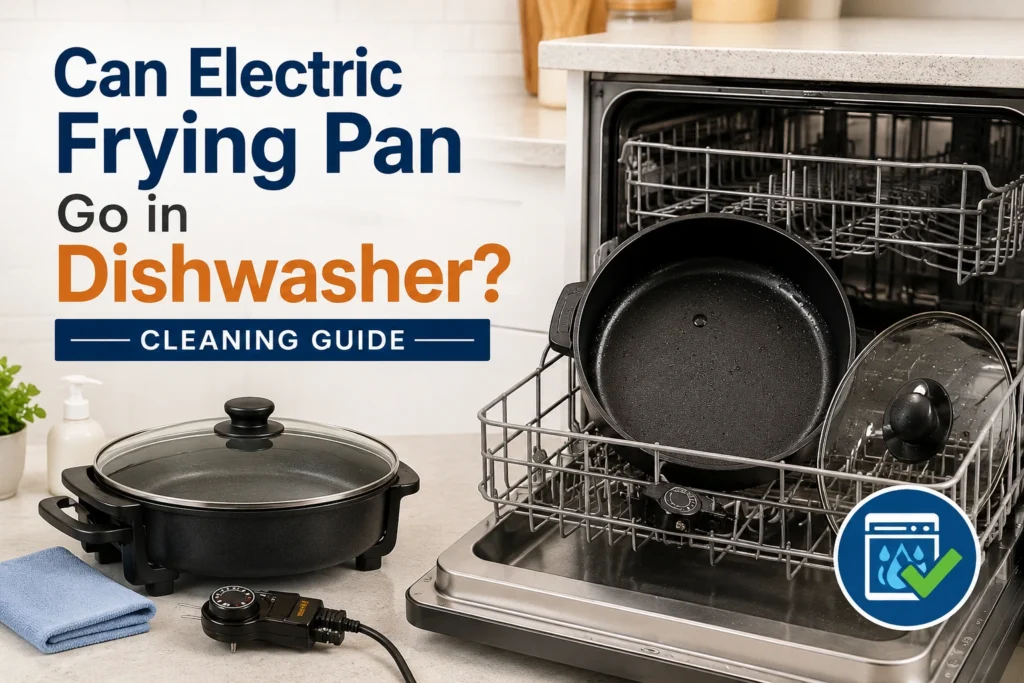
Quick Answer: No. An electric frying pan should not go in the dishwasher because the heating base holds the cord and electrical parts, which can’t get wet. Only the non-stick cooking surface, if it fully detaches from the base, may sometimes be dishwasher safe. Always check the manufacturer’s care label first.
Electric frying pans are handy for tabletop cooking, potlucks, and small kitchens without much stove space. But when it’s time to clean up, a lot of home cooks pause and ask the same thing: can electric frying pan go in dishwasher racks like a regular skillet? The honest answer depends on which part of the pan you mean, and getting it wrong can damage the appliance or create a shock risk. This guide breaks down exactly what is safe to clean, what should never touch water, and how to keep your pan working longer.
A note on accuracy: This article is for general educational and buying-guidance purposes only. It does not replace the manufacturer’s official manual, food safety guidance, or professional advice. Materials, specifications, and care instructions can vary by product and should be confirmed with the manufacturer before purchase or use. For product defects, suspected food-safety issues, or injuries such as burns or cuts, contact the manufacturer, a qualified professional, or seek medical help as needed.
Can Electric Frying Pan Go in Dishwasher? The Basics
An electric frying pan is really two parts working together. There’s the cooking surface, which is often nonstick and looks like a normal skillet. Then there’s the heating base, which holds the thermostat, the cord socket, and the wiring that heats the pan. In daily cooking, I usually notice that people picture the whole unit as one solid piece of cookware. It isn’t. The electrical base is not designed to be submerged, sprayed, or run through a dishwasher cycle, no matter how tempting that feels after a busy dinner.
So when someone asks can electric frying pan go in dishwasher racks safely, the real question is which piece they’re washing. The base always says no. The removable pan body sometimes says yes, but only if the manufacturer confirms it.
Why This Matters More Than It Seems
Getting this wrong isn’t just about a ruined pan. Water that reaches the heating element or the cord connection point can create a shock hazard the next time the pan is plugged in. It can also short out the thermostat, which is often the most expensive part to replace. A beginner might just see a dirty pan and reach for the dishwasher out of habit. A more experienced home cook checks for a detachable probe or control first, because that single step avoids most of the damage.
A realistic daily example: after a Sunday pancake breakfast, batter drips down the side of the pan and pools near the base. It’s tempting to rinse the whole thing under the tap. That’s the exact moment most electric frying pans get damaged, because water sneaks into the control socket even without a full dishwasher cycle.
Table 1: Electric Frying Pan Parts and Dishwasher Safety
What to Check Before You Clean an Electric Frying Pan
Before deciding can electric frying pan go in dishwasher cycles at all, look at three things: whether the pan body fully separates from the base, whether the manufacturer’s manual mentions dishwasher use, and whether there’s any visible damage to the nonstick coating. Scratched or peeling coatings shouldn’t go in a dishwasher even if they’re normally rated for it, because hot water and detergent can speed up wear on damaged spots.
Cleaning Routine at a Glance
In practice, this four-step routine takes about the same time as reaching for the dishwasher, but it protects the wiring completely.
Step-by-Step Safe Cleaning Process
Note: Not every electric frying pan has a removable pan body. Some budget models are one solid unit with the base built in. For those, dishwasher cleaning of any kind is not an option, and hand-wiping is the only safe method.
Common Problems and Fixes
Most complaints about electric frying pans trace back to moisture getting somewhere it shouldn’t. Here’s a quick reference for common issues people run into after cleaning.
Table 2: Problem vs. Likely Cause
Safety and Hygiene Checks
Food safety and electrical safety overlap here more than people expect. A pan that isn’t cleaned well can hold onto grease and bacteria near the rim, while a pan that’s cleaned the wrong way can become an electrical hazard. Both matter equally.
Safety note: Never immerse the heating base, cord, or plug in water, and never run them through a dishwasher, even on a light or rinse-only setting. If you notice exposed wiring, a cracked base, or a burning smell, stop using the pan and check the manufacturer’s guidance or contact a qualified repair professional.
Quick Decision Path: Should This Part Touch Water?
Is it the cord, plug, base, or probe? → Keep it dry, wipe only.
Is it a fully detachable nonstick pan body? → Check the label for dishwasher-safe wording.
Is the coating scratched or peeling? → Hand wash gently, skip the dishwasher.
Is it a glass lid with no electrical parts? → Usually fine to wash normally.
This is a practical guide, not a lab-tested checklist. When in doubt, treat the part like it’s electrical and keep it dry.
Common Mistakes When Cleaning Electric Frying Pans
The biggest mistake is treating the whole appliance like a single dishwasher-safe skillet. The second most common mistake is soaking the detachable body for too long, which can push water into seams near the handle. The third is skipping the manual entirely and guessing.
Table 3: Safe Practice vs. Risky Practice
Warning: Do not attempt to fix, dry out with heat, or continue using a pan that has visibly gotten water into the base or cord area. Drying it with a hair dryer or oven does not make it safe again. When electrical components get wet, the safest move is to stop using the appliance and check with the manufacturer.
Pro Tips and Best Practices
A few small habits go a long way toward keeping an electric frying pan usable for years.
Maintenance Checklist Dashboard
☐ Unplug before every cleaning session
☐ Keep the probe socket area completely dry
☐ Store the pan with the lid slightly open to prevent trapped moisture
☐ Re-check the manual once a year for care updates
☐ Inspect the cord for cracking every few months
Ticking through this list every month or two is often enough to catch small issues before they turn into real damage.
Tip: Many home cooks find it helpful to keep the original manual or a photo of the care label saved on their phone. That way, the dishwasher-safe question is answered instantly instead of guessed at every time.
What Experienced Home Cooks Check That Beginners Miss
The seam near the handle
Experienced cooks check for gaps where water could seep toward the base. A quick wipe here prevents most trapped-moisture issues.
The probe pins
These small metal contacts corrode easily if left damp. A dry cotton swab keeps them working reliably.
Coating wear over time
They inspect the nonstick surface periodically, since a worn coating changes whether hand washing is the better choice.
Storage humidity
Storing the pan in a damp cabinet can undo careful cleaning. A dry, ventilated spot helps the base last longer.
Tools That Can Make Cleanup Easier
If you’re deciding can electric frying pan go in dishwasher cycles or not, a few simple tools can make hand cleaning nearly as fast, without any electrical risk.
Table 4: Tool Fit for Electric Frying Pan Cleanup
This article may contain affiliate links. If you buy through these links, we may earn a small commission at no extra cost to you. We only mention products that fit the topic and recommend checking current specs and care instructions directly with the manufacturer.
Soft Silicone Pan Scrubber Set
Can make cleanup easier on nonstick pan bodies without scratching the coating.
Microfiber Kitchen Cloth Pack
A convenient option many home cooks find useful for wiping down electric appliance bases without soaking them.
Product Fit Dashboard
Silicone scrubber → best match for nonstick pan bodies
Microfiber cloth → best match for the heating base and cord area
Cotton swabs → best match for tight spots around the probe socket
Think of it as matching the tool to the part, not using one tool for the whole pan.
Mistake vs. Better Choice, and When to Call a Professional
Table 5: Mistake vs. Better Choice
When to contact a professional or manufacturer: If the pan sparks, trips a breaker, shows a cracked base, smells like burning plastic, or won’t heat evenly after cleaning, stop using it. Contact the manufacturer’s support line for repair or replacement options. For any burn or shock injury, seek medical attention as needed.
Relative Cleaning Priority (Practical Guide)
Keeping the cord dry
Drying the probe socket fully
Checking the dishwasher-safe label
Wiping down the exterior
This is a practical routine priority guide, not a scientific ranking. Cord and socket dryness matter most because they involve electrical risk.
For general product electrical safety information, the U.S. Consumer Product Safety Commission offers guidance on household appliance hazards. For questions about food-contact material safety in cookware, NSF International publishes standards that some cookware manufacturers reference.
Frequently Asked Questions
Can electric frying pan go in dishwasher racks safely?
Not as a whole unit. The heating base and cord must stay dry. Only a fully detachable pan body may be dishwasher safe, and only if the manufacturer confirms it.
What happens if water gets into the base?
It can damage the thermostat, cause the pan to stop heating, or create a shock risk. If this happens, unplug the pan and check with the manufacturer before using it again.
How do I know if my pan body is removable?
Check the underside near the handle for a latch, clip, or twist-lock connector. If the base and pan feel like one solid piece with no seam, it likely isn’t removable.
Is it safe to soak the pan body overnight?
Long soaking can push water into seams near the handle, even on detachable bodies. A shorter soak followed by hand washing is generally a gentler approach.
Can I wash the temperature probe with soap and water?
No. The probe contains electrical pins and should only be wiped with a dry or barely damp cloth, never washed or submerged.
My pan doesn’t heat evenly after cleaning. What should I do?
This can point to moisture that reached the thermostat. Let it dry fully for at least 24 hours. If the issue continues, contact the manufacturer for support.
Does the answer change for stainless steel electric skillets?
The material of the cooking surface doesn’t change the rule. Whether it’s stainless steel or nonstick, the electrical base and cord still need to stay dry.
Final thoughts: The short version of can electric frying pan go in dishwasher use is simple: the base and cord always stay dry, and the detachable pan body only goes in if the label says so. A quick check before cleaning saves you from a damaged appliance or a bigger safety issue later. Always confirm care instructions and materials with the manufacturer, and seek professional or medical help for any injuries, product defects, or persistent food-safety concerns.
