
By Michael Hayes
Quick Answer: Yes, a frying pan can be used in the oven if it is made entirely from oven-safe materials, including the handle. Cast iron, stainless steel, and some carbon steel pans usually work well. Nonstick coatings, plastic or wooden handles, and glass lids often do not tolerate high oven heat and should be checked first.
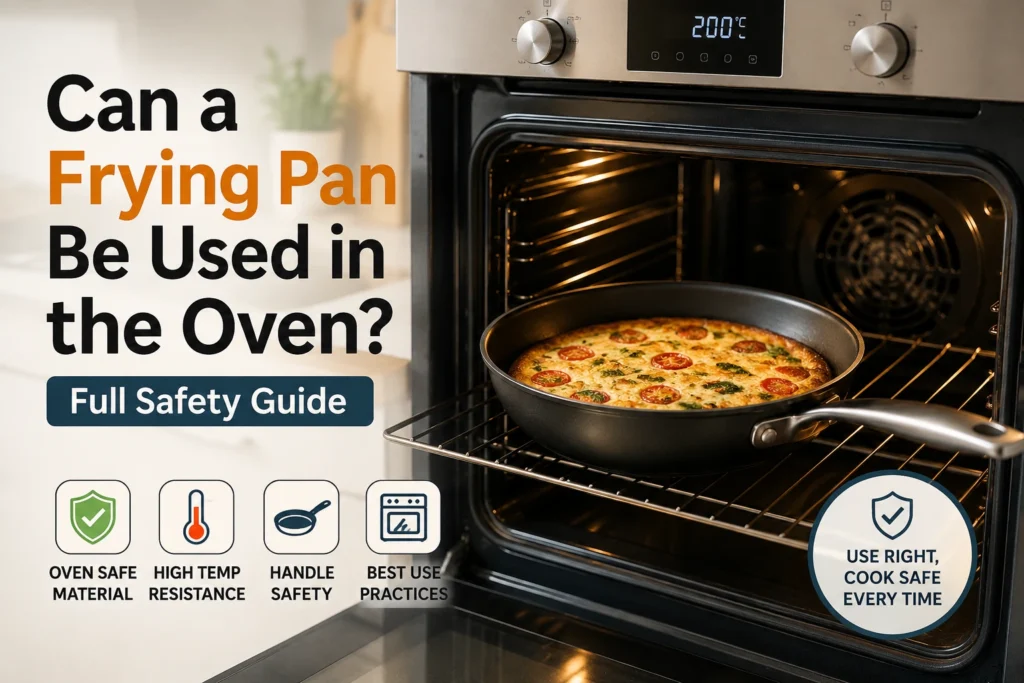
Moving a skillet from the stovetop straight into the oven is a common step in recipes like frittatas, seared chicken thighs, and skillet cornbread. But not every pan is built for it. Understanding whether a frying pan can be used in the oven depends on the base material, the coating, and — most importantly — the handle. This guide walks through how to check your specific pan, what temperature limits typically apply, and the mistakes that lead to damaged cookware or ruined meals.
This article is for general educational and buying-guidance purposes only. It does not replace the manufacturer’s official manual, food safety guidance, or professional advice. Materials, specifications, and care instructions can vary by product and should be confirmed with the manufacturer before purchase or use. For product defects, suspected food-safety issues, or injuries such as burns or cuts, contact the manufacturer, a qualified professional, or seek medical help as needed.
So, Can a Frying Pan Be Used in the Oven?
In most kitchens, the answer is a careful “it depends.” Whether a frying pan can be used in the oven comes down to three things: the metal the pan body is made from, whether it has a nonstick or painted coating, and what the handle is made of. A pan that is fine on the stovetop can still fail in the oven if the handle is plastic, rubber, or has a glued-on grip.
Many home cooks assume “oven-safe” is one universal label, but it usually comes with a temperature limit. A pan rated for 350°F is not automatically safe at 450°F. Checking the manufacturer’s specific rating is always the most reliable step.
Why This Matters in Daily Cooking
In daily cooking, I usually notice that skillet-to-oven recipes are some of the most common ways people damage cookware without realizing it until it’s too late. A melted handle, a warped base, or a nonstick coating that starts breaking down are all avoidable problems once you know what to look for before the oven door closes.
Getting this right also protects your food. A pan that isn’t built for oven heat can release damaged coating particles or warp unevenly, which affects both safety and how the dish cooks.
How Pan Material Affects Oven Safety
Here is how the most common frying pan materials typically compare for oven use. Always confirm exact limits with your specific manufacturer, since coatings and constructions vary between brands.
What to Check Before Putting a Pan in the Oven
Before deciding that a frying pan can be used in the oven for a specific recipe, walk through a short mental checklist. This matters most for pans that came without their original box or instructions.
A metal handle is a good sign. Plastic, rubber-coated, or wood-inlaid handles often cannot handle oven temperatures and are a common source of melted or cracked grips.
Nonstick coatings usually carry a specific maximum oven temperature. Going above that limit can affect the coating over time, even if nothing looks different right away.
Glass lids and plastic knobs are frequently rated for lower temperatures than the pan body itself, so check them separately before baking with a lid on.
Many brands stamp an oven-safe temperature on the base or list it in the manual. If you can’t find it, check the manufacturer’s website before assuming a limit.
Decision Path: Is This Pan Oven-Safe? Use this simple path as a practical guide before placing a pan in the oven.
In practical terms, if you answer “no” or “unsure” to any step, it’s safer to swap pans or check the manual before baking rather than guess.
Step-by-Step: Moving a Frying Pan From Stovetop to Oven
Once you’ve confirmed a frying pan can be used in the oven for your recipe, follow a consistent routine to reduce the chance of burns or cookware damage.
Safety Note: A pan handle left in the oven looks identical whether it’s 300°F or 450°F — there’s no visual warning. Always treat the handle as hot and use protection every single time, even for a “quick” broil.
Common Problems and What Usually Causes Them
If something goes wrong after putting a frying pan in the oven, the cause is often one of a few repeat issues.
Safe Practice vs. Risky Practice
Note: “Oven-safe” printed on a box usually refers to the pan body only. It’s common for the lid, knob, or handle grip to have a separate, lower rating, so check each part rather than assuming the whole pan shares one limit.
Common Mistakes Home Cooks Make
Pre-Oven Checklist Dashboard — a quick practical routine before baking in a skillet.
If any box is unchecked, it’s worth pausing before sliding the pan into the oven.
The most frequent mistake is assuming a nonstick pan is automatically oven-safe just because it’s metal underneath. Coatings often have their own, lower limit. Another common slip is forgetting the handle stays hot for a while after the pan comes out — many minor burns happen minutes after cooking, not during it.
Pro Tips and What Experienced Cooks Check
Tip: If you’re unsure whether a specific frying pan can be used in the oven, a simple habit is to set your oven 25-50°F below the pan’s stated limit as a buffer, especially for older or well-used pans.
Beginners often stop at “is this metal?” while more experienced home cooks check three additional things: the exact rated temperature, whether the handle is riveted or glued, and whether the pan has been through years of scouring that may have worn down a coating’s original protection.
Which Pan Fits Which Oven Task
Relative Heat Tolerance — Practical Guide (not scientific or lab-tested data, just a general daily-use reference)
Cast iron
Stainless steel (metal handle)
Carbon steel
Nonstick coated
Plastic or rubber handle
Mistake vs. Better Choice
After-Oven Care Routine — a simple flow for handling the pan safely once it’s out of the oven.
Skipping the cooling step is one of the most common reasons pans develop warping over time.
Helpful Tools for Oven-to-Stovetop Cooking
This article may contain affiliate links. If you buy through these links, we may earn a small commission at no extra cost to you. We only mention products that fit the topic and recommend checking current specs and care instructions directly with the manufacturer.
All-Metal Oven-Safe Skillet
A skillet with a fully metal, riveted handle can make daily stovetop-to-oven cooking more convenient, since there’s no separate handle rating to track.
Silicone Hot Handle Cover
Many home cooks find a heat-resistant handle cover useful as a visual reminder that a pan just came out of a hot oven, in addition to using a proper oven mitt.
Warning: Never use a pan in the oven if the handle has visible cracks, or if you suspect the coating is damaged. Continuing to use compromised cookware at high heat increases the risk of further damage or injury.
When to Contact a Professional or the Manufacturer
Reach out to the manufacturer if you can’t find an oven-safe rating for your pan, if a coating starts flaking after normal oven use, or if a handle shows damage after a single use at a stated “safe” temperature. Seek medical help for any burn that blisters, covers a large area, or doesn’t improve with basic first aid, and contact a qualified professional for persistent food-safety concerns tied to damaged cookware.
Frequently Asked Questions
Can a frying pan be used in the oven if it has a wooden handle?
Generally, no. Wood can scorch, crack, or catch fire at typical baking temperatures, so it’s safest to avoid putting a wood-handled pan in the oven unless the manufacturer specifically states it’s oven-safe.
Is cast iron always oven-safe?
Bare cast iron is often oven-tolerant at high heat, but enameled or coated cast iron can have a lower stated limit. Check the specific product’s manual before assuming.
What temperature is generally safe for nonstick pans in the oven?
This varies by brand and coating type, and there is no single universal number. Check the manufacturer’s stated maximum oven temperature for your specific pan rather than relying on a general estimate.
How can I tell if my pan’s handle is oven-safe?
Look for a fully metal handle with a riveted, not glued, attachment. If the handle has any plastic, rubber, or wood parts, treat it as not oven-safe unless the manufacturer confirms otherwise.
Can a frying pan be used in the oven for broiling?
Only if the manufacturer specifically lists a broil-safe rating, since broiling uses more direct, intense heat than regular baking. When in doubt, check the manual before broiling.
Is it safe to use a pan in the oven if the coating looks slightly worn?
Light wear alone isn’t necessarily dangerous, but flaking, peeling, or bubbling coating is a sign to stop using that pan for high-heat oven cooking and check with the manufacturer.
Do glass lids belong in the oven with a frying pan?
Not always. Many glass lids have a lower oven-safe rating than the pan itself. Check the lid’s specific rating, or bake uncovered if you’re unsure.
Trusted Safety Resources
For general kitchen fire and burn safety guidance, the U.S. Consumer Product Safety Commission publishes home safety resources, and FoodSafety.gov offers guidance on safe food handling practices in the kitchen.
Final Thoughts
Whether a frying pan can be used in the oven really comes down to checking the handle, the coating, and the manufacturer’s stated temperature limit before you preheat. When in doubt, confirm care instructions and materials directly with the manufacturer, and seek professional or medical help for any injury, persistent food-safety concern, or product defect.
