By Michael Hayes
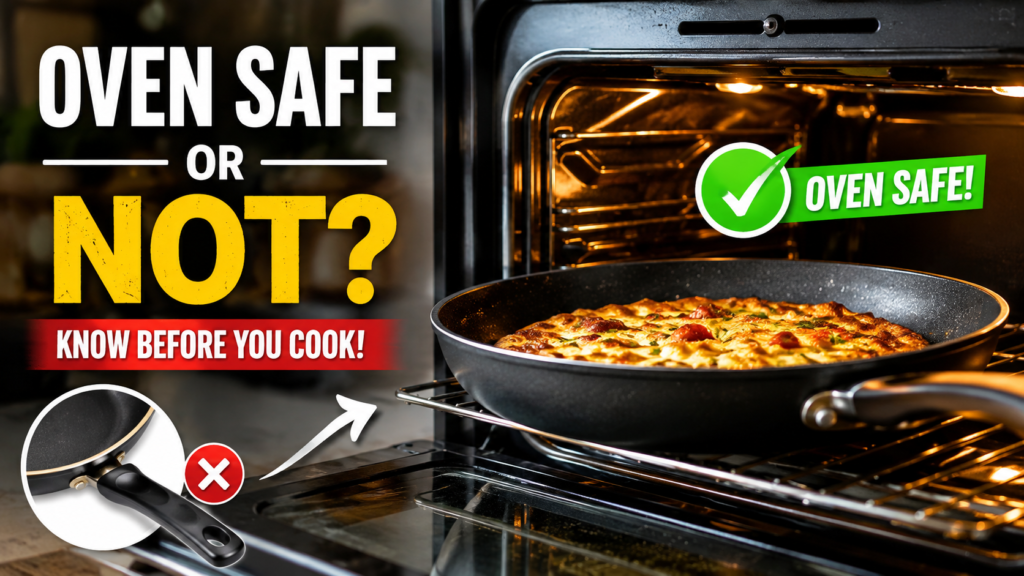
Quick Answer: Whether a non-stick frying pan can go in the oven depends on the handle material and the coating’s heat rating. Many oven-safe non-stick pans handle up to 350–450°F, but plastic or rubber handles and some coatings can’t. Always check the manufacturer’s guidance printed on the pan or in the manual before placing it in the oven.
Finishing a stovetop dish in the oven is a common technique for frittatas, seared chicken, and skillet cornbread. But not every pan in your kitchen setup is built for that switch. If you’re wondering whether your non-stick frying pan can go in the oven safely, the coating type, handle material, and temperature limit all matter more than the brand name on the box.
Non-Stick Coating Safety
Handle Materials
Kitchen Safety
Cookware Care
Trust & Accuracy Note: This article is for general educational and buying-guidance purposes only. It does not replace the manufacturer’s official manual, food safety guidance, or professional advice. Materials, specifications, and care instructions can vary by product and should be confirmed with the manufacturer before purchase or use. For product defects, suspected food-safety issues, or injuries such as burns or cuts, contact the manufacturer, a qualified professional, or seek medical help as needed.
Why This Question Matters in Daily Cooking
A lot of home cooking recipes ask you to sear something on the stove, then move the whole pan into the oven to finish. This saves a dish and cuts cleanup time. The problem is that not every non-stick frying pan is designed for that step. Putting the wrong pan in a hot oven can warp the base, damage the coating, melt a handle, or release a burning smell into your kitchen. Knowing whether your non-stick frying pan can go in the oven, and at what temperature, protects both your cookware and your food.
In daily cooking, I usually notice that people assume “non-stick” automatically means “oven-safe.” Those are two separate ratings. A pan can be excellent for stovetop non-stick cooking and still have a low oven temperature limit or an unsafe handle.
Non-Stick Coating Types Compared
*Figures are general ranges reported by cookware makers, not lab-tested numbers. Always confirm with your product’s manual.
How Oven-Safe Ratings Actually Work
Two separate parts of the pan decide whether it belongs in the oven: the coating and the handle. The coating has a maximum temperature before it can start breaking down. The handle is a separate material that may not tolerate heat the same way as the pan body. A stainless steel handle riveted to the pan usually handles oven heat well. A plastic, rubber, or soft-touch silicone handle often cannot, even if the coating itself is rated higher.
This is the core reason a non-stick frying pan going in the oven isn’t a simple yes-or-no answer for every model. Two pans that look almost identical on a store shelf can have completely different oven ratings because of handle construction alone.
Quick check routine before every oven transfer:
In practice: skipping step 1 or 2 is the most common reason a home cook damages a pan or a handle in the oven.
What to Check Before Using a Non-Stick Pan in the Oven
Before you decide a non-stick frying pan can go in the oven for a specific recipe, run through a few practical checks. A beginner can usually confirm these in under a minute by looking at the pan and the box or manual it came with.
Handle Material
Stainless steel and solid metal handles are generally more oven-tolerant than plastic, rubber-coated, or soft-grip handles. If you can’t tell what the handle is made of, treat it as not oven-safe until you confirm with the manufacturer.
Coating Temperature Limit
Look for a printed oven-safe temperature on the base of the pan, the packaging, or the manual. If it’s missing, many manufacturers list it on their official product or care-instruction page.
Recipe Temperature Match
Some oven recipes call for 450°F or a broiler setting, which can exceed many non-stick coating limits even when the handle is fine. Compare the recipe’s temperature to your pan’s rated maximum, not just its “oven-safe” label.
Safety Note: If a coating looks visibly damaged, flaking, or blistered after oven use, stop using that pan for cooking and check the manufacturer’s guidance on next steps. Do not scrape or continue heating a damaged non-stick surface.
Step-by-Step: Moving a Non-Stick Pan From Stove to Oven
Confirm the pan’s oven-safe rating and handle material against your recipe’s required temperature.
Preheat the oven separately; avoid placing an empty non-stick pan into a very hot oven with nothing in it.
Use dry, thick oven mitts for both hands, since a non-stick handle heats up but often doesn’t look hot.
Place the pan on a center rack, away from direct contact with heating elements or the broiler coil.
When removing the pan, keep using oven mitts, and rest it on a heatproof trivet, not directly on a cold, wet counter.
Decision path: should this pan go in the oven?
This is a general practical guide, not a substitute for the manufacturer’s specific instructions.
Common Mistakes and Better Choices
Note: Many manufacturers stamp an oven-safe temperature directly on the pan’s underside or handle. It’s often easier to check there first before searching the manual.
What Experienced Home Cooks Check That Beginners Miss
Beginners usually stop at “the box says oven-safe.” More experienced home cooks also check the specific temperature number, not just the label, and they double-check it against the actual recipe. They also inspect the coating periodically for early wear, since a pan can start out oven-safe and lose that rating over time as the surface degrades from scratches or overheating.
Tip: If you regularly move pans from stovetop to oven, a pan with a fully metal, riveted handle and a clearly stamped high oven rating can help make that switch more convenient and reduce the guesswork each time.
Care and maintenance checklist dashboard
Relative priority guide (practical guide, not lab data)
Checking handle material
Matching recipe temp to rating
Inspecting coating wear over time
Typical cost range for oven-safe non-stick pans
This article may contain affiliate links. If you buy through these links, we may earn a small commission at no extra cost to you. We only mention products that fit the topic and recommend checking current specs and care instructions directly with the manufacturer.
Metal-Handle Oven-Safe Non-Stick Frying Pan
Many home cooks find a fully metal, riveted handle more convenient for stove-to-oven recipes, since it removes the guesswork around plastic parts. Always confirm the exact oven temperature rating with the manufacturer’s listing before buying.
Ceramic-Coated Non-Stick Skillet
A ceramic-style non-stick skillet can be a helpful pick for lighter oven finishing tasks. Check the manufacturer’s care page for its specific maximum oven temperature before relying on it for high-heat recipes.
When to contact the manufacturer or a professional: If a pan’s coating flakes into food, if a handle loosens or cracks after oven use, if you smell something burning that doesn’t clear after ventilation, or if you experience a burn from a hot handle or pan, contact the manufacturer’s support line, a qualified repair professional, or seek medical help as needed. Do not continue using cookware you suspect is damaged.
For additional guidance on cookware and material safety, you can check the U.S. Consumer Product Safety Commission at cpsc.gov and general kitchen safety resources from the FDA at fda.gov.
Frequently Asked Questions
Can a non-stick frying pan go in the oven at any temperature?
No. Most non-stick frying pans have a maximum oven temperature, often in the 350–450°F range, and going above it can damage the coating. Always check the specific rating for your pan.
How do I know if my pan’s handle is oven-safe?
Metal handles are generally more oven-tolerant than plastic or rubber-coated handles. If you’re unsure of the material, check the manual or the manufacturer’s product page before using the oven.
Can I use a non-stick pan under the broiler?
Only if the manufacturer specifically rates it for broiler use. Broiler heat is often higher and more direct than standard baking, which can exceed many non-stick coating limits.
What happens if I exceed my pan’s oven temperature limit?
The coating can discolor, flake, or give off an odor, and the handle may soften if it isn’t metal. If this happens, stop using the pan and check the manufacturer’s guidance.
Is it safe to put an empty non-stick pan in a preheated oven?
It’s generally better to avoid heating an empty non-stick pan at high oven temperatures, since it can stress the coating faster than a pan with food in it. Follow your recipe’s specific instructions.
Does an oven-safe label mean the pan is safe forever?
No. A coating can wear down over time from scratches, overheating, or age, which may lower its practical performance even if the original rating hasn’t changed. Regularly inspect the surface for wear.
Who should I contact if I’m not sure my pan is oven-safe?
Contact the pan’s manufacturer directly or check their official product and care-instruction pages. They can confirm the exact oven-safe rating for your specific model.
Final Thoughts
Whether a non-stick frying pan can go in the oven really comes down to the handle material and the coating’s specific temperature rating, not the word “non-stick” on the label. Check both before every stove-to-oven recipe, keep an eye on coating wear over time, and confirm care instructions with the manufacturer. For any suspected product defect, burn, or cut, contact the manufacturer, a qualified professional, or seek medical help as needed.