
By Michael Hayes — RecipeTalkToday
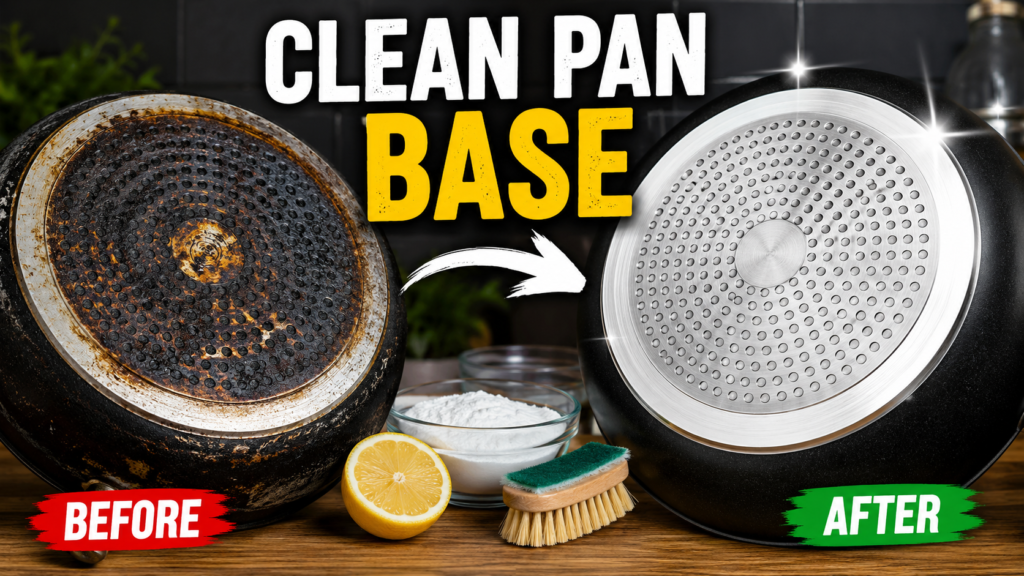
That stubborn ring on the outside of your pan isn’t just cosmetic — it’s usually a mix of baked-on oil, mineral deposits from hard water, and heat discoloration. Knowing how to clean frying pan base buildup the right way keeps your cookware looking better and heating more evenly, without damaging the surface. This guide walks through material-specific methods, common mistakes, and when it’s worth checking with the manufacturer instead of scrubbing harder.
Stainless Steel Pans
Nonstick Cookware
Cast Iron Care
Burnt Residue Fixes
Kitchen Cleaning Routine
Why the Base of a Frying Pan Gets So Dirty
The base of a pan sits directly over the burner, so it takes the most heat exposure of any part of the cookware. Oil splatters, sauce drips, and stovetop grease bake onto that surface every time you cook, and over weeks it hardens into a dark, sticky ring. Hard water can add another layer, leaving faint white mineral spots once the pan dries.
Knowing how to clean frying pan base buildup matters for more than looks. A crusty base can trap heat unevenly, cause more smoke on your stovetop, and make the pan slide less smoothly on glass or induction cooktops. Left long enough, some residues become genuinely difficult to remove without a stronger method.
What You’re Actually Looking At
Before scrubbing, it helps to know what’s causing the mark. Not every stain responds to the same method, and using the wrong one can scratch or dull the finish.
This looks like a dark, slightly glossy ring around the base edge. It builds up from splatter that never gets wiped after cooking. Warm soapy water plus gentle scrubbing usually loosens it.
This is a hard, dark, almost crusty layer that won’t wipe off dry. It forms from repeated high-heat cooking without cleaning in between. It typically needs soaking plus a paste-based cleaner.
These look like pale, chalky marks rather than dark residue. They’re common in hard water areas and often need a mild acid, like diluted vinegar, rather than scrubbing.
Bluish or rainbow-toned patches on stainless steel bases are usually from overheating, not dirt. These may fade slightly with a stainless-safe cleaner, but they aren’t always fully removable.
Step-by-Step: How to Clean Frying Pan Base Buildup
This routine works for most everyday buildup. For heavily burnt bases or specialty coatings, check the material-specific notes further down before starting.
Let the pan cool completely. Cleaning a hot pan can warp thin cookware and increases the risk of a burn from splashing water or cleaner.
Fill the sink or a basin with warm water and a few drops of dish soap. Submerge the base and let it soak for 10 to 15 minutes to loosen surface grease.
For light residue, wipe with a soft sponge in circular motions. Avoid steel wool on nonstick or anodized surfaces, since it can scratch the coating.
For stubborn spots, make a paste of baking soda and a small amount of water. Spread it over the base and let it sit for 15 to 20 minutes before scrubbing gently.
Rinse thoroughly under warm water, making sure no cleaner residue is left in texture or edges near the base.
Dry the pan fully with a towel right away. Air-drying can leave water spots, especially in hard water areas, undoing some of the cleaning work.
Cleaning Routine Flow
This is a general routine, not a fixed rule — heavier buildup may need a repeat pass or a longer soak.
Cleaning by Pan Material
How you clean frying pan base residue should change depending on what the pan is made of. A method that’s fine on stainless steel can strip a nonstick coating or dull anodized aluminum.
Common Problems and What’s Behind Them
Troubleshooting Decision Path
Residue still dark after soaking and scrubbing with baking soda? → Try a second paste application and a longer soak, not more pressure.
Still no change after two attempts, and the surface is coated or nonstick? → Stop scrubbing and check the manufacturer’s care guidance — the coating may need a specific product.
Pan base looks pitted, warped, or the coating is flaking? → This isn’t a cleaning issue. Contact the manufacturer about the cookware’s condition.
Safe Practices vs. Risky Shortcuts
Understanding how to clean frying pan base marks safely also means knowing which shortcuts cause more harm than they save time.
Tools That Make the Job Easier
You don’t need a large kit to keep on top of base buildup. A few consistent tools make it easier to fit cleaning into a normal routine, rather than saving it for a deep-clean day.
Works on most metals without scratching. Good for daily wipe-downs so residue never gets the chance to bake on hard.
A step up from a sponge for baked-on spots, without the risk that steel wool carries on coated surfaces.
Many home cooks find this convenient for lifting stubborn base rings on stainless steel without heavy scrubbing.
Helps prevent water spotting right after washing, which can make the base look dirty again within a day.
Many home cooks find a dedicated stainless cleaner convenient for lifting baked-on rings from a pan base without heavy scrubbing. Always check the label for compatibility with your specific cookware finish.
These can make daily cooking cleanup easier on coated or polished cookware, since they’re designed to avoid the fine scratches that steel wool tends to leave behind.
Choosing a Method: Fit Check by Situation
Care Checklist Dashboard
This is a general routine guide, not a strict schedule — adjust based on how often you cook.
Relative Difficulty by Residue Type (practical guide, not lab-tested)
What Experienced Home Cooks Check That Beginners Miss
In daily cooking, I usually notice that the base gets ignored until it’s visibly dirty, while the cooking surface gets wiped every time. Experienced cooks tend to do a quick base wipe as part of the same routine, not as a separate chore. They also check the handle attachment and rivets for grease buildup, since grime there can flake into food later, and they avoid stacking pans with a damp base against another pan’s polished surface.
Safety and Hygiene Around Cleaning
Most base-cleaning tasks are low-risk, but a few habits matter. Never mix cleaning products, especially anything containing bleach or ammonia, since the combination can produce harmful fumes. Rinse cookware thoroughly before it touches food again, since cleaner residue isn’t meant to be ingested. If a scrub pad or cleaner causes skin irritation, stop use and rinse the affected area with water.
Frequently Asked Questions
What’s the fastest way to clean a frying pan base?
For light residue, warm soapy water and a soft sponge right after the pan cools is usually enough. Soaking first speeds things up for anything more stubborn.
Can I use vinegar to clean a frying pan base?
Diluted white vinegar can help with mineral spots on stainless steel or copper-bottom pans. Check the manufacturer’s guidance first if the pan has a nonstick or specialty coating.
Is it safe to use steel wool on a pan base?
It depends on the material. Steel wool can work on bare cast iron, but it’s often too abrasive for nonstick, anodized, or polished stainless finishes and may leave scratches.
Why does my pan base get dirty again so quickly?
This is often from air-drying instead of towel-drying, which lets water spots and residue reform, or from setting the pan directly on a greasy stovetop.
Can burnt residue on the base affect cooking performance?
A heavily built-up base can affect how evenly the pan heats and how well it sits flat on some cooktops, so keeping it reasonably clean can help with daily cooking consistency.
Is it safe to put a frying pan base in the dishwasher?
This depends entirely on the pan. Many nonstick and cast iron pans aren’t dishwasher-safe. Always check the manufacturer’s care instructions before running cookware through a dishwasher.
When should I stop trying to clean the base myself?
If the base looks warped, pitted, or the coating is flaking regardless of cleaning, that’s a cookware condition issue rather than a cleaning issue, and it’s worth contacting the manufacturer.
Learning how to clean frying pan base buildup comes down to matching the method to the material and cleaning a little more often, rather than waiting for a deep clean. Always confirm care instructions with your pan’s manufacturer, especially for coated or specialty cookware, and seek professional or medical help for any injury, product defect, or persistent food-safety concern.
— RecipeTalkToday
