
By Michael Hayes — RecipeTalkToday
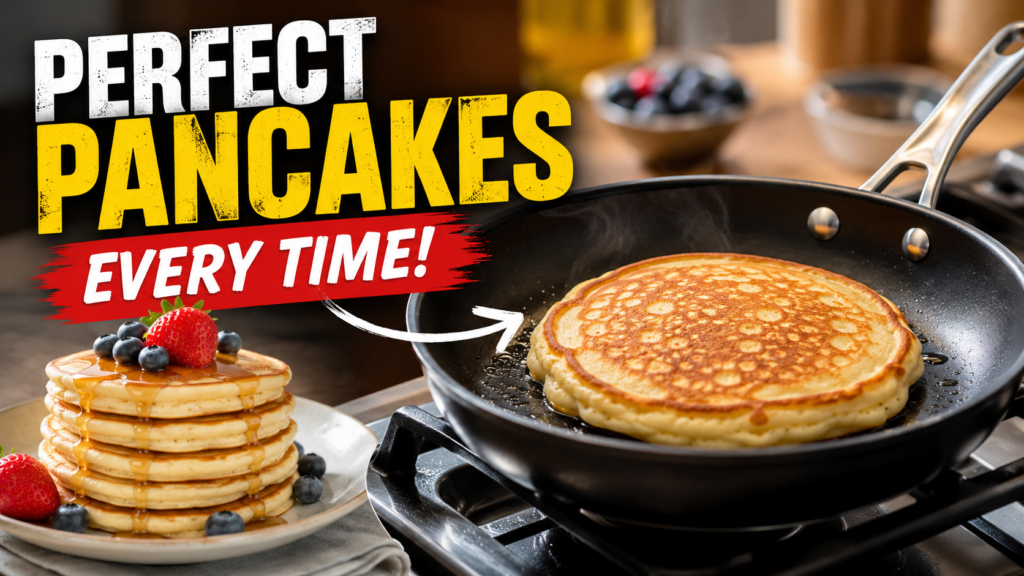
Quick Answer: To cook pancakes in a frying pan, preheat it on medium-low heat, add a light layer of butter or oil, pour batter in the center, and cook until bubbles form and edges look set. Flip once and cook the second side until golden. Consistent, moderate heat matters more than speed.
Many home cooks want to know how to cook pancakes in a frying pan without ending up with burnt spots, raw centers, or pancakes that stick and tear apart. The good news is that most pancake problems come down to a few fixable habits around heat, pan choice, and timing. This guide walks through a practical, safety-aware approach that works with almost any frying pan already in your kitchen.
Frying Pan Choice
Heat Control
Common Mistakes
Pan Care
This article on RecipeTalkToday is for general educational and buying-guidance purposes only. It does not replace the manufacturer’s official manual, food safety guidance, or professional advice. Materials, specifications, and care instructions can vary by product and should be confirmed with the manufacturer before purchase or use. For product defects, suspected food-safety issues, or injuries such as burns or cuts, contact the manufacturer, a qualified professional, or seek medical help as needed.
What You Need Before You Start
Before you cook pancakes in a frying pan, it helps to have a few basics ready: a level stovetop, a pan with a flat cooking surface, a thin spatula, batter at room temperature, and a small amount of butter or neutral oil. Cold batter straight from the fridge can cook unevenly, so letting it sit out for a few minutes often helps.
In daily cooking, I usually notice that pancakes turn out more consistent when the batter has a pourable, not runny, texture. If it looks too thick, a small splash of milk can loosen it. If it looks watery, a spoonful of flour can help firm it up.
Choosing the Right Frying Pan for Pancakes
Not every frying pan behaves the same way. Some heat unevenly, some hold heat too long, and some need more oil than others to prevent sticking. Knowing what your pan is made of can help you predict how it will behave before the first pancake ever hits the surface.
Comparing Common Pan Types
Tip: If you’re unsure which pan to use, a nonstick pan is often the most forgiving option for people just learning how to cook pancakes in a frying pan for the first time.
Step-by-Step: Cooking Pancakes in a Frying Pan
These steps outline a practical routine many home cooks find reliable. Times can vary depending on your stove and pan, so treat this as a starting guide rather than a fixed rule.
Preheat the pan on medium-low heat for about two minutes. A pan that’s too hot too quickly is one of the most common reasons pancakes burn on the outside while staying raw inside.
Add a small amount of butter or oil and let it melt evenly across the surface before pouring batter.
Pour the batter into the center of the pan and let it spread naturally rather than pushing it with the spatula.
Watch for small bubbles forming across the top and edges that look slightly dry and matte, usually within two to three minutes.
Flip once, firmly and quickly, using a thin spatula. Avoid flipping more than once, since repeated flipping can deflate the pancake.
Cook the second side for one to two minutes until golden, then transfer to a plate and repeat with the remaining batter.
Heat-Up Routine at a Glance
This is a typical routine priority, not a strict formula — your stove’s heat strength can shift these timings slightly.
Common Pancake Problems and Likely Causes
If pancakes aren’t coming out the way you’d like, the issue is usually one of a handful of predictable causes.
Problem vs Likely Cause
Safe vs Risky Practices When Cooking Pancakes
Heat and hot oil are involved any time you cook on a stovetop, so a few safety habits matter alongside technique.
Quick Troubleshooting Path
Pancake sticking? → Check oil amount → Still sticking? → Check pan surface wear → Still sticking? → Confirm pan material with manufacturer guidance.
This path is meant as a starting checklist, not a diagnosis — persistent sticking on a newer pan may be worth reviewing with the manufacturer.
Matching Pan Material to Your Stove
How you cook pancakes in a frying pan can also depend on your stove type, since gas, electric coil, and induction heat differently.
Common Mistakes and Better Choices
After-Cooking Pan Care Checklist
☐ Let the pan cool before washing ☐ Use non-abrasive sponge on nonstick ☐ Dry fully before storing ☐ Check manufacturer notes for seasoning (cast iron)
Following this typical routine can help a pan perform consistently over more uses, though results still vary by product and use.
What Experienced Home Cooks Check That Beginners Miss
Pan Temperature Test
A small drop of water should dance and evaporate quickly, not sit still or vanish instantly. This can be a useful, informal check before adding batter.
Batter Consistency
Experienced cooks often adjust batter thickness slightly between batches as it sits, since it can thicken over time.
Pan Surface Wear
Scratches or thinning nonstick coating are often checked before deciding whether a pan still needs less oil or more.
Batch Timing
Wiping the pan lightly between pancakes can help keep browning consistent across a full batch.
Pan Type Fit for Pancakes (Relative Guide)
This is a practical guide based on general ease of use, not lab-tested performance data.
This article may contain affiliate links. If you buy through these links, RecipeTalkToday may earn a small commission at no extra cost to you. We only mention products that fit the topic and recommend checking current specs and care instructions directly with the manufacturer.
Frying Pans That Can Make This Easier
Nonstick Frying Pan, 10-inch
A nonstick surface can make daily cooking easier for beginners still learning how to cook pancakes in a frying pan, since it typically needs less oil and less scrubbing afterward.
Pre-Seasoned Cast Iron Skillet
Many home cooks find cast iron convenient for even browning once it’s properly heated, though it does need a slightly longer preheat time than nonstick pans.
When to Contact a Professional or Manufacturer: If a nonstick coating is flaking, a handle is loose, or a pan warps on the stovetop, stop using it and check the manufacturer’s guidance. For burns, deep cuts, or a kitchen fire that doesn’t go out immediately when the heat source is removed, seek medical help or contact emergency services right away.
For general food safety guidance, the FoodSafety.gov website offers additional background on safe home cooking practices, and the Consumer Product Safety Commission publishes guidance on cookware recalls and kitchen safety.
Frequently Asked Questions
What heat setting is best when cooking pancakes in a frying pan?
Medium-low heat is often recommended, since it gives the batter time to cook through before the outside browns too fast.
Do I need oil or butter if my pan is nonstick?
A light amount is still generally recommended for flavor and even browning, even on nonstick surfaces.
How do I know when to flip a pancake?
Look for small bubbles across the surface and edges that appear dry and slightly set, usually after two to three minutes.
Why do my pancakes stick to the frying pan?
Sticking is often caused by too little oil, a pan that isn’t fully preheated, or wear on a nonstick coating over time.
Can I use a cast iron skillet instead of a nonstick pan?
Yes, many home cooks use cast iron for pancakes, though it typically needs a longer preheat and slightly more oil.
How do I clean a frying pan after cooking pancakes?
Let the pan cool, then wash with a non-abrasive sponge. Cast iron may need a different care routine, so check the manufacturer’s instructions.
What should I do if my nonstick pan starts flaking?
Stop using it for cooking and check the manufacturer’s guidance, since flaking coating shouldn’t come into contact with food.
Learning how to cook pancakes in a frying pan really comes down to steady heat, a bit of patience, and knowing your pan. Small adjustments — like lowering the heat or switching spatulas — often make a bigger difference than switching recipes. Always confirm care instructions and materials with your pan’s manufacturer, and seek professional or medical help for any burns, cuts, or ongoing product concerns. — RecipeTalkToday
