By Emma Hayes — RecipeTalkToday
Quick Answer: A rice cooker troubleshooting guide usually starts with three checks: the power connection, the inner pot’s fit against the heating plate, and the rice-to-water ratio. Most issues — early shut-off, hard rice, error codes, or odd smells — trace back to one of these three areas rather than a major appliance failure.
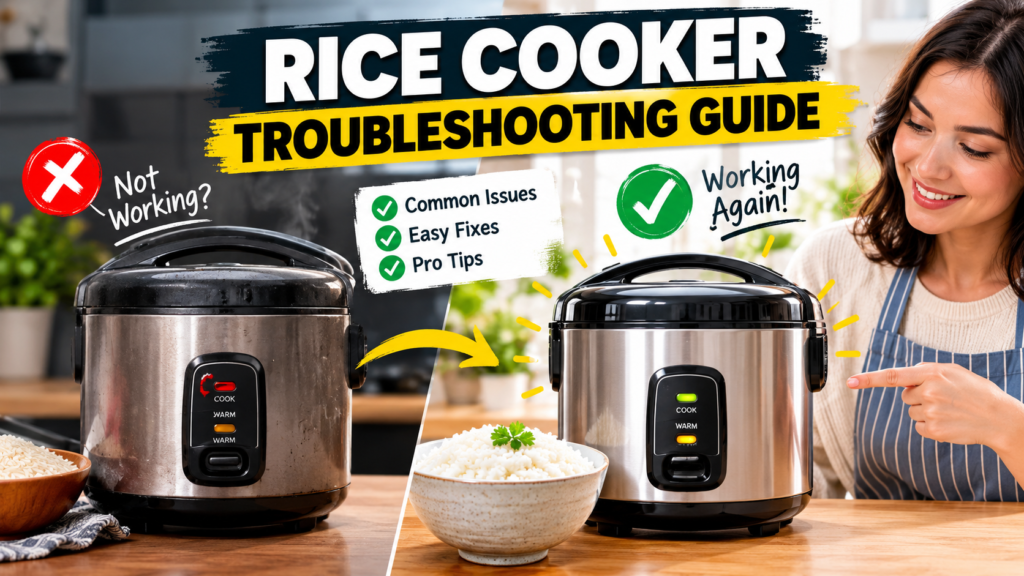
Rice cookers are simple machines, but small issues can make daily cooking frustrating. This rice cooker troubleshooting guide walks through the most common problems home cooks run into, what typically causes them, and how to check things safely before assuming the appliance is broken.
Undercooked Rice
Safety Checks
Maintenance
When to Call the Manufacturer
This article on RecipeTalkToday is for general educational and buying-guidance purposes only. It does not replace the manufacturer’s official manual, food safety guidance, or professional advice. Materials, specifications, and care instructions can vary by product and should be confirmed with the manufacturer before purchase or use. For product defects, suspected food-safety issues, or injuries such as burns or cuts, contact the manufacturer, a qualified professional, or seek medical help as needed.
Why a Rice Cooker Troubleshooting Guide Actually Helps
Rice cookers seem foolproof, which is exactly why small problems catch people off guard. In daily cooking, I usually notice that most “broken” rice cookers aren’t broken at all — a loose lid, a warped inner pot, or an off ratio is usually the real cause. A clear troubleshooting process saves you from replacing an appliance that just needs a simple fix, and it also helps you catch the rare situation where a repair or replacement really is the safer option.
How a Rice Cooker Works (Quick Refresher)
Most rice cookers use a thermostat or sensor that reads the temperature of the inner pot. As long as there’s water present, the pot stays near boiling. Once the water is absorbed, the temperature rises above that point, which tells the machine to switch to “keep warm.” Anything that interferes with heat transfer or sensor contact — a dented pot, food debris, or a loose lid — can throw off this whole process.
Common Problems and Likely Causes
Here’s where most people start when they search for a rice cooker troubleshooting guide: matching a symptom to a likely cause before deciding on a fix.
Problem vs. Likely Cause
Basic troubleshooting flow:
Unplug and check the outlet, cord, and plug for damage.
Remove and inspect the inner pot for warping, scratches, or debris.
Confirm the water ratio matches the type and amount of rice used.
Run a plain water test cycle to see if heating and shut-off behave normally.
In practical terms, this order moves from the easiest checks (power, pot condition) to the more involved ones (a full test cycle), which is usually the fastest path to an answer.
Step-by-Step: Working Through the Troubleshooting Process
Once you’ve spotted a likely symptom, working through these steps in order can help confirm the cause before you decide on a fix or a replacement.
Check the display for an error code. Note the exact code and check the manufacturer’s manual, since codes vary by brand and model.
Test the power source. Try a different outlet and confirm the cord isn’t frayed or loose at the connection point.
Inspect the inner pot and heating plate. Wipe away any dried rice or residue, and check the pot sits flat without wobbling.
Check the lid seal and steam vent. A loose gasket or a clogged vent can throw off pressure and cook times.
Run a plain water test. Add water only, start a cycle, and watch whether it heats and shuts off at a reasonable point.
Review your rice-to-water ratio. Different rice types (white, brown, jasmine) often need different ratios, so check the markings inside the pot.
How Rice Cooker Types Compare for Troubleshooting
Safety and Hygiene Checks Before You Keep Using It
Any rice cooker troubleshooting guide worth following should treat safety as a first step, not an afterthought. Electrical appliances that overheat, spark, or trip breakers repeatedly need extra caution, and food left at unsafe temperatures for too long can support bacterial growth even if the appliance seems to be working.
Warning: If the cord is frayed, the plug feels hot, or the unit trips a circuit breaker more than once, avoid this appliance until it has been checked by a qualified professional or the manufacturer. Do not attempt to repair internal electrical components yourself.
Safety decision path:
Cosmetic or minor issue
Loose lid, dried food residue, or a slightly off ratio. Usually safe to clean and continue using.
Functional issue
Error codes, early shut-off, or undercooked rice. Worth testing further before replacing anything.
Electrical warning sign
Burning smell, sparking, hot plug, or repeated breaker trips. Stop use and contact the manufacturer.
Food safety concern
Rice left on “keep warm” for many hours, or a sensor that won’t hold safe temperature. Follow food safety guidance closely.
In practical terms, most day-to-day issues fall into the first two categories, but it’s worth knowing the warning signs for the other two before they turn into a bigger problem.
Safe vs. Risky Practices
Common Mistakes People Make
A few habits show up again and again in any rice cooker troubleshooting guide discussion, and most are easy to fix once you know to look for them.
Mistake vs. Better Choice
Care and maintenance checklist:
After every use
Wipe the heating plate and check the lid seal for stray grains of rice.
Weekly
Inspect the inner pot for scratches or early signs of warping.
Monthly
Check the steam vent and gasket for buildup that could affect sealing.
As needed
Confirm the cord and plug show no fraying, discoloration, or heat damage.
Many home cooks find that sticking to this kind of routine catches small issues long before they turn into a full appliance failure.
Matching the Right Tool or Part to the Problem
Part of a good rice cooker troubleshooting guide is knowing which simple tool or part actually fits the problem you’re seeing, instead of guessing.
Tool/Part Fit Table
Relative difficulty of common fixes (practical guide, not lab-tested data):
Wiping the heating plate
Adjusting the water ratio
Checking the lid seal and vent
Diagnosing a recurring error code
Electrical or wiring concerns
As a typical routine priority, the first few items are worth trying yourself, while anything involving wiring or persistent electrical symptoms is better handled by a professional or the manufacturer.
Pro Tips: What Experienced Home Cooks Check That Beginners Miss
Rinsing rice first
Rinsing removes excess surface starch, which can affect texture and how the cooker reads doneness.
Letting rice rest
A short rest after cooking often improves texture more than adjusting the ratio again.
Pot placement
A pot that isn’t seated flat is one of the most overlooked causes of uneven cooking.
Keeping the manual
Model-specific error codes and ratios often differ, so the manual stays the most reliable reference.
Tip: Keep a small note of your usual rice type and ratio taped near your rice cooker. It’s a simple habit that removes a lot of the guesswork the next time something seems off.
When to Contact a Professional or the Manufacturer
Reach out to the manufacturer, a qualified appliance repair professional, or seek medical help as appropriate if you notice: a cord or plug that feels hot, sparking, repeated breaker trips, a persistent burning smell after cleaning, a cracked or damaged inner pot, or any burn or cut sustained while using the appliance. These situations go beyond what home troubleshooting can safely resolve.
Frequently Asked Questions
What are the most common problems a rice cooker troubleshooting guide addresses?
The most common issues are early shut-off, undercooked or mushy rice, error codes on the display, a unit that won’t start, and unusual smells. Most trace back to water ratio, pot contact, or residue rather than a major fault.
Why does my rice cooker keep shutting off early?
This is often caused by too little water, a warped inner pot, or a gap between the pot and the heating plate. Confirming the ratio and checking the pot’s fit usually resolves it.
Why is my rice still hard or undercooked on the normal setting?
This is commonly linked to an incorrect water ratio, older rice that absorbs water differently, or a scratched inner pot that no longer heats evenly. Testing with a fresh batch of rice and the manufacturer’s recommended ratio is a good first step.
Why does my rice cooker smell like burning or plastic?
A burning smell is often caused by food debris on the heating plate. If the smell persists after cleaning, or smells like burning plastic rather than food, unplug the unit and check the manufacturer’s guidance before using it again.
Can I use vinegar to clean the inner pot?
A mild vinegar-and-water rinse is commonly used for mineral buildup, but it’s best to check the manufacturer’s cleaning instructions first, especially for pots with a non-stick or specialty coating.
Is it safe to keep using a rice cooker that tripped a circuit breaker?
Repeated breaker trips are a warning sign, not a coincidence. Unplug the unit and have it checked by a qualified professional or the manufacturer before using it again.
When should I stop troubleshooting and contact the manufacturer?
Stop and contact the manufacturer if you notice sparking, a hot plug, a persistent burning smell, a cracked pot, or any injury while using the appliance. These situations are outside the scope of home troubleshooting.
Most rice cooker problems come down to a handful of simple checks: power, pot fit, water ratio, and a clean heating plate. Working through them in order, as this rice cooker troubleshooting guide outlines, usually points to a fix without any guesswork. Always confirm specific care instructions and error codes with your manufacturer’s manual, and seek professional or medical help right away for injuries, persistent electrical issues, or ongoing food-safety concerns. — RecipeTalkToday
Further reading: U.S. Consumer Product Safety Commission for general appliance safety guidance, and FoodSafety.gov for safe food holding and storage temperatures.