
By Michael Hayes
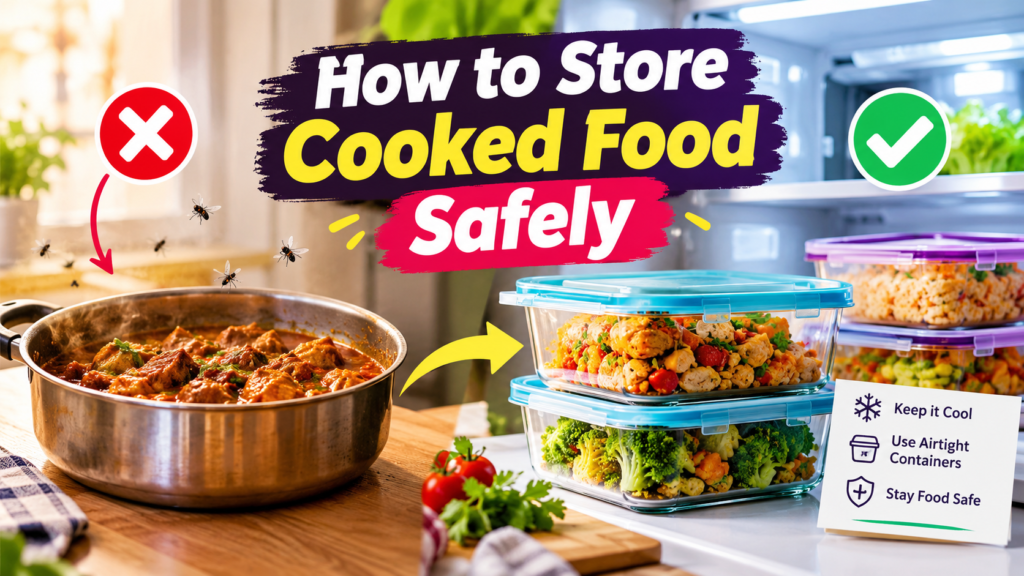
Quick Answer: Cool cooked food fast, then refrigerate it within 2 hours (1 hour if the room is above 90°F). Use shallow, airtight containers, keep your fridge at 40°F or below, and eat refrigerated leftovers within 3 to 4 days. Freeze extra portions, and reheat leftovers to 165°F.
Leftovers save time and money, but only when they stay safe. Many home cooks leave a pot on the stove, forget about it, and later wonder if it is still okay. This guide explains how to store cooked food safely, from cooling and packing to fridge times, freezing, and reheating. You will get a simple routine, quick tables, and clear rules for any meal.
This article is for general educational and buying-guidance purposes only. It does not replace the manufacturer’s official manual, food safety guidance, or professional advice. Materials, specifications, and care instructions can vary by product and should be confirmed with the manufacturer before purchase or use. For product defects, suspected food-safety issues, or injuries such as burns or cuts, contact the manufacturer, a qualified professional, or seek medical help as needed.
Why Safe Storage of Cooked Food Matters
Cooked food is not safe forever just because it was cooked well. Bacteria can grow when food sits between 40°F and 140°F, often called the danger zone. You usually cannot see, smell, or taste the germs that cause food poisoning, so food can look fine and still be unsafe.
Think of storage as the last step of cooking. Beginners watch the clock and the fridge. Experienced home cooks also portion food early, label containers, and use a thermometer instead of guessing.
Note: Cooking kills many germs, but food can be contaminated again afterward. Some bacteria also make toxins that reheating may not remove.
How to Store Cooked Food Safely: Start With the Two-Hour Rule
The most important rule is time. Refrigerate cooked food within 2 hours. If the room is hotter than 90°F, such as at a summer picnic, make it 1 hour. Hot food can go straight into the fridge when it is divided into shallow containers.
A big pot of soup holds heat in the middle for a long time. Smaller portions cool faster all the way through.
This flow shows the order that works for most meals.
Practical guide: Cooling and storing flow
Move food out of the hot pot. Smaller amounts lose heat sooner.
Fill shallow containers. Keep portions meal-sized.
Refrigerate or freeze within 2 hours. No need to wait for steam to stop.
Write the date on each container. It makes the 3 to 4 day rule easy.
Read it left to right. Set out containers before you serve dinner so the first step is easy.
Warning: Do not leave a pot on the stove overnight to cool. Food left out too long should be thrown away, even if it smells fine.
Fridge, Freezer, and Counter Compared
Step-by-Step Routine for Storing Leftovers
Here is a simple routine for how to store cooked food safely after any meal.
Tip: Keep painter’s tape and a marker near the fridge. When labeling is easy, you will actually do it.
Choosing Containers for Safe Leftover Storage
Containers matter when you think about how to store cooked food safely, because the wrong shape slows cooling and a loose lid lets air in. Choose this if you reheat often: a container labeled microwave safe. Avoid this if a container is cracked, warped, or holds a lasting odor. Check the manufacturer’s guidance before moving a container from freezer to microwave or oven.
Container Material Fit
Four basic tools cover most storage jobs.
Practical guide: Tool fit by job
Best for cooling soups, rice, and casseroles. A strong daily fit.
Confirms 165°F when reheating. Useful for casseroles and meat dishes.
Shows whether your fridge and freezer stay cold. Check it weekly.
Track dates at a glance. Great for busy households.
If you buy only two things, start with shallow containers and a thermometer. They address slow cooling and guessing.
Fridge and Freezer Times for Cooked Food
Part of how to store cooked food safely is watching the calendar. Set your fridge to 40°F or below and your freezer to 0°F. Dial settings may not match real temperatures, so a small appliance thermometer helps.
Most cooked leftovers are best eaten within 3 to 4 days. Frozen food stays safe at 0°F, but quality fades over time, so eat it within a few months for the best taste.
This bar guide shows what usually matters most.
Typical routine priority (practical guide, not scientific data)
Speed and cold temperatures come first. Labels and lids help, but they cannot fix food that sat out too long.
Safer Practices vs Risky Habits
Safety Note: Rice, pasta, soups, and meat dishes all need quick cooling. Young children, older adults, pregnant people, and those with weakened immune systems face higher risk from foodborne illness. For current guidance, visit FoodSafety.gov, the USDA, or the FDA.
Common Storage Problems and Likely Causes
Sometimes leftovers look or smell wrong. This table points to likely causes, but when in doubt, throw it out.
Problem vs Likely Cause
Use this path when you are unsure about leftovers.
Practical guide: Safety decision path
Yes: refrigerate now. No: throw it away.
Yes: keep going. No: throw it away.
Yes: throw it away. No: reheat to 165°F.
A normal smell does not prove safety, so follow the time rules first. A bad smell is always a clear stop sign.
Thawing and Reheating Stored Food Safely
Safe storage ends with safe reheating. Heat leftovers to 165°F, checking the thickest part with a food thermometer. Bring soups, sauces, and gravies to a rolling boil. Stir microwaved food and let it stand so heat spreads evenly.
Move frozen food to the fridge the night before. It stays cold while it thaws.
Seal food in a leakproof bag and submerge it, changing the water every 30 minutes. Cook it right after thawing.
Use the defrost setting, then cook the food right away. Some spots may start to cook, which is normal.
The outside warms while the middle stays frozen. That gives bacteria time to grow.
Mistake vs Better Choice
Quick Weekly Fridge Check
Run through this list once a week.
Practical guide: Weekly checklist
Five minutes a week keeps leftovers from getting lost at the back of the shelf.
When to Contact a Professional or Manufacturer: If you think food made someone sick, contact a doctor or your local health department. For severe symptoms like ongoing vomiting, high fever, or dehydration, seek medical care. If a container cracks or your fridge will not stay cold, check the manual and contact the manufacturer. Never attempt electrical repairs yourself.
Helpful Storage Tools
This article may contain affiliate links. If you buy through these links, we may earn a small commission at no extra cost to you. We only mention products that fit the topic and recommend checking current specs and care instructions directly with the manufacturer.
Shallow Glass Food Storage Containers with Lids
Shallow shapes can help leftovers cool faster, and clear sides make contents easy to see. Check lid and container labels for microwave and freezer use.
Refrigerator and Freezer Thermometer
A simple appliance thermometer can make it easier to confirm your fridge stays at 40°F or below and your freezer at 0°F. Many home cooks find it convenient.
Frequently Asked Questions
Is there a simple rule for how to store cooked food safely?
Yes. Refrigerate cooked food within 2 hours, or 1 hour above 90°F. Use shallow containers, keep the fridge at 40°F or below, and eat leftovers within 3 to 4 days.
How long can cooked food sit out?
Up to 2 hours at room temperature, or 1 hour when the air is above 90°F. After that, throw it away.
Can I put hot food straight into the fridge?
Yes, if it is divided into shallow containers. Smaller portions cool faster, and the fridge should stay at 40°F or below.
How long do leftovers last in the fridge?
Most cooked leftovers are best used within 3 to 4 days. Label containers with the date so you do not have to guess.
Can I freeze cooked food?
Yes. Freeze it in airtight packaging at 0°F and press out extra air. Quality fades over time, so use it within a few months.
What temperature should I reheat leftovers to?
Heat leftovers to 165°F, measured with a food thermometer. Bring soups, sauces, and gravies to a rolling boil.
Final Thoughts
Safe leftovers come down to a few habits: cool food quickly, use shallow containers, keep the fridge cold, label everything, and reheat well. Now you know how to store cooked food safely in a way that fits a busy kitchen. Always check manufacturer instructions for your containers and appliances, follow food-safety guidance, and seek professional or medical help for serious problems.
