
By Michael Hayes
Quick Answer: Chicken cuts fall into lean white meat, like breasts, and richer dark meat, like thighs and drumsticks. Breasts cook fast but dry out easily. Dark meat is more forgiving. Match the cut to your cooking method, and cook all chicken to a safe 165°F internal temperature.
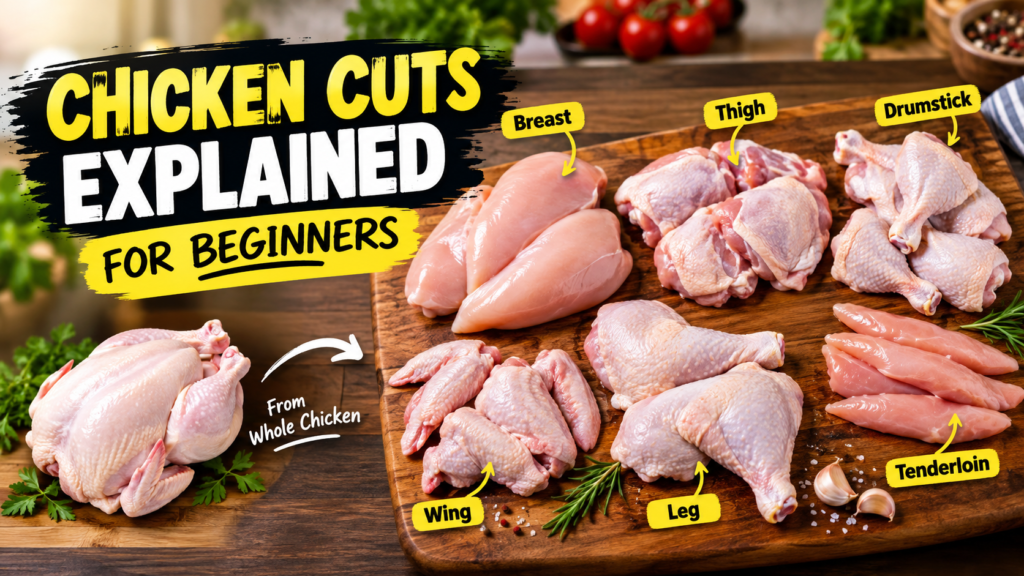
Standing in front of the poultry case can feel confusing. Breasts, thighs, drumsticks, wings, and whole birds all look different, and each one cooks a little differently. This guide offers chicken cuts explained for beginners in plain language, so you can buy with confidence and cook with fewer surprises. You will learn what each cut is, how it tastes and cooks, which mistakes to avoid, and how to handle raw chicken safely.
This article is for general educational and buying-guidance purposes only. It does not replace the manufacturer’s official manual, food safety guidance, or professional advice. Materials, specifications, and care instructions can vary by product and should be confirmed with the manufacturer before purchase or use. For product defects, suspected food-safety issues, or injuries such as burns or cuts, contact the manufacturer, a qualified professional, or seek medical help as needed.
Why Chicken Cuts Matter for Beginners
Chicken is one of the most common proteins in American kitchens, yet the package label can still confuse new cooks. Each cut has a different amount of fat, bone, and connective tissue. Those differences change how fast it cooks and how juicy it turns out. Learning the basics helps you avoid dry dinners and undercooked meals.
White Meat vs. Dark Meat
White meat comes from muscles chickens use less, such as the breast. It is lean and mild. Dark meat comes from muscles used more, such as the thighs and legs. It has more fat and flavor, so it stays moist longer. Wings sit in between and are often cooked like dark meat.
The Main Chicken Cuts Explained
Here is chicken cuts explained for beginners, one piece at a time. Use the table below as a quick buying reference.
Chicken Cuts Comparison Chart
| Cut | Meat type | Texture and flavor | Best for |
|---|---|---|---|
| Breast | White | Lean, mild, firm | Grilling, pan-searing, sliced cutlets |
| Tenderloin | White | Lean, soft | Quick sautés and kebabs |
| Thigh | Dark | Juicy, rich | Roasting, braising, grilling |
| Drumstick | Dark | Meaty, flavorful | Baking, frying, slow cooking |
| Wing | Mixed | Crispy skin, small meat | Baking, air frying, grilling |
| Whole chicken | Both types | Varies by part | Roasting and stock |
Choose boneless breasts or tenderloins if you want fast weeknight meals. Choose thighs or drumsticks if you want forgiving, juicy results. Avoid bone-in pieces if you dislike eating around bones.
Chicken Breasts and Tenderloins
Boneless, skinless breasts are the most popular cut. They are lean, so they cook quickly and can turn dry if left too long. Tenderloins are the thin strip under the breast. They cook even faster. An experienced cook may pound a thick breast to an even thickness so it cooks evenly.
Thighs and Drumsticks
Thighs and drumsticks are dark meat and are often a budget-friendly choice. They have more fat, so they stay juicy under higher heat. Imagine baking a tray of drumsticks for a family dinner. The meat usually stays tender even if you leave it in a few extra minutes.
Wings, Whole Chickens, and Leg Quarters
Wings have a lot of skin and little meat, which is why they crisp so well. A whole chicken gives you breasts, thighs, legs, and wings in one package, plus bones for stock. Leg quarters include the thigh and drumstick joined together. They are a simple roasting option.
This simple flow shows how to pick a cut by thinking about time, budget, and effort.
Start with the method, not the cut. Fast methods like pan-searing suit breasts, while slow or high-heat methods suit thighs and drumsticks.
Reading the Label and Buying Chicken
Fresh chicken should be kept cold on the way home. Check the sell-by date and make sure the package is not torn or leaking. Packages labeled boneless, skinless, bone-in, or split breast tell you what you are getting. This is where chicken cuts explained for beginners becomes practical: match the package to your plan for the week.
Common Chicken Problems and Why They Happen
Most beginner mishaps come from uneven thickness, high heat, or guessing doneness. The table below connects common problems with likely causes.
Problem vs. Likely Cause
| Problem | Likely cause | What to try |
|---|---|---|
| Dry breast | Overcooked or very thick | Pound evenly; use thermometer |
| Rubbery or stringy | Overcooking lean meat | Remove at 165°F, then rest |
| Pale, soft skin | Wet skin or low heat | Pat dry; raise oven heat slightly |
| Pink near bone | Not done, or bone color | Check temperature, not color |
| Burnt outside, raw inside | Heat too high for thick pieces | Lower heat; cook longer |
Notice a pattern: nearly every problem points back to heat and thickness. A thermometer takes much of the guesswork out.
Use this path when you are unsure whether a piece is ready.
The decision depends on temperature, not color or time. When in doubt, keep cooking and check again.
Food Safety With Raw Chicken
Raw chicken can carry bacteria, so handling matters as much as the cut you choose. FoodSafety.gov and the USDA offer detailed storage and temperature guidance for home cooks.
Safe Practice vs. Risky Practice
| Situation | Safe practice | Risky practice |
|---|---|---|
| Thawing | Refrigerator, cold water, or microwave | Counter thawing for hours |
| Washing | Skip rinsing; pat dry with paper towels | Rinsing raw chicken in the sink |
| Cutting boards | Separate board, washed with hot soapy water | Same board for chicken and salad |
| Storage | Refrigerate within two hours | Leaving it out for the evening |
| Doneness | Thermometer reading of 165°F | Guessing by color or time |
Run through this checklist before and after cooking.
These habits take little time. Together they help keep raw juices away from ready-to-eat foods.
Tools That Make Cutting and Cooking Chicken Easier
You do not need a full knife set to handle chicken. A few basic tools make the job easier and safer. The right tool also helps you follow the safe-temperature advice above.
Tool and Material Fit
| Tool | Why it helps | Choose this if… |
|---|---|---|
| Instant-read thermometer | Checks doneness quickly | You cook breasts often |
| Kitchen shears | Trims fat and cuts wing joints | You buy wings or whole birds |
| Sharp chef’s knife | Trims and slices boneless cuts | You cook boneless pieces often |
| Separate cutting board | Keeps raw juices apart | You prep chicken often |
Practical benefit: Helps you check the thickest part of a cut so you can confirm 165°F instead of guessing.
Practical benefit: Handy for trimming fat and cutting wings or whole chickens into parts. Check the manufacturer’s care instructions before cleaning.
This dashboard shows which basic tool matters most for each cooking goal.
Thermometer
Shears
Sharp knife
Own board
Match the tool to the job. If you cook mostly boneless cuts, start with the thermometer and a sharp knife.
Beginner Mistakes and Better Choices
Even with chicken cuts explained for beginners in hand, small slips are normal. These swaps cover the most common ones.
Mistake vs. Better Choice
| Mistake | Better choice |
|---|---|
| Cooking thick breasts unevenly | Pound or slice to even thickness |
| Using lean breasts for long cooking | Choose thighs or drumsticks |
| Cutting in to check doneness | Use a food thermometer |
| Crowding the pan | Leave space so pieces brown |
| Slicing right away | Rest briefly first |
This chart adds to the chicken cuts explained for beginners above with a rough difficulty ranking. It is not a scientific measurement.
Dark meat is usually easier for first-timers. Breasts and whole birds need more attention to even cooking.
Frequently Asked Questions
What is the easiest chicken cut for beginners?
Bone-in or boneless thighs are often the most forgiving because the extra fat keeps them juicy. Drumsticks are another good start. Check doneness with a thermometer.
What is the difference between white meat and dark meat?
White meat, like breast, is leaner and cooks faster. Dark meat, like thighs and drumsticks, has more fat and stays moist longer. Both are safe at 165°F.
Should I buy bone-in or boneless chicken?
Bone-in cuts usually cook slower but often taste richer. Boneless cuts cook faster and are easier to slice. Choose based on your time and preference.
What internal temperature is safe for chicken?
The USDA recommends 165°F for all poultry. Measure the thickest part with a food thermometer, away from bone.
Can I wash raw chicken before cooking?
Food safety guidance generally advises against it, because rinsing can splash bacteria around your sink and counters. Pat the chicken dry with paper towels instead.
How long can raw chicken stay in the refrigerator?
Raw chicken is generally kept for one to two days in the refrigerator. If you will not cook it by then, freeze it. Check FoodSafety.gov for current storage guidance.
Final Thoughts
Chicken cuts explained for beginners is really about matching the cut to the method and the temperature. Pick lean cuts for quick cooking and dark meat for forgiving results. Always follow food-safety guidance, confirm tool care with the manufacturer, and seek professional or medical help for injuries or suspected food-safety problems.
