
By Michael Hayes
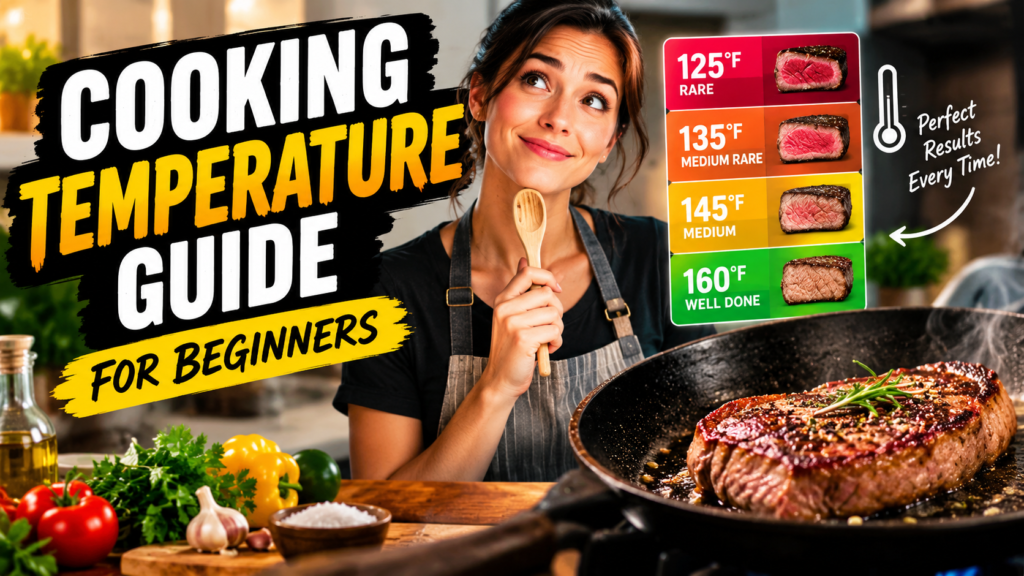
Quick Answer: A cooking temperature guide for beginners starts with two numbers: heat level and internal temperature. Use medium heat for most stovetop cooking, preheat your oven fully, and check food with a thermometer. USDA guidance lists 165°F for poultry, 160°F for ground meat, and 145°F for whole cuts of beef, pork, and fish.
Recipes say “medium heat” or “375°F,” but what do those really mean? Temperature controls safety, texture, and flavor. This cooking temperature guide for beginners explains stovetop heat, oven settings, and safe internal temperatures in plain language, so you can cook with more confidence. You will learn how to read heat levels, use a thermometer, and avoid common mistakes.
Trust & Accuracy Note: This article is for general educational and buying-guidance purposes only. It does not replace the manufacturer’s official manual, food safety guidance, or professional advice. Materials, specifications, and care instructions can vary by product and should be confirmed with the manufacturer before purchase or use. For product defects, suspected food-safety issues, or injuries such as burns or cuts, contact the manufacturer, a qualified professional, or seek medical help as needed.
Why Temperature Matters in Home Cooking
Too little heat can leave food unsafe or soggy. Too much can burn the outside while the center stays raw. Many home cooks find that learning a few key numbers fixes more problems than buying new gadgets. Time helps, but food thickness, pan material, and oven differences change results, so a thermometer reading beats a guess.
Note: Recipe times are estimates. A thick chicken breast and a thin one need different times at the same oven setting, so use time as a guide and temperature as the final check.
Heat Temperature vs. Internal Temperature
Heat temperature is how hot your oven or pan is. Internal temperature is how hot the center of the food gets. Both matter, but only internal temperature tells you whether meat, eggs, and leftovers are ready. Beginner check: set the oven number first, then confirm the food itself with a thermometer. Experienced-cook observation: probing two or three spots in a thick cut gives a more trustworthy picture than one reading.
Safe Internal Temperatures for Common Foods
The numbers below follow USDA guidance, but confirm them on FoodSafety.gov because guidance can change.
Safe Minimum Internal Temperatures Compared
| Food | Minimum Temp | Note |
|---|---|---|
| Poultry (all types) | 165°F | Check the thickest part. |
| Ground beef, pork, lamb | 160°F | Grinding spreads bacteria inside. |
| Steaks, chops, roasts | 145°F plus 3-minute rest | Resting is part of the guidance. |
| Fish and shellfish | 145°F | Flesh should look opaque. |
| Eggs and egg dishes | 160°F | Cook until firm. |
| Leftovers and casseroles | 165°F | Reheat until steaming hot. |
Choose a thermometer check whenever food is thick, stuffed, ground, or reheated.
Warning: Do not judge safety by color, juices, or touch alone. Some meat looks done before it is safe, and some safe meat stays pink. Use a food thermometer.
Stovetop Heat Levels Explained
Dial numbers differ between stoves, so heat names are more useful. Adjust slowly and watch the food.
Low Heat
Gentle heat for simmering sauces, melting butter, and keeping food warm. Bubbles should be small and slow. Choose this if you worry about scorching.
Medium Heat
The everyday setting for sautéing vegetables and cooking eggs. Food sizzles gently without smoking. Choose this if a recipe gives no heat level.
Medium-High Heat
Used for browning and searing. Preheat the pan first, and avoid this setting on thin or nonstick pans unless the manufacturer says it is fine.
High Heat
Best for boiling water and quick stir-frying. Stay near the stove, because oil and food can burn or catch fire fast.
Realistic example: when browning chicken thighs, start at medium-high, then lower to medium so the outside does not burn before the center is cooked.
This cooking temperature guide for beginners fits into one routine you can use for most recipes.
Practical guide: Cooking Routine
Heat the oven or pan fully.
Start at medium.
Use a thermometer near the end.
Let meat sit as directed.
Most beginner problems start when the preheat or final check is skipped. Follow all four stages, even for simple meals.
Oven Temperatures and Preheating
As a rough guide, 325°F suits gentle cooking, 350°F is a common baking setting, and 400°F to 425°F helps vegetables and sheet-pan meals brown. Always follow the recipe first. Preheat fully, which often takes 10 to 20 minutes, and wait for the oven’s signal. Ovens often run hotter or cooler than the dial says. Check the manufacturer’s guidance if your oven has convection, since many convection ovens need adjusted settings.
Common Temperature Problems and Likely Causes
| Problem | Likely Cause | Quick Fix |
|---|---|---|
| Outside burned, inside raw | Heat too high or food too thick | Lower heat, cook longer |
| Food will not brown | Pan not hot or crowded | Preheat, cook in batches |
| Uneven baking | Hot spots or door opened often | Rotate pan once, keep door closed |
| Dry meat | Cooked past target temperature | Check earlier with a thermometer |
Tip: Use the middle oven rack unless the recipe says otherwise, and leave space around pans so hot air can move.
How to Check Food Temperature Step by Step
Using a thermometer is the most useful skill in any cooking temperature guide for beginners.
Use this path when you are unsure what a reading means.
Practical guide: Reading Decision Path
The thermometer decides, not the clock or the color. When safety is unclear, choose caution.
Safe Practices vs. Risky Practices
| Situation | Safer Practice | Risky Practice |
|---|---|---|
| Doneness | Check the thickest part with a clean thermometer | Guess by color alone |
| Raw meat plate | Use a clean plate for cooked food | Reuse the raw-meat plate |
| Leftovers | Reheat until steaming hot | Warm only slightly |
| Thawing | Refrigerator, cold water, or microwave | Hours on the counter |
Accuracy and Safety: USDA guidance generally advises refrigerating perishable food within two hours, or within one hour when the room is above 90°F. Review current advice at USDA.gov.
Choosing a Thermometer and Other Tools
Any cooking temperature guide for beginners should include tools, because numbers only help if you can measure them.
Thermometer Fit by Cooking Task
| Tool | Best For | Choose If | Avoid If |
|---|---|---|---|
| Instant-read | Meat and leftovers | You want quick checks | You need constant monitoring |
| Leave-in probe | Large roasts | You roast often | You cook thin foods |
| Oven thermometer | Real oven heat | Baking is uneven | You will not read it |
| Surface thermometer | Pan or griddle heat | You check pan heat | You need food centers, since it reads surfaces |
Good habits keep your thermometer accurate and clean.
Practical guide: Thermometer Care Checklist
A clean, accurate thermometer protects both your food and your confidence.
Not sure which tool to buy first? Use this order.
Practical guide: Beginner Buying Priority
Safest everyday check.
Better baking accuracy.
Helpful for big roasts.
Optional pan checks.
Start with the tool that protects food safety, then add tools that improve baking and roasting.
Beginner Mistakes and Better Choices
| Mistake | Better Choice |
|---|---|
| Skipping the preheat | Wait for the oven signal |
| Using high heat to rush | Use medium and be patient |
| Crowding the pan | Cook in batches |
| Probing near bone | Aim for the thickest meat |
Some temperature skills take more practice than others.
Practical guide: Relative difficulty
This is a practical guide, not a scientific measurement. Start with the easy skills and build up.
Contact the Manufacturer or a Professional: If your oven stays far from the dial setting even with a thermometer, check the manual or contact the manufacturer. Do not repair gas or electrical parts yourself. If you smell gas, leave and call your gas utility or emergency services. Seek medical help for serious burns or suspected foodborne illness.
This article may contain affiliate links. If you buy through these links, we may earn a small commission at no extra cost to you. We only mention products that fit the topic and recommend checking current specs and care instructions directly with the manufacturer.
Instant-Read Food Thermometer
Helps you check the internal temperature of meat, poultry, and leftovers near the end of cooking.
Oven Thermometer
Helps you compare your oven dial with the actual heat inside, which can be useful for baking.
Frequently Asked Questions
What is a cooking temperature guide for beginners?
It is a simple reference for stovetop heat, oven settings, and safe internal temperatures, so new cooks know which numbers to aim for.
What temperature should chicken be cooked to?
USDA guidance lists 165°F measured in the thickest part of the chicken. Check more than one spot when the meat is thick.
What does medium heat mean on a stove?
It is usually near the middle of your dial. Food should sizzle gently without smoking, but stoves differ, so watch the food.
Do I always need to preheat the oven?
Usually yes for baking and roasting, because it helps food cook evenly. Some recipes say otherwise, so follow the recipe instructions.
Is pink meat always unsafe?
Not always, since color can vary. Use a food thermometer and the safe minimum temperatures instead of color alone.
How can I tell if my oven is accurate?
Place an oven thermometer inside, preheat, and compare it with the dial. If the difference is large, check the manual or contact the manufacturer.
Final Thoughts
Good cooking starts with a few simple numbers. Check the manufacturer’s instructions, follow USDA food-safety guidance, and use a thermometer instead of guessing. This cooking temperature guide for beginners gives you a starting point. Seek medical or professional help if you face serious burns, cuts, or suspected food-safety problems.
