
By Michael Hayes
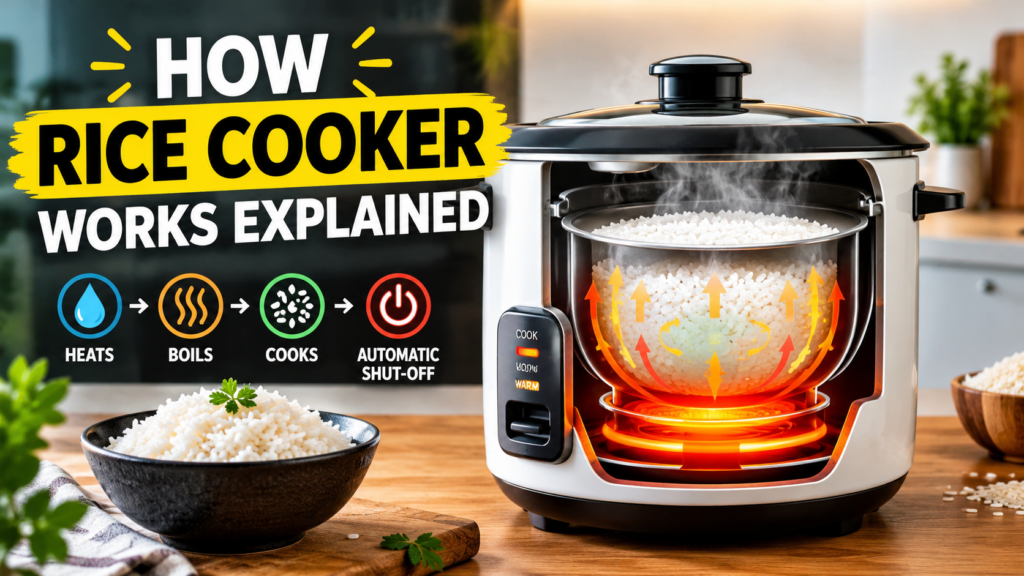
Quick Answer: A rice cooker heats water and rice in an inner pot until the water boils and is absorbed. When the pot gets hotter than boiling water can reach, a sensor or thermostat shuts off the main heat and switches to a lower keep-warm setting.
Press one button, walk away, and come back to fluffy rice. It feels like magic, but the science inside is simple. This guide has how rice cooker works explained in plain language for everyday home cooks in the USA. You will learn the main parts, each cooking stage, why the cooker clicks off, and which safety habits matter most.
Kitchen Tips Appliances Home Cooking Kitchen Safety
This article is for general educational and buying-guidance purposes only. It does not replace the manufacturer’s official manual, food safety guidance, or professional advice. Materials, specifications, and care instructions can vary by product and should be confirmed with the manufacturer before purchase or use. For product defects, suspected food-safety issues, or injuries such as burns or cuts, contact the manufacturer, a qualified professional, or seek medical help as needed.
How Rice Cooker Works Explained: The Main Parts
Most rice cookers share the same basic design. These are the parts that do the work.
Inner Pot
This removable pot holds the rice and water. Its material affects how heat spreads and how you clean it.
Heating Plate
A heating element sits under the pot. It turns electricity into heat that flows into the pot.
Temperature Sensor
A small sensor touches the pot bottom. It tracks the pot’s temperature during the whole cycle.
Switch or Control Chip
Basic models use a mechanical switch. Others use a small computer chip to adjust heat.
Lid and Steam Vent
The lid traps heat and steam. The vent lets extra pressure out so the cooker does not spit.
Outer Body and Cord
The shell protects the electrical parts. Keep the cord and plug dry and undamaged.
Rice Cooker Types Compared
What Happens Inside During One Cooking Cycle
The best way to see how rice cooker works explained is to follow one batch from start to finish.
- Start: You add rinsed rice and water, close the lid, and press cook. The heating plate turns on.
- Heat-up: Heat moves into the pot and the water warms. Water boils at 212°F (100°C) at sea level.
- Boil and absorb: Bubbling water and steam soften the grains. The rice slowly absorbs the water.
- Water runs out: Once free water is gone, the pot can climb past boiling temperature.
- Switch: The sensor notices the jump. The cooker stops full heat and moves to keep-warm or a finishing stage.
Here is a simple routine for the cook’s side of the process. It is a practical guide, not a lab method.
Most of the work happens before and after the button press. Skipping the rinse or the rest is a common reason for uneven texture.
Why the Cooker Knows the Rice Is Done
Here is the key idea behind how rice cooker works explained for beginners: the cooker watches temperature, not the clock. In many basic models, a spring-loaded sensor presses against the pot bottom. While liquid water remains, the reading stays near boiling. When the water is gone, the reading rises and a switch flips. Computer-based models add timers and heating programs, but the idea is similar.
Note: Altitude changes the boiling point of water. Many home cooks at high elevations adjust water or time. Check your manual or rice package for guidance.
Keep-Warm Mode and Rice Food Safety
Keep-warm mode is the last piece of how rice cooker works explained. After cooking, the cooker uses low, on-and-off heat to hold the rice warm. It is meant for short serving windows, not long storage. Time limits vary, so check your manual.
Safety Note: Cooked rice can carry bacteria spores that survive cooking. If rice sits warm too long, bacteria may grow. Refrigerate leftovers within about two hours and reheat until steaming hot. See FoodSafety.gov and the USDA for current guidance.
Safe Practice vs Risky Practice for Cooked Rice
Use this quick path once your rice finishes cooking.
Serve it. If you use keep-warm, stay within your manual’s time limit.
Portion it into shallow containers and refrigerate within about two hours. Reheat until steaming hot.
When in doubt, cool and refrigerate rather than leave rice out. This path is a practical guide, so also follow your manual and official food-safety advice.
Common Rice Cooker Problems and Likely Causes
Once you have how rice cooker works explained clearly, troubleshooting gets easier. Most texture problems trace back to water, rinsing, or resting.
Problem vs Likely Cause
Tip: Rinse rice in cool water until it runs clearer. This removes surface starch, which can cause foaming and clumps. Some enriched rice labels say not to rinse, so read the package.
Warning: Never open the cooker body, repair wiring, or use a damaged cord or plug. Do not put the heating base in water. Unplug the cooker before cleaning.
When to Contact the Manufacturer or a Professional: Call the manufacturer if the cooker sparks, smells like burning plastic, or has a cracked cord. Seek medical help for serious burns. You can also check CPSC for product recall notices.
Inner Pots and Choosing a Cooker
Inner Pot Material Fit
Your habits and household size can guide which cooker fits best.
You mostly cook plain white rice. You want simple controls and easy cleanup.
You cook several rice types or grains. You like preset menus and finer heat control.
Confirm current features, capacity, and care steps with the manufacturer before you buy.
Care and Everyday Habits
Simple care keeps the sensor, pot, and cord working as intended.
Unplug and let the cooker cool. Wash the inner pot as your manual directs.
Wipe the lid and check the vent for residue. Clogged vents can cause spitting.
Wipe off stray grains with a damp cloth when unplugged and cool. Keep the base dry.
Dry every part before storing. Coil the cord loosely without kinks.
A quick wipe after each use prevents most buildup. Use the next chart to see which habits deserve the most attention.
Typical routine priority (Practical guide, not scientific data)
Longer bars mean habits that help most for everyday results and safety. All five are worth doing, and the order is only a rough guide.
Mistake vs Better Choice
Frequently Asked Questions
How does a rice cooker know when rice is done?
It senses temperature. While liquid water remains, the pot stays near boiling. When the water is gone, the temperature rises and the cooker switches off full heat or moves to keep-warm.
Does a rice cooker boil or steam rice?
Both. Water boils in the pot, and steam trapped by the lid helps cook the grains. The rice absorbs most of the water.
Why does my rice cooker switch to keep warm?
The sensor detects that the pot is hotter than boiling water can reach, which usually means the water is absorbed. The cooker then lowers the heat to hold the rice warm.
Is it safe to leave rice on keep warm?
Follow your manual’s time limit, since keep-warm performance varies by model. For leftovers, refrigerate within about two hours and reheat until steaming hot.
Can a rice cooker cook other foods?
Many models can steam vegetables or cook grains like oatmeal, depending on features. Check your manual for approved foods, amounts, and settings.
Why is the rice at the bottom browned or stuck?
Low water, leftover residue, or a worn pot surface can cause it. Check the water lines, clean the pot well, and contact the manufacturer if the coating looks damaged.
Do I need to rinse rice before cooking?
Many home cooks rinse to remove surface starch, which may reduce foaming and clumping. Some enriched rice labels say not to rinse, so follow the package directions.
Final Thoughts
Now that you have how rice cooker works explained from heating plate to keep-warm, you can cook with more confidence. Check your manual for water lines, keep-warm limits, and pot care. Follow food-safety guidance for leftovers, and contact the manufacturer or seek medical help for defects or injuries.
