
By Michael Hayes
Quick Answer:
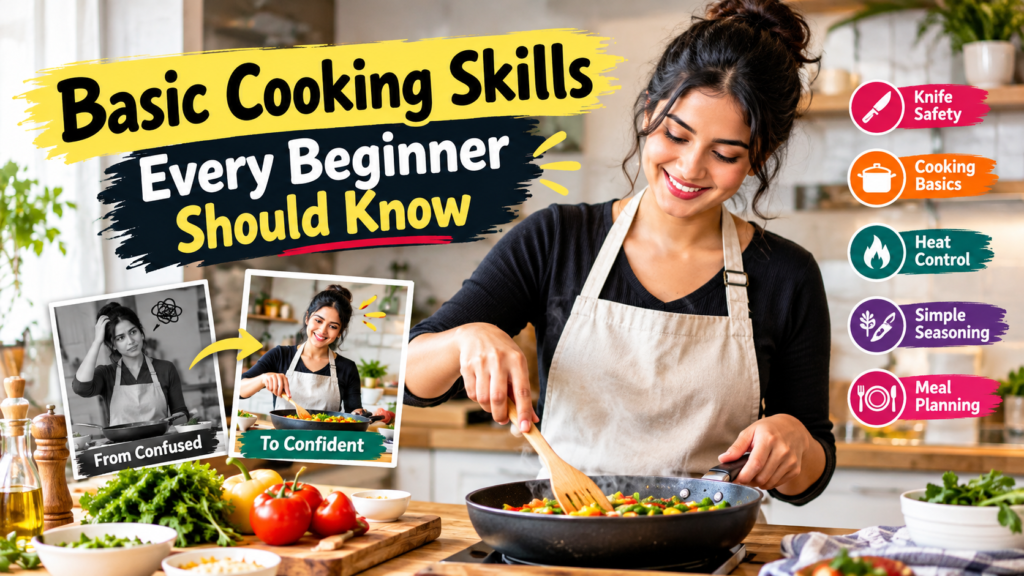
The basic cooking skills every beginner should know include safe knife handling, reading a recipe fully before starting, controlling heat, seasoning gradually, and following food safety basics like proper storage and hand-washing. Mastering these first makes every other recipe easier and safer.
Why These Skills Matter Before You Start Cooking
Learning basic cooking skills every beginner should know isn’t about fancy techniques — it’s about building a foundation so recipes make sense and the kitchen feels less intimidating. Once you understand a handful of core habits, most recipes become variations on the same few ideas: prepping ingredients, controlling heat, and seasoning as you go.
Topics covered:
Heat Control
Seasoning
Food Safety
Kitchen Tools
This article is for general educational and buying-guidance purposes only. It does not replace the manufacturer’s official manual, food safety guidance, or professional advice. Materials, specifications, and care instructions can vary by product and should be confirmed with the manufacturer before purchase or use. For product defects, suspected food-safety issues, or injuries such as burns or cuts, contact the manufacturer, a qualified professional, or seek medical help as needed.
Knife Skills: The First Basic Cooking Skill Every Beginner Should Know
Of all the basic cooking skills every beginner should know, safe knife handling usually comes first, because nearly every recipe starts with cutting something. A stable cutting board, a sharp (not dull) knife, and a proper grip reduce slipping and make chopping far less stressful.
Step-by-Step: A Safer Knife Routine
Place a damp towel or non-slip mat under your cutting board so it doesn’t shift.
Choose a knife suited to the task — a chef’s knife for chopping, a paring knife for small work.
Curl your fingertips inward (“claw grip”) on the hand holding the food.
Cut slowly at first, letting the blade do the work instead of pressing hard.
Wash and dry the knife right after use rather than leaving it in a sink of water.
Here’s a simple visual of that routine in order:
This flow is a practical guide, not a strict rule — the goal is to build a habit so each step feels automatic over time.
Note: A sharp knife is generally considered safer than a dull one, since dull blades require more pressure and are more likely to slip. Check the manufacturer’s sharpening guidance for your specific knife.
Table 1: Common Beginner Knife Types Compared
| Knife | Best For | Beginner Notes |
|---|---|---|
| Chef’s Knife | Chopping, slicing, dicing | Most-used everyday knife |
| Paring Knife | Peeling, small cuts | Good for detail work |
| Serrated Knife | Bread, tomatoes | Saws rather than presses |
| Utility Knife | Mid-size tasks | Useful between chef’s and paring knives |
Reading the Recipe and Prepping Ingredients First
Among the basic cooking skills every beginner should know, reading the full recipe before turning on the stove is one of the easiest to skip — and one of the most useful. Chefs call pre-measuring and organizing ingredients “mise en place,” and doing this at home prevents burnt garlic while you’re still chopping the onion.
Choose this if: you tend to feel rushed mid-recipe. Avoid this if: you’re just reheating something simple — full prep isn’t always necessary.
Heat Control: Managing Your Stove and Oven
Learning to control heat is one of the basic cooking skills every beginner should know that takes the longest to feel natural. Many beginner mistakes — burnt outsides, raw insides, sticking pans — trace back to heat that’s too high or a pan that wasn’t preheated properly.
If something isn’t cooking the way you expected, this decision path can help narrow down why:
Food is burning outside but raw inside → Heat is likely too high. Lower it and give more time.
Food is sticking to the pan → Pan may not have been preheated, or too little oil was used.
Food is cooking unevenly → Pieces may be cut in different sizes, or the pan is overcrowded.
This is a practical troubleshooting guide, not a diagnostic tool — when in doubt, check the manufacturer’s stove or cookware instructions.
Warning: Never pour water on a grease or oil fire. Turn off the heat if it’s safe to do so and smother small flames with a metal lid. For any fire that doesn’t go out immediately, leave the kitchen and call emergency services.
Table 2: Common Cooking Problems and Likely Causes
| Problem | Likely Cause |
|---|---|
| Food sticks to pan | Pan not preheated, not enough oil |
| Burnt outside, raw inside | Heat set too high |
| Bland final dish | Under-seasoned or seasoned only at the end |
| Uneven cooking | Inconsistent ingredient sizes, overcrowded pan |
Seasoning as You Go
Seasoning gradually, rather than all at the end, is one of the basic cooking skills every beginner should know that most improves flavor. Adding salt in stages and tasting along the way is often more reliable than guessing at the finish.
Tip: Taste with a clean spoon each time, and use a fresh spoon if you’re tasting something that still needs more cooking, to avoid recontaminating the pot.
Table 3: Safe vs. Risky Tasting and Seasoning Practices
| Safe Practice | Risky Practice |
|---|---|
| Use a clean spoon each taste | Double-dipping the same spoon back into the pot |
| Taste once food is fully cooked | Tasting raw meat, egg, or batter |
| Season in small increments | Adding large amounts at once with no tasting |
Food Safety Basics for Beginners
No list of basic cooking skills every beginner should know is complete without food safety. Washing hands before and after handling raw meat, keeping raw and cooked foods separate, and storing leftovers promptly all reduce the risk of foodborne illness.
A simple daily kitchen checklist:
This is a general routine guide — always follow current official food safety guidance for specifics.
Accuracy & Safety: For detailed, up-to-date food safety guidance, many home cooks refer to FoodSafety.gov and the FDA. These cover safe internal cooking temperatures and storage times in more depth than a general article can.
Basic Kitchen Tools Worth Having
You don’t need a fully stocked kitchen to practice these basic cooking skills every beginner should know, but a few reliable tools make daily cooking noticeably easier.
Table 4: Tool Fit by Beginner Task
| Tool | Typical Use | Material Note |
|---|---|---|
| Chef’s knife | Everyday cutting | Check manufacturer care instructions |
| Cutting board | Prep surface | Wood or plastic; sanitize between raw items |
| Nonstick or stainless pan | Sautéing, frying | Follow heat limits in manufacturer manual |
| Food thermometer | Checking doneness | Useful for meat and poultry safety |
Contact Manufacturer or Professional: If you experience a deep cut, a significant burn, or suspect a product defect (such as a pan warping or a handle loosening), stop use, contact the manufacturer, and seek medical attention if needed.
This article may contain affiliate links. If you buy through these links, we may earn a small commission at no extra cost to you. We only mention products that fit the topic and recommend checking current specs and care instructions directly with the manufacturer.
Basic Chef’s Knife
A reliable everyday knife can help make chopping and slicing noticeably easier for beginners still building comfort with knife skills.
Instant-Read Food Thermometer
A basic thermometer may be useful for checking doneness on meat and poultry, which many home cooks find helpful when learning proper cooking temperatures.
Common Beginner Mistakes and Better Choices
Table 5: Mistake vs. Better Choice
| Common Mistake | Better Choice |
|---|---|
| Cooking on high heat the whole time | Adjust heat as the dish progresses |
| Not reading the recipe fully first | Read through and prep ingredients before starting |
| Seasoning only at the very end | Season gradually, tasting as you go |
A typical routine priority for beginners deciding what to practice first:
This reflects typical routine priority, not a scientific ranking — your own kitchen habits may shift the order.
Frequently Asked Questions
What is the most basic cooking skill for a beginner?
Safe knife handling is often considered the most foundational, since most recipes start with cutting ingredients.
How do I know if my pan is hot enough?
A common check is to add a small drop of water — if it sizzles and evaporates quickly, the pan is generally ready.
Do I need a food thermometer as a beginner?
It isn’t required, but many home cooks find one useful for checking that meat and poultry reach a safe temperature.
How often should I season food while cooking?
Seasoning in small amounts at a few points during cooking, then tasting, is often more reliable than seasoning once at the end.
What cutting board material is safest for beginners?
Both wood and plastic boards can be safe when cleaned properly; check the manufacturer’s care instructions for either type.
How long can leftovers safely sit out?
Many food safety resources recommend refrigerating leftovers within about two hours to help reduce bacterial growth.
What should I do if I cut myself while cooking?
Apply pressure and clean the wound for minor cuts. For deep cuts or cuts that won’t stop bleeding, seek medical attention promptly.
Final Thoughts
The basic cooking skills every beginner should know — safe knife handling, heat control, gradual seasoning, and food safety habits — don’t need to be learned all at once. Practicing them one at a time, checking manufacturer guidance for your specific tools, and following official food safety resources will help build confidence in the kitchen over time.
