
By Michael Hayes
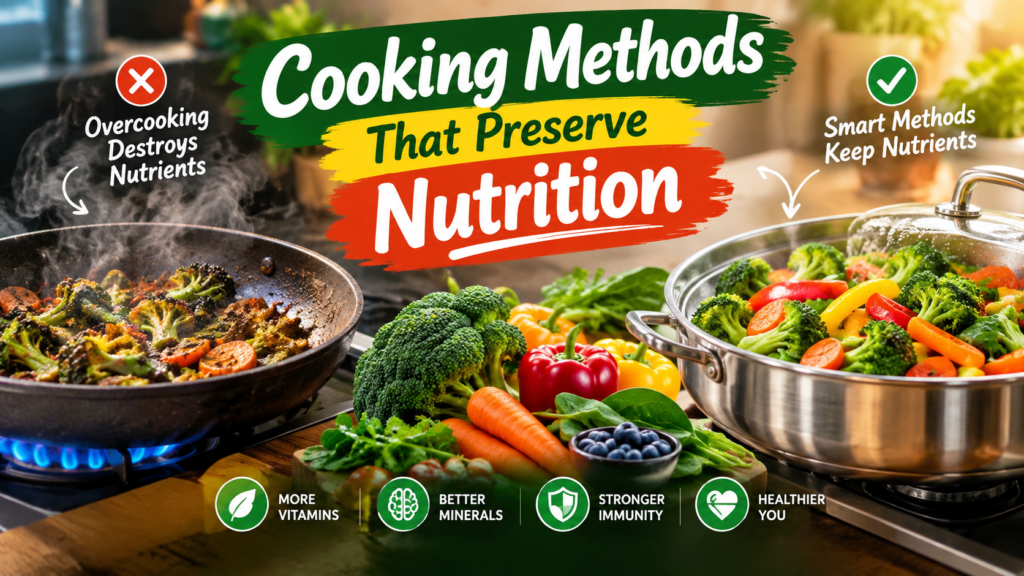
Quick Answer: Cooking methods that preserve nutrition usually use short cooking times, little water, and moderate heat. Steaming, microwaving with a splash of water, quick stir-frying, and light roasting are common choices. Keep pieces large, avoid overcooking, and reuse any cooking liquid when it fits the dish.
Many home cooks buy fresh vegetables and whole grains for good reasons, then lose some of their value in the pot. The goal is smart choices that keep more flavor, color, and nutrition on your plate.
In this guide you will learn how heat and water affect common nutrients, compare the most useful cooking methods that preserve nutrition, follow a simple steaming routine, and avoid common mistakes.
Trust & Accuracy Notice: This article is for general educational and buying-guidance purposes only. It does not replace the manufacturer’s official manual, food safety guidance, or professional advice. Materials, specifications, and care instructions can vary by product and should be confirmed with the manufacturer before purchase or use. For product defects, suspected food-safety issues, or injuries such as burns or cuts, contact the manufacturer, a qualified professional, or seek medical help as needed.
How Cooking Changes the Nutrients in Food
Cooking is not the enemy of nutrition. Heat makes many foods safer and easier to digest, but it can also change some nutrients.
Some vitamins, such as vitamin C and many B vitamins, dissolve in water and can be sensitive to heat. When you boil vegetables in a large pot, some of these nutrients can move into the water. Fat-soluble vitamins (A, D, E, and K) do not dissolve in water, and a little oil can help your body absorb them.
Cooking can help, too. Nutrition sources often note that heat can make some plant compounds in tomatoes and carrots easier to use. The practical answer is balance: short times, little water, and a mix of raw and cooked foods.
Beginner check: If vegetables lose their bright color and the pot water turns cloudy, the food was probably cooked longer, or in more water, than needed.
Realistic example: A pan of green beans often needs only five to seven minutes in a lidded skillet with a few spoonfuls of water. Fifteen minutes in a large pot can turn them soft and pale.
Practical decision rule: Choose short cooking if you want better texture and more nutrients. Avoid it if the dish is a long-simmered stew, where the liquid becomes part of the meal.
Note: Nutrient changes depend on the food, the cut size, the heat, and the time. Treat every method here as a general guide.
Comparing Popular Cooking Methods
No single method wins for every food, but a few cooking methods that preserve nutrition show up again and again: steaming, microwaving, quick stir-frying, and light roasting. This table compares common methods.
Cooking Method Comparison Table
| Method | Water contact | Typical time | Nutrition note |
|---|---|---|---|
| Steaming | Low | Short | Food sits above water, so fewer water-soluble nutrients may leach out. |
| Microwaving | Very low | Very short | Short time and little water can help keep nutrients. |
| Stir-frying | None | Short | Small pieces cook fast, and a little oil helps absorb fat-soluble vitamins. |
| Roasting | None | Medium to long | No water loss, but long high heat can reduce some heat-sensitive nutrients. |
| Boiling | High | Short to medium | More nutrients can move into the water. Use the liquid if you can. |
Choose this if…
You cook vegetables like broccoli, green beans, or spinach on busy nights. Steaming or a quick stir-fry keeps them tender.
Avoid this if…
You plan to boil vegetables in a big pot and pour the water down the drain. Use less water, or save the liquid for soup.
Tip: Add acidic ingredients like lemon juice or vinegar at the end. Adding them early can turn green vegetables a dull olive color.
A Simple Nutrition-Friendly Cooking Routine
You can use this routine with almost any of the cooking methods that preserve nutrition. The idea is to prepare well, use gentle heat, and stop at the right moment.
Practical guide: Cooking Routine Flow
Wash, then cut larger pieces
Moderate heat, little water
Set a short timer
Test with a fork or thermometer
Eat soon, save the liquid
Much of the nutrient protection happens before and after the heat, so prep and quick serving matter.
How to Steam Vegetables Step by Step
Steaming is the easiest place to start. You need a pot and a steamer basket.
Prep and Storage Habits That Protect Nutrition
What you do before and after cooking also matters.
Practical guide: Kitchen Habit Checklist
Even two or three of these habits can improve everyday cooking at no cost.
Common Mistakes and Better Choices Table
| Mistake | Why it can hurt | Better choice |
|---|---|---|
| Chopping vegetables tiny, hours early | More surface is exposed to air and water. | Cut larger pieces right before cooking. |
| Boiling in a big pot, then draining it all | Dissolved nutrients go down the sink. | Steam, or use less water and save the liquid. |
| Cooking everything until very soft | Long heat can reduce color and some nutrients. | Stop at tender-crisp for most vegetables. |
Troubleshooting Common Cooking Problems
Use this table to match what you see with a likely cause.
Problem vs Likely Cause Table
| Problem | Likely cause | What to try |
|---|---|---|
| Vegetables are mushy and dull | Cooked too long or kept covered after cooking | Check earlier and serve right away. |
| Green vegetables look olive-brown | Long cooking or acid added too soon | Add lemon or vinegar at the end. |
| Steamed food tastes bland | No seasoning after cooking | Season after steaming, or add herbs to the steaming water. |
| Stir-fry turns watery | Crowded pan or wet vegetables | Dry vegetables well and cook in batches. |
What to Focus On First
If you are new to cooking methods that preserve nutrition, do not change everything at once. Start with the habits below.
Practical guide: Typical Routine Priority
Relative difficulty and priority are practical guesses for home cooks, not scientific measurements.
Safety sits at the top because a food-safety problem outweighs any nutrient gain. Avoiding overcooking is the easiest next change.
Food Safety Comes Before Nutrition
Short cooking suits vegetables, but meat, poultry, fish, eggs, and leftovers need enough heat to be safe. Check the FoodSafety.gov and USDA sites for current safe minimum temperatures.
Safe Practice vs Risky Practice Table
| Safe practice | Risky practice | Why it matters |
|---|---|---|
| Checking chicken with a food thermometer | Judging doneness by color alone | Color can be misleading. |
| Refrigerating leftovers within two hours | Leaving cooked food out for hours | Bacteria can grow quickly. |
| Using separate boards for raw meat and produce | Using one board without washing it | Germs can spread to ready-to-eat food. |
Warning: Do not undercook meat, poultry, fish, or eggs to protect nutrients. Steam can also burn skin, so open lids away from your face.
Accuracy & Safety Box: Nutrient changes vary by food and cooking style. Confirm current safe temperatures with USDA or FoodSafety.gov.
Practical guide: Stop-or-Continue Decision Path
Raw animal foods follow safety rules first, while vegetables follow a taste-and-texture check.
Tools and Materials That Help
The right tools make cooking methods that preserve nutrition easier to repeat. A lidded pot, a basket, and a thermometer cover most needs.
Tool and Material Fit Table
| Tool or material | Often used for | Fit note |
|---|---|---|
| Steamer basket | Vegetables, fish, dumplings | Confirm it fits your pot and check heat limits. |
| Lidded skillet | Quick steam-sautéing | A snug lid holds steam. |
| Microwave-safe dish with vented cover | Vegetables and reheating | Use only containers labeled microwave-safe. |
| Instant-read thermometer | Meat, poultry, leftovers | Follow the maker’s guide for probe placement. |
Practical guide: Tool Fit Dashboard
Strong fit for vegetables. It keeps food out of the water, but must fit your pot.
Good fit for quick sides. It uses little water, but the lid must close well.
Useful for fast cooking and reheating. Follow your microwave manual.
Important for meat and leftovers. It protects safety without guessing.
Contact the Manufacturer or a Professional: Check the manufacturer’s instructions if you are unsure about microwave power levels, steamer limits, or cookware care. For a damaged appliance, a burn, or suspected food-safety illness, stop and contact the maker or seek medical help.
This article may contain affiliate links. If you buy through these links, we may earn a small commission at no extra cost to you. We only mention products that fit the topic and recommend checking current specs and care instructions directly with the manufacturer.
Stainless Steel Steamer Basket
A steamer basket can hold vegetables above simmering water in a compatible pot. Check size and material details first.
Digital Instant-Read Food Thermometer
A thermometer helps you confirm that meat, poultry, and leftovers are hot enough without overcooking. Read the manufacturer’s guide for correct use.
Frequently Asked Questions
What are the best cooking methods that preserve nutrition?
Steaming, microwaving with little water, quick stir-frying, and light roasting are common choices. They use short times or little water, which can help keep more nutrients.
Is steaming better than boiling for vegetables?
Often, yes. Steamed food touches less water, so fewer water-soluble nutrients may leach out.
Does microwaving destroy nutrients?
Not by itself. It is fast and uses little water, which can help keep nutrients.
Should I save the water from boiling vegetables?
It can be a good idea. Some nutrients dissolve into the water, so using it in soup or sauce lets you eat them.
Is raw food always more nutritious than cooked food?
No. Some foods, like tomatoes and carrots, may offer certain plant compounds more easily after cooking. Raw meat, poultry, and eggs are not safe choices, so cook them properly.
What internal temperature is safe for chicken and leftovers?
USDA guidance lists 165°F for poultry and for reheated leftovers. Confirm current guidance on USDA or FoodSafety.gov.
Final Thoughts
The best cooking methods that preserve nutrition are simple: use gentle heat, little water, short times, and a quick check.
Always check the manufacturer’s instructions for your cookware and appliances, follow food-safety guidance for meat and leftovers, and seek professional or medical help for injuries or suspected foodborne illness.
