
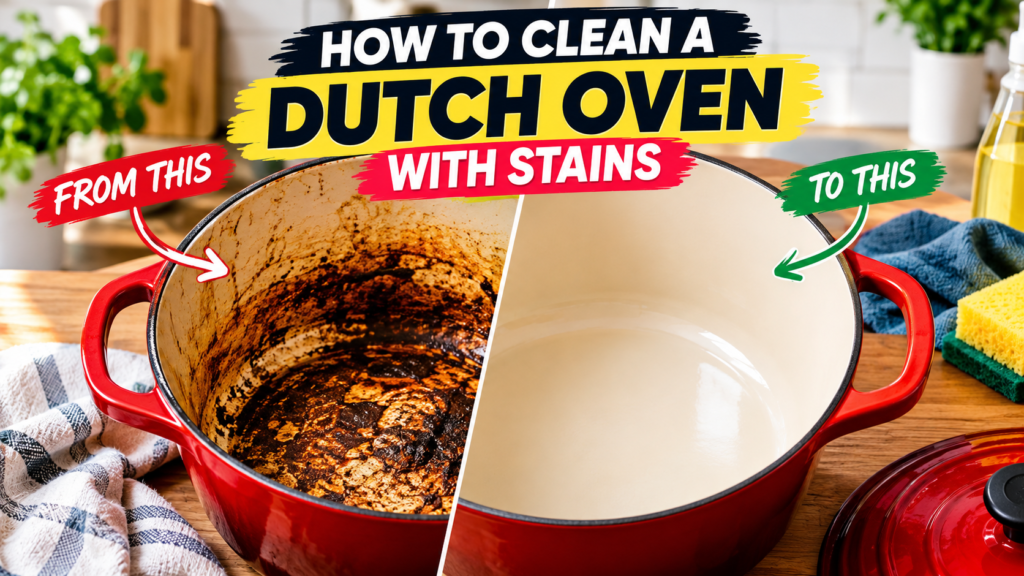
Stains can make a Dutch oven look damaged, but most marks respond to gentle cleaning. The right method depends on whether the surface is enameled, bare cast iron, stainless steel, or nonstick.
A paste of baking soda and water can lift many browned or burnt stains without harsh scrubbing. Mild soap, warm water, and a soft sponge work well for everyday residue, while bare cast iron needs careful drying and a light coat of oil to prevent rust.
This guide explains how to assess each stain, choose safe supplies, and restore the cookware without harming its surface. It also shares simple habits that help prevent buildup during future meals.
Key Takeaways
- Match the cleaning method to the cookware surface.
- Use baking soda for many stubborn stains.
- Dry and protect bare cast iron after washing.
Assess the Stain and Cookware Surface
The cleaning method depends on whether the Dutch oven has enamel or exposed cast iron. The user should also check for damage first, because harsh scrubbing or soaking can worsen chips, cracks, and rust.
Identify Enameled Versus Bare Cast Iron
An enameled Dutch oven has a smooth, glass-like coating over the cast iron. The inside may be white, cream, black, or another color. Food stains, brown marks, and dull patches sit on this coating rather than on the iron itself.
Bare cast iron has a dark, slightly textured surface with no glass coating. It usually has a seasoned layer made from baked-on oil. This surface needs different care because long soaking, soap used too often, or strong cleaners can weaken the seasoning.
| Surface | Common signs | Cleaning concern |
|---|---|---|
| Enameled cast iron | Smooth, colored, glass-like interior | Scratches and chips |
| Bare cast iron | Dark, textured, oiled surface | Rust and lost seasoning |
A magnet will stick to both types, so it cannot identify the coating. The rim, lid, and cooking surface should be inspected in bright light. Some Dutch ovens use enamel inside but have exposed cast iron around the rim or on the underside, so each area may require separate care.
Check For Chips, Cracks, And Rust
The user should let the cookware cool, wash away loose food, and inspect it under strong light. Small enamel chips often appear as missing spots that expose dark metal. Cracks may look like thin lines, while deep scratches can feel rough when a fingertip moves across them.
Cleaning should stop if a chip exposes metal near the cooking surface or if the enamel flakes during washing. Abrasive powders, steel wool, and metal tools can enlarge the damaged area. A cracked or badly chipped Dutch oven should not be used until the manufacturer provides guidance.
Rust signals exposed iron. On bare cast iron, surface rust may respond to gentle scrubbing, thorough drying, and a fresh coat of cooking oil. Rust beneath chipped enamel needs more caution, because moisture can spread under the coating. The user should not soak damaged cookware or place it in a dishwasher.
Gather Safe Cleaning Supplies

A stained Dutch oven needs gentle tools and mild cleaners that protect its surface. Soft sponges, baking soda, warm water, and mild dish soap handle most food residue without scratching enamel or removing seasoning from bare cast iron.
Recommended Nonabrasive Tools
A soft sponge, microfiber cloth, or nylon scrub brush can loosen food without damaging the cooking surface. A wooden or silicone scraper helps lift stuck pieces from the bottom and sides. The scraper should have smooth edges and no sharp corners.
For stained enamel, baking soda makes a mild paste when mixed with a small amount of water. Mild dish soap works for grease and everyday residue. White vinegar can help with mineral deposits, but it should be diluted and used briefly rather than left sitting in the pot.
| Supply | Best use |
|---|---|
| Soft sponge | Routine washing and light stains |
| Baking soda | Burnt food and discoloration |
| Wooden scraper | Loosening stuck food |
| Mild dish soap | Removing grease |
Cleaners To Avoid
Steel wool, metal scrubbers, and abrasive scouring powders can scratch enamel and dull its finish. They can also damage the seasoning on bare cast iron. Harsh oven cleaners, bleach, and strong chemical degreasers may harm the surface and leave residues.
A dishwasher can expose many Dutch ovens to strong detergent and repeated heat changes. Unless the manufacturer approves dishwasher cleaning, hand washing remains safer. Bare cast iron also should not soak for long periods, because extended water exposure can cause rust.
Cleaners containing citrus, vinegar, or other acids should not remain on enamel or cast iron for extended periods. They may affect the finish or seasoning. A nonabrasive cleaner made for enameled cookware offers a safer option for stains that baking soda cannot remove.
Remove Everyday Food Residue
Warm water, mild dish soap, and soft tools remove most fresh residue without harming the pot’s finish. For dried food, a short simmer loosens the buildup before scrubbing.
Use Warm Water And Gentle Soap
The cook should let the Dutch oven cool before cleaning it. Sudden temperature changes can damage enamel or stress cast iron. Once it feels safe to handle, the cook should empty crumbs and loose food into the trash.
The cook should fill the pot with warm water and add a small amount of mild dish soap. A soft sponge, nylon brush, or dishcloth can remove grease and food without scratching the surface. The cook should pay attention to the bottom, side walls, rim, and corners where residue often collects.
| Dutch oven type | Safe cleaning method |
|---|---|
| Enameled cast iron | Warm water, mild soap, and a soft sponge |
| Bare cast iron | Warm water, little or no soap, and quick drying |
| Nonstick | Warm water, mild soap, and a soft sponge |
The cook should rinse away all soap and dry the pot completely. Bare cast iron should receive a thin layer of cooking oil after drying to help prevent rust.
Loosen Stuck-On Food With Simmering Water
For hardened residue, the cook should add enough water to cover the stuck food. Adding two or three tablespoons of baking soda can help loosen baked-on material, especially in an enameled Dutch oven.
The cook should place the pot on the stove and bring the water to a gentle simmer. It should simmer for about 8 to 10 minutes, not boil aggressively. The softened food can then be lifted with a wooden spoon or silicone spatula.
After the pot cools slightly, the cook should wash it with a soft sponge. A second short soak can help with remaining residue. The cook should avoid metal scrapers, steel wool, and harsh abrasive cleaners because they can scratch enamel or damage the seasoning on bare cast iron. Rinsing and drying should follow immediately.
Treat Browned And Burnt Stains
Browned and burnt food usually loosens with baking soda, warm water, and gentle scrubbing. The method should match the cookware: enameled Dutch ovens need nonabrasive tools, while bare cast iron needs quick washing and thorough drying.
Apply A Baking Soda Paste
A baking soda paste works well for shallow brown marks and small burnt spots. The cook should mix three parts baking soda with one part water until the mixture becomes thick enough to spread.
After removing loose food, the cook should cover the stained areas with the paste. Let it sit for 15 to 30 minutes, then scrub gently with a soft sponge or nylon brush. A wooden utensil can help lift softened food from corners without scratching the surface.
The cook should rinse the Dutch oven well and dry it completely. If the stain remains, the process can be repeated rather than using steel wool or a harsh abrasive. For enameled cookware, the cook should avoid metal scrubbers because they can damage the finish.
Use A Baking Soda Simmer
A baking soda simmer helps loosen thick, baked-on residue across the bottom of the pot. The cook should add enough water to cover the burnt area, then stir in two to three tablespoons of baking soda.
The pot should simmer gently for about 15 minutes. After it cools enough to handle, the cook should pour out the water and lift the softened residue with a wooden spatula or soft sponge. Several gentle passes work better than forceful scraping.
For bare cast iron, the cook should avoid prolonged soaking. After cleaning, it should be rinsed, dried over low heat, and coated lightly with cooking oil to help protect the seasoning.
Address Mineral Marks And Discoloration
Mineral deposits often appear as white, gray, or dull patches after hard water dries on the enamel. Food stains may need a mild alkaline cleaner, but harsh abrasives and sudden temperature changes can damage the finish.
Lift Hard-Water Deposits With Vinegar
The cook should first let the Dutch oven cool completely. They can fill it with equal parts warm water and white vinegar, then leave the mixture for 15 to 30 minutes. This helps loosen calcium and other mineral deposits.
They should empty the solution and wipe the surface with a soft sponge or nylon brush. A small amount of dish soap can remove any remaining film. The cook should rinse the pot well and dry it at once to prevent new water spots.
For marks on the lid or outside surface, they can dampen a cloth with the same mixture and place it over the area for several minutes. They should avoid soaking an uncoated cast-iron rim, which can develop rust. The care guidance from Dutch oven references also distinguishes enameled cookware from bare cast iron.
Brighten Interior Staining Safely
For brown or gray stains inside enameled cookware, the cook can add enough water to cover the marks and mix in two tablespoons of baking soda. They should simmer the solution gently for 10 to 15 minutes, turn off the heat, and let the pot cool before scrubbing with a soft sponge.
A baking soda paste can target stains above the waterline. The cook should apply it for 10 minutes, then wipe gently and rinse. They should not use steel wool, oven cleaner, bleach, or abrasive scouring powders. These products can dull or scratch enamel.
If discoloration remains, repeating the mild treatment works more safely than scrubbing harder. The cook should inspect the surface afterward; chips, deep cracks, or exposed metal require stopping use until the cookware maker provides care advice.
Restore Bare Cast Iron Surfaces
Bare cast iron needs careful rust removal, complete drying, and fresh seasoning. Gentle scrubbing protects the metal while thin layers of oil create a durable cooking surface.
Remove Rust Without Damaging The Pot
Start by washing the pot with warm water, mild dish soap, and a stiff nylon brush. For light rust, scrub the spots with coarse salt and a small amount of cooking oil. A fine steel-wool pad can remove stubborn rust, but it may also strip old seasoning. The pot should not soak for long periods.
For heavy rust, place the affected area in a 1:1 mixture of white vinegar and water for up to 30 minutes. Check it often, because vinegar can damage the iron if left too long. Scrub the loosened rust, then rinse the pot well. Avoid bleach, harsh cleaners, and metal tools that can gouge the surface. Cleaning methods for cast-iron cookware should always match the pot’s bare, uncoated surface.
Dry And Re-Season After Cleaning
Dry the pot immediately with a clean towel. Place it on a burner over low heat for several minutes to remove moisture from the pores and handle joints. This step helps prevent new rust from forming.
When the pot cools slightly, apply a very thin coat of neutral cooking oil, such as canola or vegetable oil, to the inside and outside. Wipe away excess oil until the surface looks almost dry. Bake the pot upside down at 450°F (230°C) for one hour, placing foil on the lower rack to catch drips. Let it cool in the oven, then repeat the oil-and-bake process two or three times if the surface looks uneven or dull. Proper cast-iron seasoning builds gradually through thin, even coats.
Prevent Future Buildup
Controlled heat, suitable utensils, and complete drying help prevent stuck-on food, discoloration, and rust. The correct care also depends on the Dutch oven’s material, especially whether it has an enamel coating or exposed cast iron.
Use Proper Heat And Utensils
Dutch ovens hold heat well, so medium or low heat usually works for simmering and slow cooking. High heat can scorch sauces, burn oil, and leave dark marks, especially on enameled surfaces. The cook should preheat the pot gradually and add oil or food before it becomes extremely hot.
Wood, silicone, or heat-safe nylon tools help protect enamel and seasoning. Metal utensils can scratch or chip an enamel coating when used forcefully. The cook should also avoid cutting food inside the pot and should lift stuck food with a wooden or silicone tool instead of scraping aggressively.
After cooking, loosening browned bits with warm water makes washing easier. Mild dish soap and a soft sponge remove most residue without damaging the surface. For care guidance about cast iron, the cast-iron cookware guide provides useful background.
Store The Dutch Oven Completely Dry
The Dutch oven should be washed according to its material and dried immediately. A soft towel can remove surface moisture, while a few minutes over low heat can dry the rim, handles, and small gaps. The pot must cool before storage.
Exposed cast iron needs a very thin coat of cooking oil after drying. The oil should cover the interior and exterior without leaving a greasy layer. Enameled ovens do not need seasoning, but they still require complete drying to prevent moisture marks around the rim and lid.
The lid should remain slightly ajar during storage so air can circulate. If the lid seals tightly, placing a folded paper towel between the lid and pot helps absorb leftover moisture. The Dutch oven should stay in a dry cabinet, away from damp counters and sinks.
FAQs
Can a Dutch oven go in the dishwasher?
Most enameled Dutch ovens can handle a dishwasher, but hand-washing helps protect the finish. Bare cast iron should not go in the dishwasher because moisture and harsh detergent can cause rust.
How can baked-on food be removed?
The cook should add warm water and a small amount of dish soap, then simmer the water for 5–10 minutes. After it cools, a soft sponge or nylon brush can loosen the residue. Metal tools and steel wool may scratch enamel.
How can stains on enameled cast iron be cleaned?
A paste of baking soda and water can help lift dark marks. Apply it to the stain, let it sit briefly, and scrub gently with a nonabrasive sponge. A cleaner made for enamel can help with marks that remain.
Can bleach remove Dutch oven stains?
Bleach is not the first choice. It can damage some finishes and leave a strong odor. Baking soda or a product labeled safe for the cookware’s surface offers a gentler option.
How should bare cast iron be cleaned?
The cook should rinse it, scrub it with a brush, and dry it at once. A thin layer of cooking oil helps protect the seasoning and reduce rust.
Why should a Dutch oven not be soaked for a long time?
Long soaking can promote rust on bare cast iron and may weaken some cookware finishes. Short cleaning sessions work better.
Conclusion
A stained Dutch oven usually needs gentle cleaning, not harsh chemicals or rough tools. The best method depends on its surface: enameled cookware can handle baking soda paste, while bare cast iron needs quick washing and thorough drying to prevent rust.
For stubborn food, the cook can simmer water with baking soda, then lift the softened residue with a wooden or silicone tool. A soft sponge can remove remaining marks without scratching the finish.
After cleaning, the Dutch oven should dry completely. Bare cast iron benefits from a thin coat of cooking oil and occasional reseasoning. Enameled cookware does not need seasoning, but it should stay free from sudden temperature changes and abrasive cleaners.
| Surface | Best care |
|---|---|
| Bare cast iron | Dry quickly and oil lightly |
| Enameled cast iron | Use baking soda and a soft sponge |
| Nonstick coating | Avoid metal tools and abrasive pads |
Regular cleaning prevents stains from becoming harder to remove and helps the cookware remain safe and useful for everyday cooking.