
By Michael Hayes
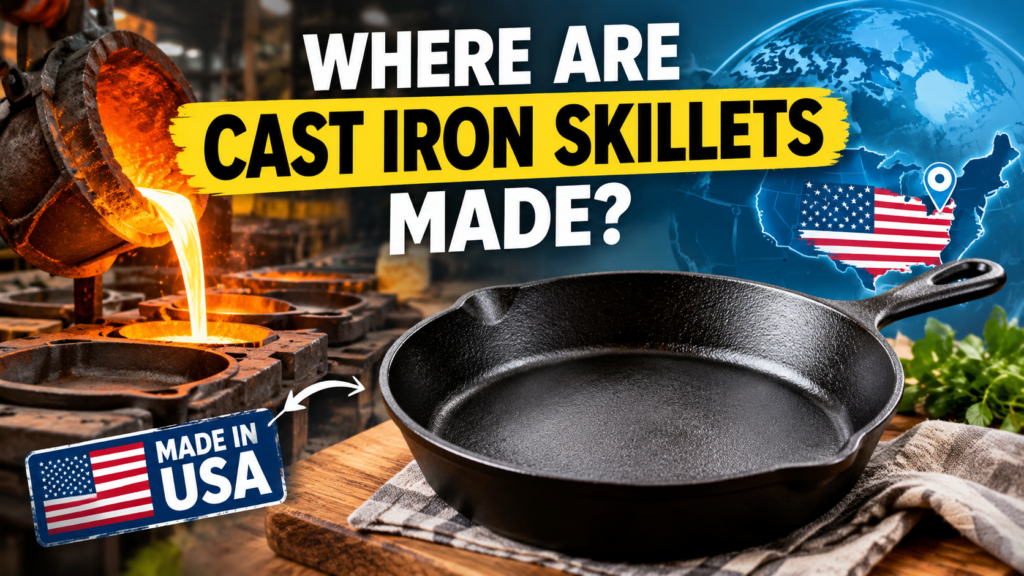
Quick Answer: Where are cast iron skillets made? Many well-known skillets are cast in the United States, such as Lodge in South Pittsburg, Tennessee, while many lower-priced skillets are imported. Check the label, packaging, or maker’s website for the stated country of origin before you buy.
Cast iron can last for generations, so shoppers often care about its story. The question “where are cast iron skillets made” comes up because origin can affect price, finish, and history. This guide covers major U.S. makers, imported options, vintage pieces, and simple ways to check a label. You will also learn what origin does and does not tell you about a pan.
Kitchen TipsCookwareCast IronHome Cooking
This article is for general educational and buying-guidance purposes only. It does not replace the manufacturer’s official manual, food safety guidance, or professional advice. Materials, specifications, and care instructions can vary by product and should be confirmed with the manufacturer before purchase or use. For product defects, suspected food-safety issues, or injuries such as burns or cuts, contact the manufacturer, a qualified professional, or seek medical help as needed.
Where Are Cast Iron Skillets Made Today?
Cast iron skillets are made in foundries. A foundry is a factory that melts iron and pours it into molds. Skillets sold in the USA usually come from two groups: American foundries and overseas factories, often in Asia, that export lower-priced pans.
Lodge is the best-known American example. The company says it has operated in South Pittsburg, Tennessee, since 1896, and it states that its cast iron skillets are made there. Because a brand’s catalog can include different product lines, check each product page or label instead of assuming.
Cast Iron Skillet Origins at a Glance
Most skillets follow the same basic path from raw iron to your stovetop. This practical guide shows the usual order.
Practical guide: How a Skillet Is Made
Finishing is where brands differ most. Some smooth the cooking surface, while others leave a textured one. Neither is wrong. Choose based on how you cook and what feels easy to use.
Well-Known American Cast Iron Makers
If you want to know where are cast iron skillets made in the USA, start with a few familiar names. Lodge is based in South Pittsburg, Tennessee. Smithey Ironware is based in Charleston, South Carolina, and is known for smooth, premium skillets. Stargazer Cast Iron is associated with Pennsylvania. Other small brands cast skillets in the U.S. too, so confirm details on each maker’s website.
Choose an American-made skillet if you value domestic manufacturing or a smoother surface. Choose an imported skillet if budget matters most.
Note: “Made in the USA” describes where a product was made. It does not describe thickness, weight, or surface texture. Compare product pages for those details.
Origin Label Problem vs Likely Cause
Why Imported Skillets Are Also Common
Shoppers who ask where are cast iron skillets made often find that imported pans fill many store shelves. They can cost less, and many home cooks find them useful for everyday meals. Imported does not automatically mean poor quality. Still, weight and finish can differ, so read product details and reviews carefully. Follow the maker’s care steps, whatever the origin.
How to Check Where Your Skillet Was Made
Sometimes a label gives no clear answer. This simple path shows what to do next.
Practical guide: If the Label Is Unclear
A missing label is not proof of a problem. It simply means you need more information before paying.
Safer Shopping Habits vs Risky Shortcuts
Safety Note: Do not heat a skillet with a visible crack, loose handle, or wobbly base. Cast iron holds heat for a long time, and handles can stay hot, so use dry oven mitts. For general food safety guidance, see FoodSafety.gov.
Vintage Skillets and Their Origins
Old American brands such as Griswold, made in Erie, Pennsylvania, and Wagner, made in Sidney, Ohio, are popular with collectors. These skillets often show a logo and a city name on the bottom. Condition matters more than a famous name. Look for a flat bottom, no cracks, and no heavy rust pitting. Surface rust can often be cleaned and re-seasoned, but follow trusted care guidance.
Tip: Set a vintage pan on a flat counter and press gently on the edge. If it rocks or spins, it may be warped, and many cooks find a flat pan heats more evenly.
Use this quick checklist before you buy any skillet, new or used.
Practical guide: Before You Buy Checklist
Find the “Made in” wording. Confirm it on the maker’s page.
Compare texture and weight. Pick what feels easy to lift and use.
Read the cleaning and seasoning steps. Make sure you will follow them.
Check the return policy. A clear policy helps if the pan arrives damaged.
Work through all four, not just the first. Origin is useful, but it is only one part of a good buying decision.
Skillet Origin vs Shopper Fit
Different cooks want different things from a skillet. This guide compares two common shopper types.
Practical guide: Product Fit Dashboard
A pre-seasoned skillet at a lower price may be enough. Focus on size, weight, and clear care instructions.
You may prefer a U.S.-made or vintage pan. Check origin, condition, and the maker’s history.
Neither choice is better for everyone. Pick the one that matches your budget, your cooking habits, and your comfort with maintenance.
Skillets to Consider
This article may contain affiliate links. If you buy through these links, we may earn a small commission at no extra cost to you. We only mention products that fit the topic and recommend checking current specs and care instructions directly with the manufacturer.
Lodge Cast Iron Skillet
Lodge states that its cast iron skillets are made in South Pittsburg, Tennessee. A pre-seasoned skillet can make daily cooking easier. Confirm the exact size and origin on the listing.
Smithey Ironware Skillet
Smithey is a U.S. small-batch brand known for smooth cooking surfaces. It may suit cooks who want a premium option. Check current specs and care steps with the maker.
This chart shows what many shoppers check first. It is a general guide, not test data.
Typical routine priority: What to Check First
Longer bars mean higher priority in a typical routine. Your order may differ if budget is your main limit.
Common Mistake vs Better Choice
When to Contact the Manufacturer or a Professional: Contact the maker if a skillet arrives cracked, the origin label seems wrong, or you have questions about materials or care. If a product seems dangerous, you can learn how to report it through the CPSC. For burns, seek medical help.
Warning: Do not rely on a seller’s photo or title alone for origin. Confirm it with the maker before you pay, especially for higher-priced pans.
Frequently Asked Questions
Where are cast iron skillets made in the USA?
Several are made in the USA. Lodge states it makes skillets in South Pittsburg, Tennessee, and Smithey is based in Charleston, South Carolina. Confirm the origin of the exact product you plan to buy.
Is Lodge cast iron still made in America?
Lodge says its cast iron skillets are made in South Pittsburg, Tennessee. Because catalogs change, check each product page for current details.
Are all cast iron skillets made in America?
No. Many skillets sold in the USA are cast overseas. Always read the label or listing for the country of origin.
Does “made in the USA” mean a better skillet?
Not by itself. Origin does not tell you weight, surface texture, or durability. Compare product details, reviews, and care instructions as well.
How can I tell where my old skillet was made?
Check the bottom for a logo, city name, or size number. Then compare those marks with the maker’s history or a trusted collector resource.
Are imported cast iron skillets safe to use?
Many home cooks use them without trouble. Follow the maker’s care instructions, avoid cracked pans, and contact the manufacturer or CPSC if you have a product safety concern.
Final Thoughts
So, where are cast iron skillets made? The answer depends on the brand and the exact product, with some made in the U.S. and others imported. Check the label, confirm details and care instructions with the manufacturer, follow food-safety guidance, and seek professional or medical help for serious problems.
