
By Michael Hayes
Quick Answer: Yes — you can use frying pan for baking in most home ovens, but only if the pan, handle, and any lid are labeled oven-safe up to your recipe’s temperature. Cast iron and all-metal stainless steel pans usually work best. Nonstick coatings, plastic or wooden handles, and glass lids often cannot handle oven heat safely.
Many home cooks ask can we use frying pan for baking when a recipe calls for a skillet cornbread, a baked frittata, or a one-pan dessert. The short answer depends entirely on what the pan is made of and how it was built. This guide walks through material safety, handle risk, temperature limits, and the practical checks experienced cooks use before sliding a frying pan into a hot oven.
Cast Iron Baking
Handle Safety
Nonstick Temperature Limits
Skillet Recipes
Trust & Accuracy Note: This article is for general educational and buying-guidance purposes only. It does not replace the manufacturer’s official manual, food safety guidance, or professional advice. Materials, specifications, and care instructions can vary by product and should be confirmed with the manufacturer before purchase or use. For product defects, suspected food-safety issues, or injuries such as burns or cuts, contact the manufacturer, a qualified professional, or seek medical help as needed.
What “Using a Frying Pan for Baking” Actually Means
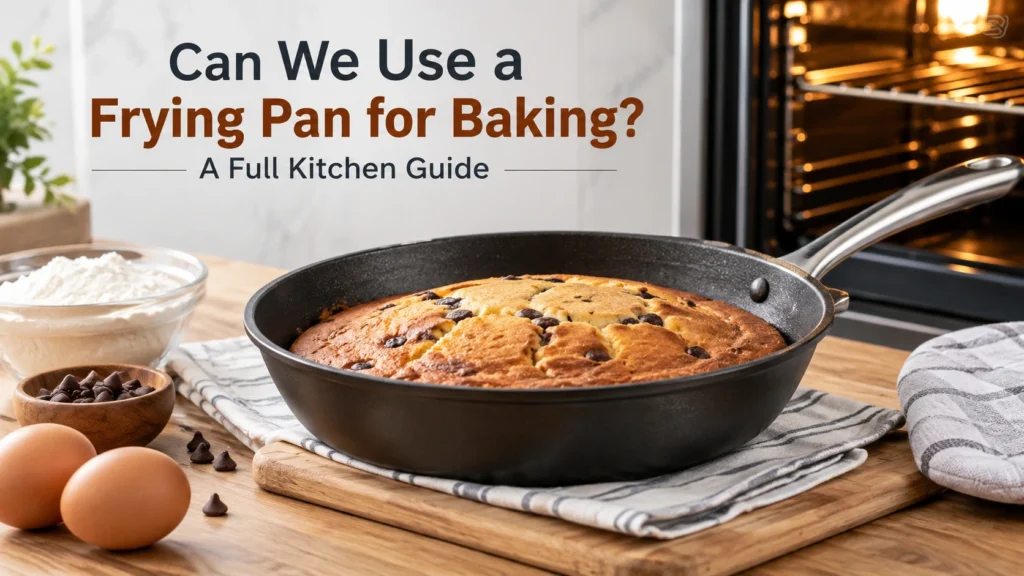
When people ask can we use frying pan for baking, they usually mean moving a stovetop skillet directly into an oven to finish a dish. This is common for skillet cornbread, deep-dish frittatas, baked pasta, and desserts like skillet cookies. The pan starts on the burner, then goes into the oven to finish cooking with dry, surrounding heat instead of direct stovetop contact.
Note: Not every pan labeled “frying pan” is built the same way. Two pans that look similar can have very different maximum oven temperatures depending on the base material, coating, and handle construction.
Why This Question Matters for Home Cooks
Getting this wrong can damage cookware, ruin a meal, or create a safety hazard. A plastic handle can soften or melt in oven heat. A nonstick coating pushed past its rated temperature can degrade faster and release odor. Glass lids can crack from sudden temperature changes. This is why home cooks find it worth pausing before assuming can we use frying pan for baking with a specific pan they already own.
Frying Pan Types and Oven Safety Comparison
This is a general practical guide, not a certification chart. Always confirm with your pan’s manufacturer.
How Frying Pan Materials Behave in Oven Heat
Metal conducts and holds heat differently depending on thickness and alloy. Cast iron heats slowly and holds heat well, which is why it is a common choice when people ask can we use frying pan for baking a dense dish like cornbread. Stainless steel heats faster and is generally stable at high oven temperatures when it has no plastic parts. Nonstick coatings are engineered polymers that can break down faster once pushed past their intended limit, which is why brands set a maximum oven-safe rating.
Quick decision path before baking with your pan:
This is a practical routine, not a technical safety certification.
What to Check Before You Use a Frying Pan for Baking
Before you decide can we use frying pan for baking with a particular pan, look at four things: the base material, the handle material, any lid, and the recipe’s required temperature. A beginner can usually find an oven-safe symbol stamped on the pan bottom or handle. A more experienced cook also checks whether the coating has visible wear, since damaged nonstick surfaces can behave less predictably under heat.
Tip: If your recipe needs a temperature higher than your pan’s rated limit, switch to a confirmed oven-safe dish rather than pushing the pan past its limit “just this once.”
Common Baking Problems and Likely Causes
Step-by-Step: Using a Frying Pan for Baking Safely
Pre-bake safety checklist dashboard:
✔ Oven-safe symbol or manual confirmation checked
✔ Handle is fully metal or confirmed heat-rated
✔ Lid removed unless labeled oven-safe
✔ Oven temperature at or below pan’s rated limit
✔ Oven mitts ready for both hands
Use this as a general daily routine reminder, not a substitute for the manufacturer’s manual.
Safety and Hygiene Checks
Beyond material limits, hygiene matters too. A pan that went from raw meat prep straight into the oven for baking should be washed first, since baking heat is not the same as a thorough handwash for cross-contamination control. Always let a hot pan rest on a trivet, never directly on a countertop, and keep the handle turned away from reachable edges when it comes out of the oven.
Warning: A frying pan handle can stay dangerously hot for many minutes after it leaves the oven, even if the pan itself looks like it has cooled. Always assume the handle is hot until proven otherwise.
Accuracy Note: Coating and handle temperature limits vary by brand, model, and manufacturing batch. This article cannot state a universal safe temperature for every frying pan. Check the manufacturer’s guidance if the maximum oven temperature is not printed on the pan or in the manual.
Safe vs. Risky Baking Practices
Relative heat-tolerance guide (practical routine priority, not lab-tested data):
Cast iron
All-metal stainless steel
Nonstick coated
Plastic-handle pans
This bar chart reflects general practical patterns, not certified test results. Confirm your specific pan with its manufacturer.
Common Mistakes to Avoid
The most frequent mistake is guessing instead of checking the pan’s rating. Another is leaving a wooden or plastic handle attached and assuming a short bake time is safe. A third mistake is trusting a nonstick pan at very high broiler temperatures, since broiling often runs hotter than standard baking. Experienced cooks also avoid stacking a frying pan directly under a top heating element, which concentrates heat unevenly.
Pro Tips and Best Practices
Many home cooks find it helpful to keep one dedicated all-metal skillet just for stovetop-to-oven recipes, so there’s never a guessing game about can we use frying pan for baking on a given night. Preheating the pan briefly on the stove before it goes in the oven can also help some dishes, like skillet cornbread, develop a better crust — though results can vary by recipe and pan.
What Experienced Home Cooks Check That Beginners Miss
Experienced cooks check whether the handle is riveted metal or bonded plastic, since bonded parts often fail first in oven heat.
Scratched or peeling nonstick coating is treated as a signal to stop using the pan at high oven heat.
Broiling runs hotter and more direct than baking, so a pan rated for baking is not automatically rated for broiling.
Placing the pan on a middle rack instead of directly under the top element helps avoid uneven, overly fast surface heat.
When a Frying Pan Isn’t the Right Choice
If a pan has a non-rated handle, a cracked coating, or no printed oven-safe information at all, it’s often simpler to use dedicated bakeware instead. A confirmed oven-safe skillet or a plain metal baking dish removes the guesswork entirely.
This article may contain affiliate links. If you buy through these links, we may earn a small commission at no extra cost to you. We only mention products that fit the topic and recommend checking current specs and care instructions directly with the manufacturer.
All-Metal Cast Iron Skillet
A fully metal handle and body can make daily stovetop-to-oven cooking more convenient, since there are no plastic or rubber parts to remove first.
All-Metal Oven-Safe Stainless Steel Pan
A stainless design with a fully welded metal handle may support more consistent stovetop-to-oven use for dishes like frittatas or skillet bakes.
Mistake vs. Better Choice
Pan-to-dish fit dashboard:
Cast iron or all-metal skillet, medium rack.
Oven-safe nonstick or stainless, within rated temperature.
Cast iron preferred for even heat retention.
Dedicated bakeware often fits better than a frying pan.
General practical fit guide, not a guarantee of specific cooking results.
When to Contact the Manufacturer or a Professional: Reach out to the manufacturer if the oven-safe rating is not printed anywhere and not listed in the manual, if the coating shows unusual bubbling or peeling after normal use, or if you suspect a product defect. Seek medical help for burns beyond a minor surface reaction, or for any deep cut from handling damaged cookware. For fire risk near the stove or oven, follow standard kitchen fire safety guidance and contact emergency services if needed.
For general product safety information, you can review guidance from the U.S. Consumer Product Safety Commission and food-contact material information from the U.S. Food and Drug Administration.
Frequently Asked Questions
Can we use frying pan for baking in a regular home oven?
Yes, many frying pans can go in a regular oven if the base, handle, and any lid are confirmed oven-safe for your recipe’s temperature.
How do I know if my frying pan is oven-safe?
Look for an oven-safe symbol on the base or handle, or check the product manual or manufacturer’s website for a stated maximum temperature.
Can nonstick frying pans go in the oven?
Many nonstick pans can go in the oven, but usually only up to a lower stated temperature than cast iron or plain metal pans. Check the manufacturer’s guidance before baking.
What happens if I put a pan with a plastic handle in the oven?
A non-rated plastic or rubber handle can soften, warp, or melt under oven heat, which can damage the pan and create a safety hazard.
Is cast iron the best pan for stovetop-to-oven baking?
Cast iron is a common choice because it generally tolerates high oven heat well, but it is heavy and still requires checking for any non-metal accents.
Can I use a glass lid when baking with a frying pan?
Only if the lid is specifically labeled oven-safe. Otherwise, remove it before placing the pan in the oven to avoid cracking from heat.
When should I stop using a pan for oven baking and contact the manufacturer?
Contact the manufacturer if there’s no printed oven-safe rating anywhere, if the coating is bubbling or peeling, or if you suspect a defect after normal use.
Final Thoughts: So, can we use frying pan for baking? In most cases, yes — as long as the pan, handle, and lid are confirmed oven-safe for your recipe’s temperature. Always confirm care instructions and material ratings with your pan’s manufacturer, and seek professional or medical help for any product defect, burn, or cut. A little checking before baking goes a long way toward a safer, better result.
