
By Michael Hayes
Quick Answer: Yes, a sauté pan can be used as a frying pan for most everyday cooking, since both have a flat cooking surface and handle direct stovetop heat well. The main difference is the taller straight sides on a sauté pan, which can make flipping delicate foods a little less convenient than a shallow frying pan, though overall daily performance is very similar.
If you only own one large pan, you have probably wondered whether it can cover every job in the kitchen. Many home cooks ask whether a sauté pan can be used as a frying pan before buying a second piece of cookware. In daily cooking, I usually notice that the two pans overlap far more than kitchen catalogs suggest, but a few differences in shape and depth do change how certain foods behave. This guide walks through what each pan does best, how to use one in place of the other safely, and when a dedicated frying pan is still worth having.
Accuracy Note: This article is for general educational and buying-guidance purposes only. It does not replace the manufacturer’s official manual, food safety guidance, or professional advice. Materials, specifications, and care instructions can vary by product and should be confirmed with the manufacturer before purchase or use. For product defects, suspected food-safety issues, or injuries such as burns or cuts, contact the manufacturer, a qualified professional, or seek medical help as needed.
What Is a Sauté Pan?
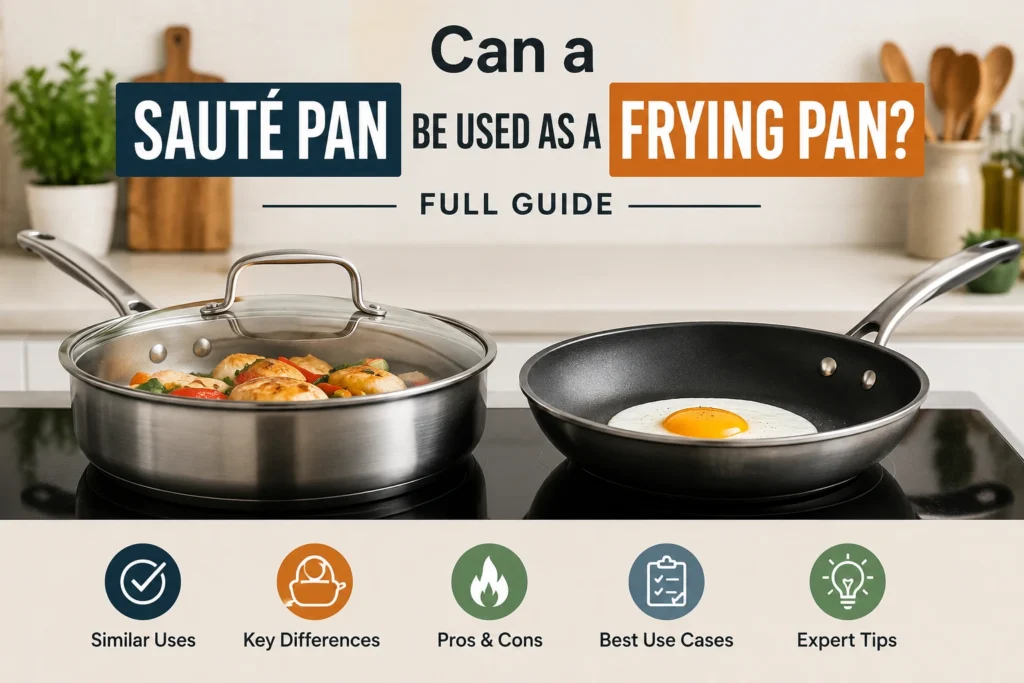
A sauté pan has a wide, flat bottom and tall, straight sides, usually between 2 and 4 inches high. It often comes with a lid and a long handle, and sometimes a helper handle on the opposite side. The straight sides hold in liquid, oil, and sauce, which is why this pan works so well for browning meat, simmering a sauce, or cooking a dish that needs a splash of wine or broth added partway through.
Because of the taller walls, a sauté pan also handles a full meal in one vessel. Many home cooks brown chicken, add vegetables, then pour in liquid and let everything simmer with the lid on, all in the same pan.
What Is a Frying Pan?
A frying pan, sometimes called a skillet, has shallow, sloped or curved sides, typically 1 to 2 inches high. The lower, angled sides make it easy to slide a spatula under food and flip it with a flick of the wrist. This shape is a natural fit for eggs, pancakes, thin cuts of meat, and stir-fried vegetables that need frequent tossing.
The shallow design also lets more moisture escape as steam, which helps food brown and crisp instead of steaming in its own juices.
Can a Sauté Pan Be Used as a Frying Pan? The Basic Answer
In most kitchens, a sauté pan can be used as a frying pan without any special adjustment. Both pans are typically made from similar materials, both sit flat on a burner, and both handle direct heat from the stovetop. If a recipe calls for a frying pan and you only have a sauté pan, you can usually go ahead and cook the dish as written.
The situations where it matters most are foods that need to be flipped in the air, foods cooked in a very thin layer of oil where reach matters, or dishes where you want maximum surface contact with the pan for fast browning. In those cases, the taller sides of a sauté pan can get in the way slightly, though it still gets the job done.
Sauté Pan vs. Frying Pan at a Glance
Note: Both pans are often sold in the same material lines, so switching between them usually does not change how you clean or care for the cookware, only how the food behaves while it cooks.
Why the Difference in Shape Matters
The height of the sides changes airflow and moisture around the food. A frying pan’s low, sloped walls let steam escape quickly, which supports crisping and browning. A sauté pan’s tall, straight walls trap more steam near the food, which is useful for gentle simmering but can soften a crust that you were hoping to keep crisp, such as on a pan-seared piece of fish or a grilled cheese sandwich.
This does not mean a sauté pan performs poorly. It simply behaves a little differently, and once you know the pattern, you can predict which dishes will turn out closest to a dedicated frying pan.
Quick Decision Flow: Should You Use Your Sauté Pan Today?
This is a practical routine guide, not a lab-tested cooking rule.
What to Check Before You Use a Sauté Pan as a Frying Pan
Before you use a sauté pan as a frying pan for something delicate, take a moment to check a few practical details. These checks matter more for beginners, since experienced cooks often judge a pan by feel.
Cooking Surface Material
Stainless steel, nonstick, and cast iron all fry food differently. Check the manufacturer’s guidance for maximum heat and safe utensils before frying at high temperatures.
Size and Weight
A large, heavy sauté pan can be tiring to tilt for pan sauces or flipping. Confirm the pan’s weight feels manageable one-handed before you rely on it daily.
Handle Type
Some sauté pans have handles that get warmer than a frying pan’s handle because of pan mass. Use a dry towel or mitt and check if the handle is oven-safe if needed.
Side Height for the Dish
If a recipe depends on rapid flipping, a very tall sauté pan may not be the right fit. Choose this if you are frying with tongs; avoid it if you plan to toss food in the air.
Which Pan Fits Which Task
How to Use a Sauté Pan as a Frying Pan Safely
Preheat the pan on medium heat for one to two minutes before adding oil, so the surface heats evenly.
Add a thin, even layer of oil and let it warm for about 30 seconds before adding food.
Use tongs or a spatula instead of tossing food in the air, since the taller sides make airborne flips harder to land cleanly.
Leave the lid off if you want a crisp finish, since the tall sides already trap more steam than a frying pan.
Check food doneness a little earlier than usual the first few times, since heat and moisture can build up differently in a deeper pan.
Let the pan cool before washing, and follow the manufacturer’s cleaning guidance for the specific material.
Tip: If a sauté pan feels too deep to comfortably reach into with a spatula, tilt it slightly toward you while cooking flatter foods like eggs or pancakes. This can make the taller side feel less like an obstacle.
Safety and Hygiene Checks
Safety Note: Hot oil in a deep-sided pan can splatter unexpectedly when food is added quickly. Add food gently, keep the handle turned away from the front of the stove, and never leave hot oil unattended. If a pan’s coating is peeling, cracked, or scratched deeply, check the manufacturer’s guidance on whether it is still safe to use, since surface condition affects how food contact materials perform.
Wash the pan after each use with warm water and a suitable cleaner for its material, and dry it fully before storing to reduce the chance of rust on carbon steel or cast iron. If you are ever unsure whether a coating or material is safe for food contact, the FDA’s guidance on substances that contact food is a useful starting point.
Troubleshooting: Oil Is Splattering Heavily
Common Problems and Likely Causes
Care and Maintenance Checklist
Common Mistakes to Avoid
One common mistake is assuming a sauté pan can be used as a frying pan for every single technique without adjusting your approach at all. Small changes in timing and tool choice go a long way.
Warning: Never use a pan with a badly damaged or heavily scratched nonstick coating for frying at high heat. Stop using it and check the manufacturer’s care instructions, since damaged coatings may not perform as intended.
Safe Practice vs. Risky Practice
Pan Fit Dashboard by Food Type
Eggs & Pancakes
Stir-Fry & Sears
Simmered Sauces
Deep Browning of Meat
Bar length shows a practical guide to how well a sauté pan fits each task, not a lab measurement.
Pro Tips and What Experienced Cooks Check
Beginners often focus only on heat level. Experienced home cooks also check pan balance, oil depth, and how the handle sits before they start cooking.
Pan Balance
A well-balanced pan tilts evenly for pan sauces. Test this empty before adding oil.
Oil Depth
A thin, even layer prevents both sticking and excess splatter, and works in either pan style.
Lid Fit
A snug lid speeds up simmering, but many cooks remove it at the end for a crisper finish.
Batch Size
Crowding a pan lowers the temperature quickly. Cook in smaller batches for even frying.
Sauté Pan vs. Frying Pan: Everyday Priorities
Ease of Use for Beginners
Typical Cost Range
Cleaning Effort
Storage Space Needed
These bars reflect a typical routine priority for a sauté pan relative to a frying pan, not measured test data.
Product Recommendations
This article may contain affiliate links. If you buy through these links, we may earn a small commission at no extra cost to you. We only mention products that fit the topic and recommend checking current specs and care instructions directly with the manufacturer.
Stainless Steel Sauté Pan with Lid
A tall-sided sauté pan like this can make daily cooking easier when you regularly move between browning and simmering in one pot. It may support more consistent results for pan sauces and one-pan dinners.
Nonstick Frying Pan / Skillet
A shallow, sloped-side frying pan like this is often used for eggs, pancakes, and quick sautés where flipping matters. Many home cooks find it convenient for fast weekday meals.
When to Contact a Professional or Manufacturer: Reach out to the manufacturer if a pan warps, if a coating bubbles or peels shortly after normal use, or if you notice an unusual smell during heating that does not go away after cleaning. Seek medical attention for burns, deep cuts, or any suspected food-safety reaction, and check current recall listings through the Consumer Product Safety Commission’s cookware recall page if you have safety concerns about a specific product.
Frequently Asked Questions
Can a sauté pan be used as a frying pan for eggs?
Yes, though the taller sides may make sliding a spatula under the egg slightly less convenient than a shallow frying pan. It still works fine for most everyday breakfasts.
Is it safe to fry in a sauté pan on high heat?
Most sauté pans can handle typical frying heat, but always check the manufacturer’s maximum temperature guidance for the specific material and coating before frying at high heat.
Do I need both a sauté pan and a frying pan?
Not necessarily. Many home kitchens function well with just one large pan. A second pan becomes more useful once you cook a wide variety of dishes regularly.
Why does food sometimes steam instead of fry in a sauté pan?
The taller sides trap more steam near the food than a shallow pan, especially with the lid on. Removing the lid for the last few minutes usually helps food crisp up.
Does using a sauté pan as a frying pan affect cleaning?
No. Cleaning depends on the pan’s material, not its shape. Follow the manufacturer’s care instructions for the specific surface, whether stainless steel, nonstick, or cast iron.
Can a frying pan be used instead of a sauté pan for a sauce?
It can, but shallow sides mean liquid may reduce faster and can splash out more easily. Watch the heat and stir often if you use a frying pan this way.
When should I stop using a pan and contact the manufacturer?
Stop using a pan and contact the manufacturer if it warps, if the coating peels or bubbles under normal use, or if you notice a persistent unusual smell during cooking.
Overall, a sauté pan can be used as a frying pan for the vast majority of daily cooking tasks, from eggs to stir-fries to weeknight sautés. The main trade-off is convenience when flipping food in the air, not safety or food quality. Keep the manufacturer’s care instructions on hand, confirm materials and coatings before buying, and contact the manufacturer or seek medical help right away for any defect, injury, or suspected food-safety issue.
