
By Michael Hayes
Most home cooks assume a frying pan lasts forever, but that isn’t quite true. Coatings wear down, metal fatigues, and handles loosen with years of stovetop heat and daily scrubbing. Knowing whether can a frying pan go bad is more than a curiosity question — it affects how your food cooks, how evenly your pan heats, and whether flaking material ends up in your dinner. This guide walks through the real signs of wear, the material-specific issues to watch for, and practical, safe decision rules for when to keep using a pan and when to let it go.
Cast iron care
Warping & hot spots
Kitchen safety
When to replace
What Does It Mean When a Frying Pan Goes Bad?
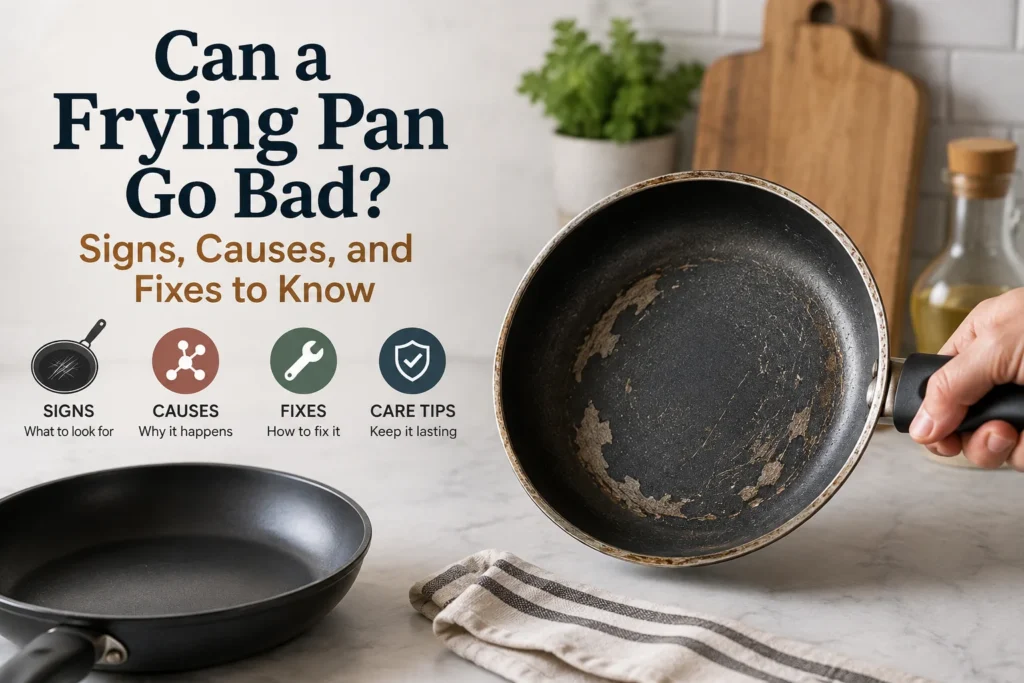
When people ask whether can a frying pan go bad, they’re usually noticing something specific: food sticking that never used to stick, a wobbly base, or dark flecks showing up in a fried egg. A pan “going bad” doesn’t mean it spoils like food. It means the material has worn, corroded, warped, or physically broken down to the point where it no longer heats evenly or holds up to safe daily cooking.
This can happen slowly over years of normal use, or faster if a pan is exposed to high heat, metal utensils, or improper cleaning. In daily cooking, I usually notice the first signs long before a pan becomes unsafe — that’s the window where a quick check can save money and prevent a bigger problem.
Why This Matters for Your Cooking and Safety
A worn frying pan does more than cook unevenly. Flaking nonstick coating can end up in food, rusted cast iron can affect taste and texture, and a loose handle is a burn risk waiting to happen. Understanding whether a frying pan can go bad helps you catch these issues early instead of discovering them mid-meal. It also protects your kitchen budget — replacing one pan is far cheaper than assuming every meal cooked in a damaged pan is automatically unsafe, which isn’t accurate either. The goal is informed, calm decision-making, not fear.
How Frying Pans Wear Out: Material by Material
Every pan material breaks down differently, so the question of whether can frying pans go bad really depends on what your pan is made of. Nonstick coatings degrade with scratches and overheating. Cast iron can rust if seasoning is stripped and the pan sits wet. Stainless steel rarely “dies” but can warp or develop permanent stains from overheating empty. Carbon steel behaves similarly to cast iron and needs its seasoning layer maintained.
Material Wear Comparison
Signs Your Frying Pan May Be Going Bad
Before assuming the worst, look for a few practical signs. These are the checks that answer does a frying pan go bad in real, everyday terms rather than guesswork.
Visible chips or a rough, scratched nonstick surface mean the coating is breaking down. Food often starts sticking in patches first.
A pan that rocks on a flat burner heats unevenly, which can burn food in one spot while leaving another undercooked.
A handle that shifts under weight is a safety issue, not just an annoyance, especially when the pan is full of hot food.
On cast iron or carbon steel, spreading rust after reseasoning attempts often signals deeper corrosion.
Step-by-Step: How to Check If Your Pan Has Gone Bad
Here’s a simple, practical routine for checking a pan you’re unsure about.
This kind of routine check is the most reliable way to answer can a frying pan go bad for your specific pan, rather than relying on age alone.
Pan Check Routine — Practical Flow
Practical guide only — run through this five-step flow anytime a pan feels or looks “off” before your next cooking session.
Safety and Hygiene Checks
A pan that’s simply worn is different from one that’s actively unsafe. Flaking coating in food, sharp rust flecks, or a handle that separates while lifting a hot pan are all reasons to stop using the pan immediately rather than trying to finish the meal in it.
Keep or Replace — Simple Decision Path
Coating flaking or peeling? → Replace
Handle loose or cracked? → Replace
Rust returns after reseasoning? → Deep clean, reseason, recheck
Minor scratches, still heats evenly? → Keep using, monitor
This is a practical guide, not a lab-tested safety test — check your product’s manual if you’re unsure.
Common Problems and Likely Causes
Safe Practices vs Risky Practices
Daily habits often decide how quickly a pan wears out. This is where many people unintentionally shorten a pan’s usable life without realizing why.
Weekly Pan Care Checklist
A simple routine priority guide — not a strict schedule, just a helpful habit checklist for daily cooking.
Common Mistakes People Make
Many people ask can a frying pan go bad only after making one of these avoidable mistakes: stacking pans without protective liners, using cooking sprays that build up residue on nonstick coatings, or scrubbing cast iron with steel wool and soap. Another frequent mistake is ignoring a wobble in the base, assuming it doesn’t matter until food starts burning unevenly on one side.
What Experienced Home Cooks Check That Beginners Miss
Beginners usually check the cooking surface and stop there. Experienced cooks also check the rivets, the base flatness on an induction or flat-top stove, and whether the handle material has become brittle from repeated oven use. In daily cooking, I usually notice that base flatness is the detail most beginners skip, even though it’s one of the biggest reasons for uneven cooking.
Choosing the Right Replacement: Fit Table
If your check confirms the pan has gone bad, picking a fit for your actual cooking habits matters more than picking the priciest option.
Replacement Urgency Meter — by Material
Nonstick with visible flaking
Cast iron with returning rust
Stainless steel with staining only
Any pan with a loose handle
A practical guide only, not a scientific or lab-tested rating — use it as a general priority reference.
Mistake vs Better Choice
Product Recommendations
When to Contact a Professional or Manufacturer
FAQ
Can a frying pan go bad even if it looks fine?
Yes. Some wear, like a thinning nonstick coating or a slightly warped base, isn’t always obvious by sight. Testing food release and checking flatness on a counter can reveal early wear.
How long does a nonstick frying pan usually last?
It varies by brand, use, and care, but many home cooks notice nonstick coatings start wearing down within a few years of regular use. Check the manufacturer’s guidance for specifics on your pan.
Is it safe to use a pan with a few scratches?
Light scratches alone don’t always mean a pan is unsafe, but if scratches lead to visible flaking or coating loss, it’s a good time to check care instructions and consider replacement.
Can rust on a cast iron pan be fixed?
Often yes, with cleaning and reseasoning. If rust keeps returning despite proper drying and seasoning, the pan may have deeper corrosion and could need professional evaluation or replacement.
Why does my frying pan cook unevenly now?
Uneven cooking is often a sign of a warped base or worn coating. Checking the pan’s flatness on a counter is a quick way to confirm.
Is it safe to eat food cooked in a flaking nonstick pan?
Once coating visibly flakes, it’s best to stop using the pan and check the manufacturer’s guidance. Replacing the pan is the safer, more practical choice going forward.
When should I contact the manufacturer about my pan?
Contact the manufacturer if you notice an unusual defect, unclear care instructions, or coating failure that seems unrelated to normal wear. Many brands have specific warranty guidance for this.
For further reading on cookware and food-contact material safety, see guidance from the U.S. Food and Drug Administration, product safety information from the Consumer Product Safety Commission, and cookware standards resources from NSF International.
