By Michael Hayes — RecipeTalkToday
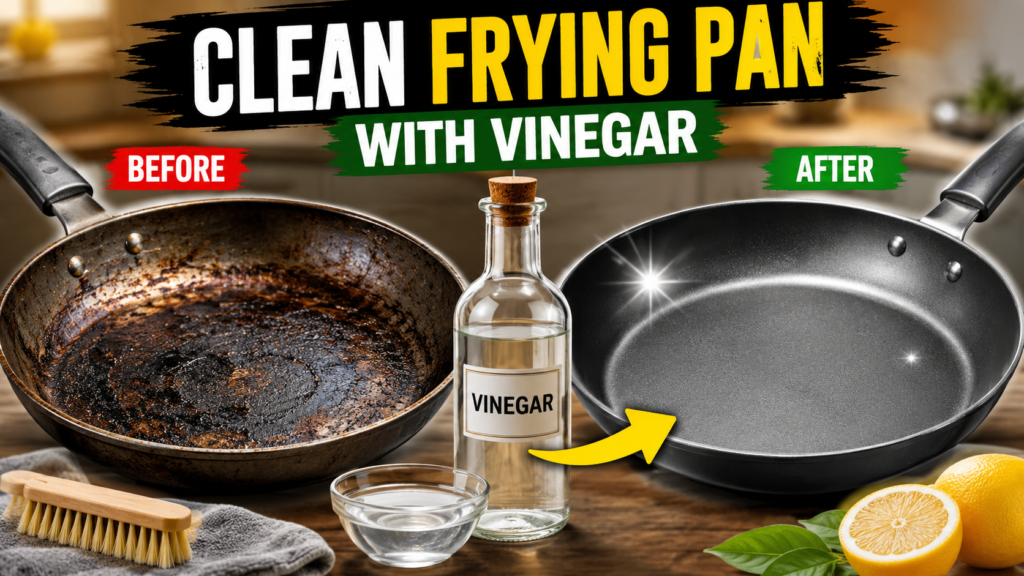
Quick Answer: To clean a frying pan with vinegar, mix equal parts white vinegar and water, heat gently in the pan for a few minutes, then scrub with a soft brush or non-abrasive pad. This method works well on burnt residue, mineral spots, and light rust on stainless steel and some non-stick pans, but it isn’t right for every material.
Vinegar is one of the most common kitchen staples for cutting through grease and burnt-on food, which is why so many home cooks search for how to clean a frying pan with vinegar instead of reaching for harsh chemical cleaners. It’s inexpensive, easy to find, and gentle enough for regular use on the right cookware. This guide walks through when vinegar works well, when to avoid it, and how to get the best results without damaging your pan.
Burnt Residue
Rust Removal
Non-Stick Care
Everyday Kitchen Cleaning
This article on RecipeTalkToday is for general educational and buying-guidance purposes only. It does not replace the manufacturer’s official manual, food safety guidance, or professional advice. Materials, specifications, and care instructions can vary by product and should be confirmed with the manufacturer before purchase or use. For product defects, suspected food-safety issues, or injuries such as burns or cuts, contact the manufacturer, a qualified professional, or seek medical help as needed.
Why Vinegar Works on Frying Pans
Vinegar is mildly acidic, which is why it can help loosen mineral deposits, burnt sugar, and light rust from cookware surfaces. In daily cooking, I usually notice that a quick vinegar soak softens stuck-on food far better than plain water alone, especially after searing or reducing sauces. The acidity in vinegar reacts with mineral buildup and some oxidized metal, making it easier to lift away with a sponge instead of scrubbing hard enough to scratch the surface.
That said, vinegar is not a universal cleaner. How to clean a frying pan with vinegar depends heavily on what your pan is made of, since some coatings and metals react poorly to prolonged acid exposure.
Before You Start: Check Your Pan’s Material
Before using vinegar, confirm what your pan is made of and check the manufacturer’s care guidance if you’re unsure. Vinegar behaves differently depending on the surface, and using it on the wrong material can dull a finish or wear down a coating faster than normal use would.
Generally tolerates vinegar well for occasional cleaning. It can help remove heat stains and mineral spots without harming the surface when used in a diluted solution and rinsed promptly.
Vinegar can strip seasoning if left on too long. Many home cooks find a very brief, diluted wipe acceptable, but soaking is best avoided since it can encourage rust once the seasoning layer is disturbed.
Check the manufacturer’s guidance first. Repeated acid exposure combined with abrasive scrubbing can shorten coating lifespan, so a gentle, brief application is usually safer than a long soak.
Vinegar can help remove discoloration on aluminum and tarnish on copper, but polished or anodized finishes may need gentler handling. Confirm with the manufacturer if the pan has a specialty finish.
Step-by-Step: How to Clean a Frying Pan With Vinegar
Here is a practical, beginner-friendly routine for how to clean a frying pan with vinegar safely at home.
Everyday Vinegar Cleaning Routine
In practical terms, this routine takes about ten minutes for most everyday messes and avoids the harsher scrubbing that leads to scratched surfaces over time.
Vinegar vs. Other Common Pan-Cleaning Methods
Common Problems and How Vinegar Can Help
Different pan problems call for slightly different approaches, even when the base method is the same diluted vinegar solution.
Problem vs. Likely Cause
Tip: A short baking soda rinse after vinegar can neutralize the smell if you’re sensitive to the vinegar scent lingering on cookware.
Safe Practices vs. Risky Habits
Safe vs. Risky Vinegar Cleaning Practices
Should You Use Vinegar? A Quick Decision Path
This decision path is a practical guide, not a lab-tested standard, and manufacturer instructions should always take priority.
Common Mistakes When Cleaning Pans With Vinegar
Mistake vs. Better Choice
Note: If a pan has a badly damaged or peeling non-stick coating, avoid continued use for cooking and contact the manufacturer about replacement, since coating flakes are a food-safety concern rather than a cleaning issue.
What Experienced Home Cooks Check That Beginners Miss
Beginners often focus only on visible stains, but experienced cooks tend to also check pan handles for looseness, inspect rivets for trapped grime, and confirm the pan is bone-dry before storing it stacked with others. These small habits prevent rust and extend cookware life far more than any single cleaning session.
Pan Care Maintenance Checklist
Running through this checklist after cleaning takes under a minute and helps catch small issues before they become bigger repair or replacement problems.
Choosing the Right Tools for the Job
Tool Fit by Pan Material
This article may contain affiliate links. If you buy through these links, RecipeTalkToday may earn a small commission at no extra cost to you. We only mention products that fit the topic and recommend checking current specs and care instructions directly with the manufacturer.
Many home cooks find a nylon brush convenient for everyday scrubbing after a vinegar rinse, since it can help lift residue without scratching coated or polished surfaces.
After a vinegar wipe-down and full drying, a light seasoning oil can support a more consistent protective layer on cast iron pans, helping guard against rust between uses.
Relative Cleaning Difficulty by Stain Type (practical guide, not lab-tested data)
Set-in rust is typically the hardest to fully resolve with vinegar alone, and heavier cases may need a manufacturer-approved metal cleaner or professional restoration.
When to Contact a Professional or Manufacturer: If a pan shows deep pitting, a peeling or bubbling non-stick coating, a loose handle that can’t be tightened, or rust that returns quickly after cleaning, stop using it for cooking and check the manufacturer’s warranty or replacement guidance. For burns from hot cookware or vinegar solution, treat the area under cool running water and seek medical attention for anything beyond a minor burn.
Helpful External Resources
For broader food-contact safety and cookware guidance, these official sources can help: the U.S. Food and Drug Administration, FoodSafety.gov, and the Consumer Product Safety Commission, which covers cookware and appliance safety recalls.
Frequently Asked Questions
Can I use vinegar on every type of frying pan?
Not always. Vinegar works well on stainless steel and bare metal in most cases, but non-stick coatings and cast iron seasoning can be more sensitive to prolonged acid exposure, so check the manufacturer’s care guidance first.
How long should vinegar sit on a pan?
A few minutes is usually enough for everyday residue. Long soaks aren’t necessary for most stains and can increase the risk of surface damage on sensitive materials.
Will vinegar remove rust from a pan?
Vinegar can help with light surface rust when combined with gentle scrubbing. Deeper or spreading rust may need a stronger, manufacturer-approved approach or professional evaluation.
Is it safe to cook in a pan right after cleaning with vinegar?
Yes, as long as the pan is rinsed thoroughly and fully dried first. Leftover vinegar residue can affect the taste of food if it isn’t rinsed off.
Does vinegar remove non-stick coating?
Occasional, brief, diluted use is generally considered low-risk, but frequent or prolonged exposure combined with abrasive scrubbing can wear down a coating faster over time. When in doubt, follow the manufacturer’s instructions.
What if the vinegar smell won’t go away?
A quick rinse with warm water and a small amount of baking soda can help neutralize lingering odor. Fully drying the pan also reduces the chance of smell being trapped.
When should I stop trying to clean a pan and replace it instead?
If the coating is peeling, the pan has deep warping, or rust keeps returning right after cleaning, it’s reasonable to contact the manufacturer about a replacement rather than continuing to use it for cooking.
Learning how to clean a frying pan with vinegar is a simple, budget-friendly habit that fits well into everyday kitchen routines, but it isn’t a one-size-fits-all solution. Always confirm care instructions with your pan’s manufacturer, especially for non-stick and cast iron cookware, and seek professional or medical help for injuries, product defects, or persistent food-safety concerns. — RecipeTalkToday