
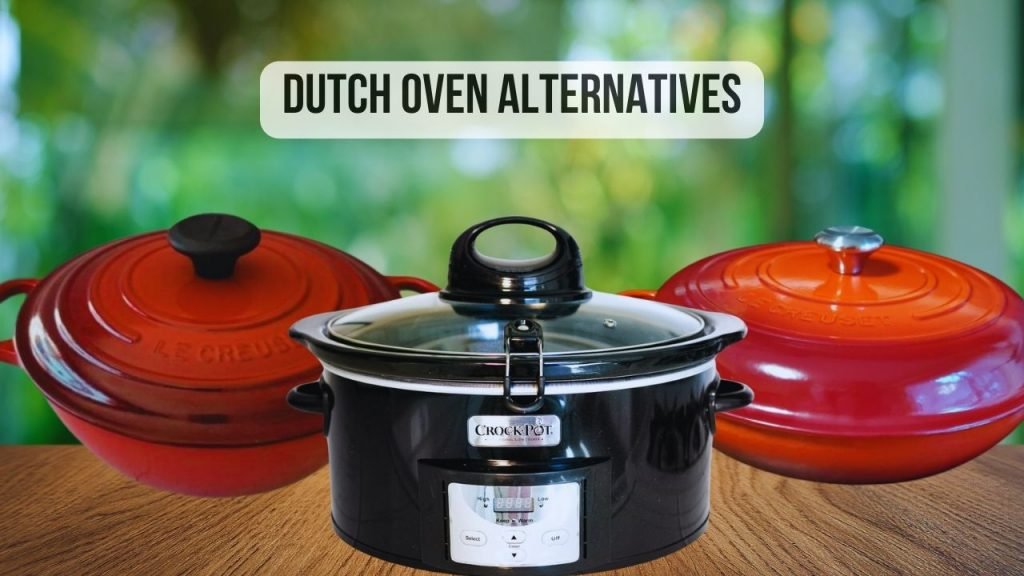
If you are asking what’s better than a Dutch oven, the first thing to know is that there is no universal winner. A Dutch oven is one of the most useful pots in a US kitchen, but it is also heavy, slow to heat, and not ideal for every meal.
The right alternative depends on how you cook. If you make soups and pasta, a stock pot may be easier. If you love low-and-slow meals, a slow cooker can save time. If you sear meat and make shallow braises, a braiser may feel more natural.
A useful way to compare cookware is to focus on the job, not the name of the pan. Look at heat control, cooking area, capacity, oven use, weight, and cleanup. That simple test makes it much easier to decide what’s better than a Dutch oven for your kitchen.

What Makes a Dutch Oven So Useful?
A Dutch oven is a thick pot with strong heat retention. Many models use cast iron, while enameled versions add a smooth coating that works well for acidic foods. The heavy lid also helps hold heat and moisture inside the pot.
This design makes a Dutch oven useful for stews, soups, braises, roasts, beans, bread, and more. You can often move the same pot from the stovetop to the oven. That makes it a true multi-use tool.
Still, those strengths create some limits. A large Dutch oven can be heavy when full. It can also take more time to wash and store than a lighter pan. For some cooks, those limits are the main reason to ask what’s better than a Dutch oven.
- ✦ Strong heat retention
Thick walls hold heat well, which helps with browning and slow cooking.
- ✦ Many uses
One pot can handle searing, simmering, braising, roasting, and some types of baking.
- ✦ Heavy build
The same thick iron that holds heat well also makes many Dutch ovens heavy.
- ✦ Good oven performance
Oven-safe Dutch ovens can move from the stovetop to the oven with few extra steps.
Why You May Want an Alternative
A Dutch oven may be more cookware than you need. A person who mainly cooks pasta may get more value from a tall stock pot. Someone who wants dinner ready while they work may prefer a slow cooker.
Size also matters. A wide braiser can give food more surface area for browning. A chef’s oven can offer a wide base with less depth. These small design changes can make a big difference in daily cooking.
- ✦ Weight
Cast iron can be hard to lift, especially when the pot is full.
- ✦ Storage
A large pot takes more shelf space than many lighter cookware options.
- ✦ Cleanup
Heavy cookware can be less convenient to wash and dry by hand.
Braiser: A Strong Choice for Shallow Braises and Searing
For many cooks, a braiser is one of the clearest answers to what’s better than a Dutch oven. A braiser is wide and fairly shallow, with a heavy lid. Its shape gives you more cooking surface and makes it easier to arrange food in one layer.
That wide base works well when you want to brown chicken, pork, beef, or vegetables before adding liquid. It also suits dishes such as chicken thighs, short ribs, baked pasta, and vegetable braises.
A braiser does not replace a Dutch oven in every task. Its lower sides hold less liquid, so it is not the best choice for a large batch of soup or a deep stew. But for searing and shallow braising, its shape can be a real advantage.
- ✦ Best for
Searing, shallow braises, chicken dishes, vegetables, baked meals, and pan sauces.
- ✦ Main advantage
The wide cooking surface gives food more room to brown.
- ✦ Main limit
The shallow shape is less useful for large amounts of liquid.
- ✦ Good alternative when
You use your Dutch oven mainly for browning and braising rather than soups or large stews.
Braiser vs Dutch Oven
A Dutch oven is deeper and usually more versatile for large batches. A braiser is wider and easier to use when surface area matters most.
If your meals often start with browning meat and finish with a small amount of liquid, a braiser may be what’s better than a Dutch oven for your cooking style.
- ✦ Choose a braiser
Choose it for wide cooking space, shallow braises, and easy access to food.
- ✦ Choose a Dutch oven
Choose it when you need more depth for soups, stews, beans, and large batches.
Slow Cooker: Better for Hands-Off Cooking
A slow cooker can be what’s better than a Dutch oven when convenience is your top goal. It uses gentle, steady heat for long cooking times. You can add your ingredients, set the cooker, and let it work while you handle other tasks.
This makes a slow cooker useful for busy US households. It works well for pulled pork, chili, pot roast, beans, shredded chicken, and many soups. It also uses less active cooking time than a stovetop pot.
The trade-off is control. A slow cooker does not brown food in the same way as a hot Dutch oven. Some recipes taste better when you sear the meat first in another pan.
- ✦ Best for
Long, hands-off cooking and meals that can simmer for several hours.
- ✦ Main advantage
It reduces the need to watch a pot during a long cooking period.
- ✦ Main limit
Most slow cookers do not provide the same searing and browning control as a stovetop pot.
- ✦ Good alternative when
Your main goal is easy meal prep rather than one-pot control from start to finish.
Slow Cooker vs Dutch Oven
A slow cooker is built around convenience. A Dutch oven is built around versatility and direct heat control. Both can produce tender food, but they suit different routines.
If you leave home for work and want dinner ready later, a slow cooker may be what’s better than a Dutch oven. If you enjoy browning, reducing sauces, and changing heat quickly, the Dutch oven has a clear advantage.
- ✦ Hands-off meals
A slow cooker makes long cooking sessions easier to manage.
- ✦ Active cooking
A Dutch oven gives you more control over browning, simmering, and reducing.
Stock Pot: Better for Soups, Pasta, and Large Batches
A stock pot may be what’s better than a Dutch oven if you often cook large amounts of food. It has tall sides and a large capacity. This shape works well for pasta, stock, soup, seafood boils, corn, and batch cooking.
Most stock pots are also much lighter than cast iron Dutch ovens. That makes them easier to move when full and easier to wash. Stainless steel models also do not need cast iron seasoning.
The main weakness is heat retention. A thin stock pot can lose heat faster than a heavy Dutch oven. It also may not give you the same strong browning surface for meat.
- ✦ Best for
Pasta, soup, stock, large batches, and foods that need plenty of liquid.
- ✦ Main advantage
High sides and large capacity make it easy to cook a lot of food.
- ✦ Main limit
Many stock pots do not retain or spread heat as strongly as heavy cookware.
- ✦ Good alternative when
You care more about capacity and low weight than heavy heat retention.
Stock Pot vs Dutch Oven
For a family-size soup or a large pot of pasta, the stock pot often feels more practical. For a stew that needs strong browning first, the Dutch oven often gives better control.
This is a good example of why what’s better than a Dutch oven depends on the task. The taller, lighter stock pot wins for some jobs, while the heavy Dutch oven wins for others.
- ✦ Capacity
Stock pots often offer more useful volume for liquid-heavy meals.
- ✦ Weight
Stainless steel stock pots are usually easier to lift than large cast iron pots.
Chef’s Oven: A Wide and Flexible Alternative
A chef’s oven is another useful answer when you are asking what’s better than a Dutch oven. It usually has a wide base and rounded sides. This shape gives you a good mix of surface area and depth.
The wide base makes it easy to brown meat and vegetables. The rounded sides also make stirring simple. For many home cooks, it feels like a middle ground between a Dutch oven and a large sauté pan.
A chef’s oven can be especially useful when you cook for a few people and want one pan for searing, simmering, and finishing dishes in the oven. The exact design varies by brand, so always check its oven-safe temperature and material.
- ✦ Best for
Sautéing, searing, sauces, braises, grains, soups, and one-pot meals.
- ✦ Main advantage
The wide shape gives good cooking access without the depth of a traditional Dutch oven.
- ✦ Main limit
It may not provide the same capacity as a deep Dutch oven.
- ✦ Good alternative when
You want a versatile pot with more surface area and easy access to food.
Chef’s Oven vs Dutch Oven
A chef’s oven can feel easier to use for everyday meals because its wide shape gives you room to stir and brown. A Dutch oven tends to offer more depth and strong heat retention.
If most of your meals serve two to four people, the chef’s oven may be what’s better than a Dutch oven for your routine. If you cook large stews, bread, or big batches, the Dutch oven may remain more useful.
- ✦ Wide base
Useful for browning food without crowding the cooking surface.
- ✦ Everyday size
Many chef’s ovens suit smaller household meals without the bulk of a large Dutch oven.
Pressure Cooker: Better When Speed Matters
A pressure cooker can be what’s better than a Dutch oven when you want tender food in less time. It cooks under pressure, which raises the boiling point of water and speeds up many cooking tasks.
This makes pressure cooking useful for beans, tough cuts of meat, stews, grains, and stocks. Electric pressure cookers can also combine several functions in one appliance.
The cooking style is different from a Dutch oven. You get speed rather than long, open simmering and easy visual control. You also need to follow the manufacturer’s instructions for safe pressure release and operation.
- ✦ Best for
Beans, tough meat, grains, stews, and meals where cooking time matters.
- ✦ Main advantage
Pressure can shorten the cooking time for foods that normally need long simmering.
- ✦ Main limit
You cannot use it like an open pot during active cooking, and pressure cooking needs specific safety steps.
- ✦ Good alternative when
You want faster results and do not need constant access to the food while it cooks.
When Speed Beats Versatility
A Dutch oven rewards slow cooking and careful heat control. A pressure cooker rewards speed. If a long simmer does not fit your schedule, the pressure cooker may be what’s better than a Dutch oven for that meal.
- ✦ Fast cooking
Useful when a recipe would otherwise need a long simmer.
- ✦ Less active time
Once the cooker reaches pressure, the cooking process needs less hands-on work.
Stainless Steel Sauté Pan: Better for Browning and Quick Meals
A deep stainless steel sauté pan can be what’s better than a Dutch oven for cooks who value quick searing and easy pan sauces. Its wide base gives food plenty of room, while the straight sides hold liquid better than a skillet.
Stainless steel also has a major care benefit. It does not need seasoning, and many models can go into the dishwasher if the manufacturer allows it. It is also much lighter than a large cast iron pot.
The trade-off is heat retention. Stainless steel usually heats and cools faster than thick cast iron. That can be helpful for control, but it does not provide the same thermal mass for long, steady cooking.
- ✦ Best for
Searing, pan sauces, vegetables, pasta dishes, and quick one-pan meals.
- ✦ Main advantage
It offers a broad cooking surface with easier handling than heavy cast iron.
- ✦ Main limit
It may not hold heat as long as a heavy Dutch oven.
- ✦ Good alternative when
You want strong stovetop control and simple care.
Is a Sauté Pan Better Than a Dutch Oven?
For fast stovetop cooking, a deep sauté pan can be easier to handle. For slow braises, bread, and large stews, the Dutch oven offers more depth and heat retention.
Think of the sauté pan as a speed and access tool. Think of the Dutch oven as a heat and versatility tool.
- ✦ Pick stainless steel
Choose it for easy care, quick heat response, and strong searing.
- ✦ Pick cast iron
Choose it when heat retention and long cooking matter more.
Ceramic or Clay Pot: Better for Gentle Cooking
A ceramic or clay cooking pot can be what’s better than a Dutch oven when you want gentle, even cooking. Some traditional clay pots are designed to cook food with steady heat and can bring a different texture to slow-cooked meals.
These pots can work well for grains, beans, stews, and dishes where gentle heat is useful. They can also offer a lighter alternative to some cast iron cookware, depending on the design.
Care varies a lot. Some ceramic and clay cookware can crack with sudden temperature changes. Always follow the maker’s instructions about stovetop use, oven temperatures, preheating, and cleaning.
- ✦ Best for
Gentle cooking, grains, beans, stews, and traditional slow-cooked dishes.
- ✦ Main advantage
Some designs provide gentle and steady heat for slow cooking.
- ✦ Main limit
Thermal shock can damage some ceramic and clay cookware.
- ✦ Good alternative when
You enjoy slow cooking and want a material other than cast iron.
Check the Cooking Instructions
Ceramic cookware does not all behave the same way. Some pieces are made for direct heat, while others are designed mainly for the oven or table.
If you choose ceramic as what’s better than a Dutch oven, confirm the maker’s instructions before using it on a burner or under a broiler.
- ✦ Avoid sudden temperature changes
Let cookware cool as directed instead of moving a very hot piece into cold water.
- ✦ Check heat limits
Use the manufacturer’s stated temperature and burner guidance.
How to Choose What’s Better Than a Dutch Oven for You
The best choice starts with your cooking habits. Do not buy an alternative just because it looks lighter or more modern. Match the cookware to the meals you make most often.
A simple test can help. Think about your last ten meals and count how many needed deep liquid, strong searing, long cooking, a large capacity, or hands-off cooking. The pattern usually points to the right tool.
For many homes, the answer is not to replace the Dutch oven at all. A smaller complementary pan can solve the problems that make the Dutch oven feel inconvenient.
- ✦ Choose a braiser
If you often sear meat and make shallow braises.
- ✦ Choose a slow cooker
If you want hands-off meals while you work or handle other tasks.
- ✦ Choose a stock pot
If you cook large batches of soup, pasta, stock, or seafood.
- ✦ Choose a chef’s oven
If you want a wide, versatile pot for everyday meals.
- ✦ Choose a pressure cooker
If reducing cooking time is your main goal.
- ✦ Choose a sauté pan
If you want quick searing, sauces, and easy stovetop control.
- ✦ Keep the Dutch oven
If you regularly make stews, braises, bread, beans, roasts, and other deep one-pot meals.
What’s Better Than a Dutch Oven for a Small Household?
For one or two people, a wide chef’s oven, braiser, or deep sauté pan can be easier to handle than a large Dutch oven. Smaller cookware heats quickly and takes less space in a cabinet.
If you still make soups and stews often, a smaller Dutch oven can also solve the problem without giving up the benefits you value.
- ✦ For two people
A smaller wide pan can reduce bulk and make everyday cooking easier.
- ✦ For meal prep
A stock pot or slow cooker may be more useful when you cook several servings at once.
What’s Better Than a Dutch Oven for a Busy Family?
A slow cooker can be a practical choice when your schedule is tight. It lets you start a meal early and return to food that has cooked for hours.
For families that cook large batches on the stovetop, a stock pot may be a better match. A Dutch oven still makes sense when browning and slow braising are part of the routine.
- ✦ Busy schedule
A slow cooker can reduce active cooking time.
- ✦ Large portions
A stock pot provides more room for liquid-heavy meals.
Dutch Oven Alternatives at a Glance
There is no single answer to what’s better than a Dutch oven. Each alternative solves a different problem. The key is to choose based on the way you cook.
Use this quick guide to narrow down your options before you buy. The goal is not to replace one famous pot with another. The goal is to get the cooking tool that makes your meals easier.
- ✦ Braiser
Best for wide cooking space, searing, and shallow braises.
- ✦ Slow cooker
Best for hands-off meals and long cooking.
- ✦ Stock pot
Best for soup, pasta, stock, and large batches.
- ✦ Chef’s oven
Best for a wide and flexible everyday cooking pot.
- ✦ Pressure cooker
Best for faster cooking of foods that usually take a long time.
- ✦ Deep sauté pan
Best for quick searing, sauces, and stovetop meals.
- ✦ Ceramic or clay pot
Best for gentle cooking when the cookware is rated for your heat source.