
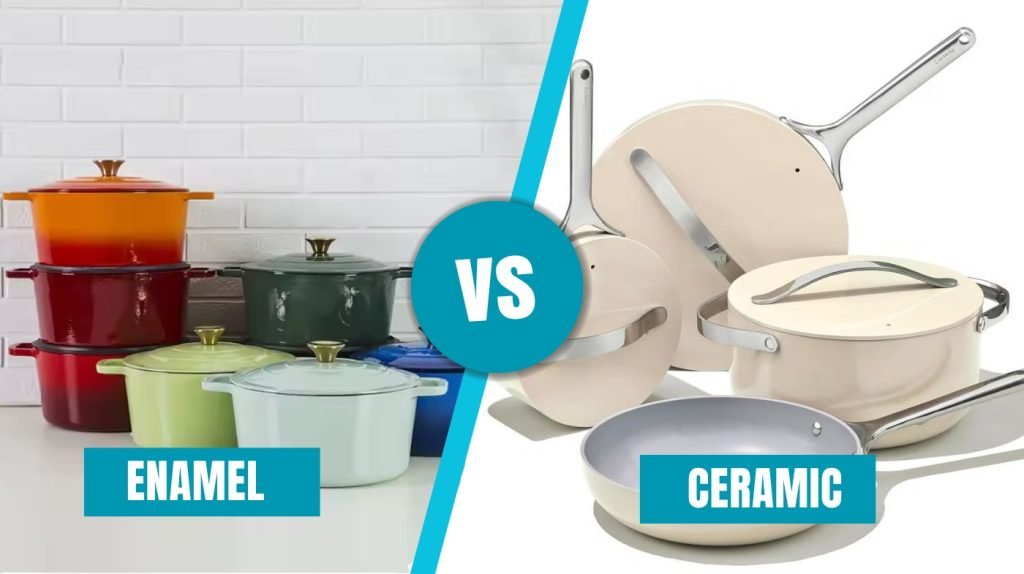
If you are asking which is better ceramic or enamel, the answer depends on what you cook and how you use your pans. The two materials can look similar, but they work in different ways. Ceramic cookware often feels light and smooth. Enamel is a glass-like coating that is bonded to metal, cast iron, or steel.
For many U.S. home cooks, the choice comes down to daily convenience versus long-term strength. Ceramic can make quick meals easy and often needs less lifting. Enamel cookware can handle slow cooking, oven use, and many high-heat tasks with ease. The key is to look beyond the word on the label and check what is under the cooking surface.
In this guide, we will explain which is better ceramic or enamel for searing, simmering, baking, cleaning, safety, durability, and daily use. We will also cover a common source of confusion: the difference between ceramic cookware and cookware with an enamel coating.

Ceramic vs Enamel: What Is the Difference?
Before deciding which is better ceramic or enamel, it helps to know what each term means. Ceramic cookware may be made from ceramic material or may have a ceramic-based nonstick coating over a metal body. These are not the same thing. Enamel cookware uses a hard glass-like layer that is fused to another material, often cast iron or steel.
This difference affects weight, heat response, care, and durability. A ceramic-coated pan can heat up fast and feel easy to handle. An enameled cast-iron pot takes longer to heat but holds heat very well. That makes the two materials useful for different cooking jobs.
The word enamel can also cause confusion. Porcelain enamel is a type of glass coating, not the same material as ceramic cookware. When comparing products, read the product details rather than relying only on the word ceramic or enamel in the name.
- ✦ Ceramic cookware
Often refers to ceramic-coated metal pans or cookware made from ceramic material. Ceramic-coated pans are valued for a smooth cooking surface and easy food release when the coating is new and well cared for.
- ✦ Enamel cookware
Usually means a metal body covered with a fused glass-like enamel layer. Enameled cast iron is a common example and is known for strong heat retention.
- ✦ Why the base matters
A ceramic-coated aluminum pan and an enameled cast-iron Dutch oven behave very differently. The coating alone does not tell you how the cookware will heat or how heavy it will be.
Ceramic Does Not Always Mean 100% Ceramic
Many pans sold as ceramic cookware have a metal body with a ceramic-based nonstick coating. The metal base gives the pan its strength and heat response. The ceramic layer mainly provides the cooking surface.
This matters when you compare products. A light ceramic-coated aluminum skillet will not perform like a thick ceramic baking dish. Always check the full construction before deciding which is better ceramic or enamel.
- ✦ Check the body
Look for the base material, such as aluminum, stainless steel, or cast iron. It has a major effect on weight and heat behavior.
- ✦ Check the coating
A ceramic nonstick coating can offer easy food release, but it needs careful use to help preserve its performance.
Which Is Better Ceramic or Enamel for Cooking Performance?
Cooking performance is one of the biggest factors in deciding which is better ceramic or enamel. Ceramic-coated pans often respond quickly to changes in heat, especially when they use an aluminum body. This can be useful for eggs, pancakes, vegetables, fish, and other foods that benefit from a smooth surface.
Enamel works differently. Enameled cast iron heats more slowly, but it stores heat well and spreads it across a thick cooking body. That makes it useful for stews, braises, soups, roasts, and other meals that need steady heat.
For fast stovetop cooking, ceramic can feel more responsive. For long cooking and heat retention, enamel can be the stronger choice. Neither material wins every cooking task.
- ✦ Eggs and delicate foods
Ceramic-coated cookware can be convenient because food may release easily when the surface is in good condition.
- ✦ Searing meat
Enameled cast iron can provide strong heat retention for browning meat. A suitable ceramic-coated pan can also sear food, but you should follow its heat limits.
- ✦ Slow cooking
Enamel, especially over cast iron, is well suited to slow cooking because the heavy body holds heat for a long time.
- ✦ Quick meals
A lightweight ceramic-coated skillet can be easier to move, heat, and clean during busy weeknight cooking.
Heat Retention and Heat Response
Heat response means how quickly cookware reacts when you raise or lower the burner. Heat retention means how well it keeps heat after the burner changes. These are different traits.
Ceramic-coated aluminum cookware often responds quickly. Enameled cast iron responds more slowly but keeps heat for longer. If you cook a lot of sauces, stews, or braised dishes, that difference can matter.
- ✦ Fast response
Ceramic-coated cookware with a thin metal base often changes temperature quickly.
- ✦ Strong retention
Enameled cast iron holds a large amount of heat, which can help during searing and slow cooking.
Durability: Which Lasts Longer?
If long service life is your main concern, enamel often has an advantage, especially when it covers a thick cast-iron or steel body. The enamel surface can resist rust because it separates the metal from air and moisture. The underlying cookware can also be very strong.
Ceramic-coated cookware needs more care. The coating can lose its nonstick performance over time, especially when exposed to excessive heat, rough utensils, or harsh cleaning. A good ceramic pan can last for years, but its coating is usually the part that needs the most attention.
This is an important point when asking which is better ceramic or enamel. Enamel can chip if it receives a hard impact, but a quality enameled pot can remain useful for many years. Ceramic-coated cookware may be easier to handle but can have a shorter useful coating life.
- ✦ Enamel strength
A quality enamel coating can provide a hard cooking surface over a durable metal body. It can resist rust when the coating remains intact.
- ✦ Ceramic coating wear
Ceramic nonstick performance can decline with heavy use, high heat, scratches, and poor cleaning habits.
- ✦ Impact damage
Enamel can chip if dropped or struck. Chips do not mean every piece must be discarded, but exposed metal should be checked and cared for according to the maker’s instructions.
How to Make Either Material Last Longer
Use the care rules supplied with your cookware. Avoid sudden temperature changes when the manufacturer warns against them. Let hot cookware cool before washing when appropriate.
For ceramic-coated pans, use utensils that will not scratch the surface and avoid unnecessary high heat. For enamel, avoid dropping the cookware and use gentle cleaning tools.
- ✦ Use the right heat
Do not use more heat than the recipe or cookware maker recommends.
- ✦ Avoid hard impacts
Treat enamel with care because strong impacts can chip the glass-like coating.
- ✦ Protect ceramic surfaces
Avoid metal tools and abrasive cleaning methods unless the manufacturer says they are safe.
Which Is Easier to Clean?
Both ceramic and enamel can be easy to clean when used correctly. Ceramic-coated pans often need little effort because food may release well from the smooth surface. This can be a major benefit after a quick breakfast or weeknight dinner.
Enameled cookware also has a smooth surface, so it does not need the seasoning routine used by bare cast iron. However, baked-on food can take more work, especially in a heavy enameled cast-iron pot.
When deciding which is better ceramic or enamel for cleanup, think about your cooking style. Ceramic may save time after small meals. Enamel can still be simple to clean but may need soaking for stubborn food.
- ✦ Ceramic cleaning
Use mild soap, a soft sponge, and the care method recommended by the manufacturer. Avoid abrasive tools that can damage the coating.
- ✦ Enamel cleaning
Warm water and mild dish soap work for routine cleaning. Soaking can help loosen stuck food.
- ✦ Dishwasher use
Do not assume a pan is dishwasher safe. Check the manufacturer’s instructions because dishwasher use can affect finishes and handles.
Which Is Safer: Ceramic or Enamel?
Safety depends on the exact product, materials, coating, and how you use the cookware. Both ceramic and enamel cookware are widely used for food preparation. A reputable product should be made and sold for cooking and should include clear care instructions.
For ceramic-coated cookware, the coating can wear with use. Avoid overheating an empty pan and follow the temperature limits set by the manufacturer. For enamel cookware, the main concern is physical damage to the coating, such as chips caused by impacts.
When asking which is better ceramic or enamel for safety, there is no universal winner. Focus on a reputable maker, clear product information, proper heat use, and cookware that remains in good condition.
- ✦ Buy from a reputable source
Choose cookware with clear material details, care instructions, and a stated intended use for food preparation.
- ✦ Follow temperature limits
Use the heat range and oven limits supplied by the manufacturer. Different ceramic coatings and enamel products can have different limits.
- ✦ Inspect damaged cookware
Check ceramic-coated cookware for serious coating damage and enamel cookware for chips, cracks, or other damage before continued use.
Ceramic and Enamel Are Not the Same as Bare Metal
The cooking surface can change how food interacts with the pan and how the pan should be cleaned. A ceramic coating is not the same as a ceramic baking dish, and enamel is not the same as bare cast iron.
This is why broad claims about one material being safe or unsafe can be misleading. The exact construction and product instructions matter more than the name alone.
- ✦ Read the label
Look for the full construction, coating type, oven rating, and care instructions before buying.
- ✦ Replace when needed
If cookware has severe damage or no longer performs as intended, follow the manufacturer’s guidance about replacement.
Weight, Handling, and Everyday Convenience
Weight can change your cooking experience more than you might expect. Many ceramic-coated pans are light enough to lift with one hand. That can make them comfortable for daily cooking, especially when you cook several meals each day.
Enameled cast iron is much heavier. The weight can make it harder to lift, wash, and store, but it also gives the pot excellent heat retention. For a large family meal, that extra mass can be useful rather than a drawback.
If you are still wondering which is better ceramic or enamel, ask how often you move your cookware. A person who cooks quick meals may prefer light ceramic-coated pans. Someone who makes bread, stew, chili, or braised meat may enjoy the stability of enamel.
- ✦ Choose ceramic for light handling
Ceramic-coated pans are often easier to lift, turn, wash, and store.
- ✦ Choose enamel for stability
Heavy enameled cast iron stays firmly on the cooktop and holds heat well.
- ✦ Think about storage
Heavy enamel pieces need strong shelves and enough cabinet space. Lighter ceramic cookware is often easier to stack and move.
Which Is Better for Different Types of Cooking?
There is no single answer to which is better ceramic or enamel because different dishes need different cookware traits. A thin, light pan is useful for fast meals. A heavy pot is useful when steady heat and heat retention matter.
For eggs, pancakes, grilled cheese, and quick vegetables, ceramic-coated cookware can be convenient. For chili, soup, stew, braised meat, and many oven dishes, enameled cast iron can be a strong fit.
The best approach is to match the pan to the task. If your kitchen budget allows it, owning both types can make sense because they fill different roles.
- ✦ Best for eggs and pancakes
Ceramic-coated cookware can be a good fit when easy food release and light handling are priorities.
- ✦ Best for stews and chili
Enameled cast iron is well suited to slow simmering and recipes that benefit from steady heat.
- ✦ Best for oven cooking
Both types can work in an oven, but the exact oven limit depends on the product, coating, lid, and handles.
- ✦ Best for acidic foods
Enameled cookware is often chosen for tomato sauces, wine-based dishes, and other acidic recipes because the enamel separates food from the underlying metal.
- ✦ Best for easy lifting
A lightweight ceramic-coated skillet is usually easier to move than a large enameled cast-iron pan.
Ceramic for Daily Quick Meals
Ceramic-coated cookware can fit well in a busy U.S. kitchen. It works well for simple meals where fast heating, easy food release, and easy cleanup matter.
It is especially useful when you do not want to lift a heavy pan several times during cooking. The trade-off is that you need to protect the coating from excessive heat and rough use.
- ✦ Good fit
Breakfast foods, vegetables, fish, sandwiches, and other quick meals.
- ✦ Main care need
Protect the cooking surface and follow the manufacturer’s heat and utensil rules.
Enamel for Slow and Oven Cooking
Enameled cast iron shines when a recipe needs stable heat over a long period. It can move from stovetop to oven when the specific piece is rated for that use.
Its heavy body also helps reduce temperature swings when cold ingredients enter a hot pot. That can be useful for braises, soups, sauces, and slow-cooked meals.
- ✦ Good fit
Braises, stews, soups, roasts, bread, and other long-cooked dishes.
- ✦ Main care need
Avoid impacts, sudden temperature changes when warned against, and harsh cleaning methods.
Cost and Value: Which Should You Buy?
Price varies widely for both ceramic and enamel cookware. You can find basic ceramic-coated pans at modest prices, while premium enameled cast iron can cost much more. Brand, size, construction, and finish all affect the price.
The better value depends on how long the cookware performs well for you. A low-cost pan that needs frequent replacement may cost more over time than a durable piece that serves you for many years. At the same time, a heavy premium pot may not be worth the cost if you mainly cook quick meals.
When deciding which is better ceramic or enamel, consider cost per use rather than the purchase price alone. Buy the material that fits your cooking habits instead of paying for features you will rarely use.
- ✦ Ceramic value
Often makes sense for shoppers who want light cookware, easy food release, and a simple everyday pan.
- ✦ Enamel value
Can make sense for cooks who want a long-term pot for slow cooking, oven recipes, and strong heat retention.
- ✦ Avoid buying by price alone
A higher price does not automatically mean better cooking performance. Check construction, warranty, care instructions, and intended use.