
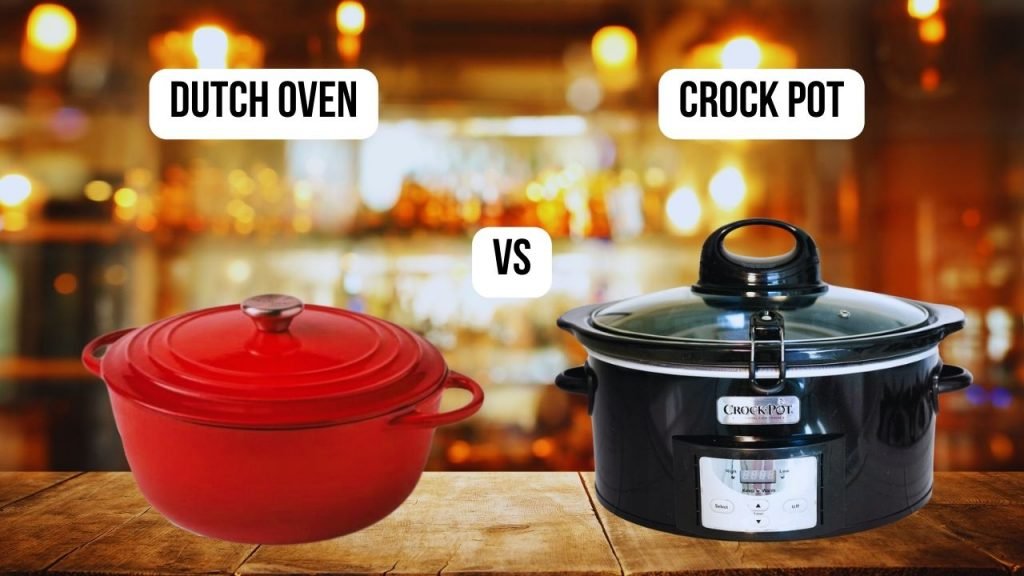
If you have ever seen a rich beef stew made in a Dutch oven and one made in a Crock Pot, you may wonder if the two are really the same thing. They are not. Both can turn tough meat, beans, and vegetables into tender meals, but the way they heat food is quite different.
The key difference is simple. A Dutch oven is a heavy cooking pot that you heat on a stovetop, in an oven, or over a fire. A Crock Pot is an electric slow cooker with a heated base. In everyday US kitchens, both can be useful, but they fit different cooking habits.
When people ask, “are Dutch ovens the same as Crock Pots,” they often want to know if one can replace the other. In many recipes, the answer is yes with some changes. The best choice depends on whether you value hands-on control, easy meal prep, browning, long cooking times, or cooking in one pot.

What Is a Dutch Oven?
A Dutch oven is a heavy pot with thick walls and a tight lid. Many modern Dutch ovens use cast iron. Some have an enamel coating, while others have a bare cast iron surface.
The thick walls help the pot hold heat well. You can use a Dutch oven on many stovetops and, when the model allows it, in the oven. This makes it useful for browning, simmering, roasting, baking, and slow cooking.
A Dutch oven does not have its own heating element. You control the heat with the stove, oven, or another heat source. That gives you direct control over how fast your food cooks.
- ✦ Main heat source
A stovetop, oven, or another suitable heat source provides the heat.
- ✦ Common materials
Cast iron is common. Enameled cast iron is also popular because the enamel gives the cooking surface a smooth coating.
- ✦ Typical uses
Dutch ovens work well for stews, soups, braises, roasts, bread, beans, fried foods, and many one-pot meals.
Why Dutch Ovens Are Good for Slow Cooking
A Dutch oven can hold a steady heat for a long time. When you keep the heat low, it can gently cook meat and vegetables until they become tender.
The tight lid also helps reduce moisture loss. This matters for dishes such as beef stew, chili, and braised short ribs. You can also start by browning the meat in the same pot, which adds flavor before the long cook begins.
- ✦ Browning
You can brown meat and vegetables directly in the pot before adding liquid.
- ✦ Oven use
Many Dutch ovens can move from the stovetop to the oven, making them useful for braises and baked dishes.
What Is a Crock Pot?
Crock Pot is a well-known brand name associated with slow cookers. In everyday speech, many people use “Crock Pot” to mean an electric slow cooker in general. A slow cooker has a removable or fixed cooking vessel that sits inside an electric heating base.
Unlike a Dutch oven, a Crock Pot makes its own heat. You choose a setting, add the ingredients, and let the cooker work over several hours. This makes it useful for busy weekdays when you want dinner ready without watching a pot on the stove.
Slow cookers are designed for low and slow cooking. They are especially useful for foods that benefit from long cooking, such as pulled pork, pot roast, chili, soups, and beans.
- ✦ Electric heating
The cooker uses electricity to warm the cooking vessel from the base.
- ✦ Hands-off cooking
Once the ingredients are added and the cooker is set, there is usually little need to stir or adjust the heat.
- ✦ Long cooking times
Slow cookers are built for recipes that cook over several hours.
Why a Crock Pot Feels Easier for Busy Days
The main appeal of a Crock Pot is convenience. You can prepare ingredients in the morning, set the cooker, and return later to a meal that has been cooking slowly.
This makes a slow cooker useful for busy US households, especially on workdays. It can also help when you want to cook a large batch of food for several meals.
- ✦ Simple setup
Most recipes require you to add the ingredients, choose a setting, and let the cooker run.
- ✦ Meal planning
Large batches of soup, chili, shredded meat, and beans can work well for planned leftovers.
Dutch Oven vs Crock Pot: The Main Differences
So, are Dutch ovens the same as Crock Pots when it comes to cooking results? They can produce some similar meals, but the cooking process is not the same.
A Dutch oven gives you more direct control over heat. A Crock Pot gives you convenience and steady electric heat. That difference affects how you brown food, how you manage liquid, and how much attention the meal needs.
The table below summarizes the main practical differences for home cooks.
- ✦ Heat control
A Dutch oven lets you change the heat directly on the stovetop or use an oven. A Crock Pot uses preset electric heat settings.
- ✦ Browning
A Dutch oven is well suited to browning meat and vegetables. A traditional slow cooker usually does not brown food in the same way.
- ✦ Cooking time
Both can handle long cooks, but slow cookers are designed around extended low-temperature cooking.
- ✦ Hands-on work
A Crock Pot usually needs less attention. A Dutch oven may need heat adjustments and occasional checking.
- ✦ Versatility
A Dutch oven can handle many cooking methods. A Crock Pot focuses mainly on slow cooking.
- ✦ Energy source
A Dutch oven needs an external heat source. A Crock Pot uses electricity.
Can Both Make the Same Recipes?
Many recipes can work in either tool. Beef stew, chicken soup, chili, pulled pork, beans, and pot roast are common examples.
The recipe may need changes when you switch from one cooker to the other. You may need to adjust cooking time, liquid levels, and when you add certain ingredients. A Dutch oven can also brown food first, while a Crock Pot recipe may call for browning in a separate pan.
- ✦ Good shared recipes
Stews, braises, chili, soups, beans, pot roast, and shredded meat can often be adapted to either method.
- ✦ Recipe changes
Do not assume that the same time, heat setting, and liquid amount will work without adjustment.
Which One Is Better for Different Cooking Tasks?
There is no single answer to which tool is better for every meal. The right choice depends on what you are cooking and how you want to cook it.
If you want to sear meat, build a sauce, then finish the dish in the oven, a Dutch oven is a natural fit. If you want to load ingredients before work and let dinner cook for hours, a Crock Pot can be more convenient.
This is also why the question “are Dutch ovens the same as Crock Pots” matters for buying decisions. They overlap in some uses, but they are not interchangeable in every situation.
- ✦ Choose a Dutch oven for browning
Its direct contact with a hot cooking surface makes it useful for searing meat and cooking vegetables before a long simmer.
- ✦ Choose a Crock Pot for convenience
A slow cooker is useful when you want a long, mostly hands-off cooking process.
- ✦ Choose a Dutch oven for baking
Many Dutch ovens can be used for bread and other oven-based dishes.
- ✦ Choose a Crock Pot for scheduled slow meals
A slow cooker can be handy when you want a meal to cook while you handle work, errands, or other tasks.
For Stews and Chili
Both tools can make excellent stews and chili. A Dutch oven gives you the option to brown meat and vegetables first in the same pot. A Crock Pot lets the ingredients cook slowly with little attention.
If flavor-building and control are your main goals, the Dutch oven offers more steps you can manage yourself. If convenience is the priority, the Crock Pot has a clear advantage.
For Pot Roast and Tough Cuts
Both tools can turn tough cuts into tender meals when cooked with enough time and moisture. A Dutch oven can sear the meat first and then move to the oven for a long braise.
A Crock Pot can cook the same type of meat slowly over many hours. The result can be very tender, but the cooking method and surface heat are different.
For Bread and Baking
A Dutch oven is far more useful for bread baking. Its heavy body and lid can help create the enclosed environment many crusty breads need.
A standard Crock Pot is not a direct substitute for a Dutch oven when the recipe depends on high oven heat or a hot covered pot.
Can You Use a Dutch Oven Like a Crock Pot?
Yes, you can use a Dutch oven for many meals that are normally made in a Crock Pot. The key is to cook the food gently and give it enough time.
For a slow-cooker-style meal, you can often brown the meat and vegetables in the Dutch oven, add the liquid and other ingredients, then cover the pot and cook it over low heat or in a suitable oven.
However, a Dutch oven does not automatically copy the exact heat pattern of a slow cooker. You need to monitor the food and make sure the cooking temperature stays appropriate for the recipe.
- ✦ Start with browning
Brown meat or vegetables in the Dutch oven when the recipe benefits from deeper roasted flavor.
- ✦ Use low heat
Keep the cooking temperature gentle so the food can soften without boiling too hard.
- ✦ Keep the lid on
A tight lid helps retain moisture during a long cook.
- ✦ Check the liquid
Watch the amount of liquid, especially when using an oven or stovetop method that may reduce liquid faster than a slow cooker.
How to Convert a Crock Pot Recipe to a Dutch Oven
Start by reading the recipe and identifying the cooking stage. If the recipe asks you to brown meat, do that in the Dutch oven first. Then add the remaining ingredients and use a low, steady heat.
Cooking times vary by recipe, cut of meat, ingredient size, and temperature. Instead of relying on an exact time conversion, check the food for tenderness and make sure meat reaches a safe internal temperature.
- ✦ Watch texture
Tenderness is often a better guide than a fixed clock time for braised meats and vegetables.
- ✦ Avoid hard boiling
A gentle simmer is usually better for long braises than a strong boil.
Pros and Cons of Dutch Ovens and Crock Pots
When comparing the two, it helps to look beyond the type of food they can cook. Their biggest differences are convenience, control, versatility, and care.
A Dutch oven is a strong all-purpose cooking tool. A Crock Pot is more specialized, but that focus can make it very convenient. Your cooking style should guide the choice.
- ✦ Dutch oven advantage: versatility
It can handle searing, simmering, braising, roasting, baking, and slow cooking.
- ✦ Dutch oven advantage: one-pot browning
You can often sear ingredients in the same pot that you use for the rest of the meal.
- ✦ Dutch oven limitation: weight
Cast iron Dutch ovens can be heavy, especially when filled with food.
- ✦ Dutch oven limitation: more attention
You usually need to manage the heat rather than simply setting an electric cooker and walking away.
- ✦ Crock Pot advantage: convenience
It is designed for long cooking with minimal hands-on work.
- ✦ Crock Pot advantage: simple controls
Most models offer straightforward heat settings that are easy to use.
- ✦ Crock Pot limitation: less browning
Many traditional slow cookers are not designed to create the same searing heat as a stovetop pan.
- ✦ Crock Pot limitation: less versatile
A standard slow cooker is mainly built for slow cooking and does not replace an oven or stovetop pot for many tasks.
Cleaning and Care
Care depends on the exact model. Enameled Dutch ovens are generally simple to clean with normal dish soap and suitable tools. Bare cast iron needs more careful drying and seasoning to help protect the surface.
Slow cooker inserts may be easier to handle for everyday meals, but you should always follow the maker’s cleaning instructions. Do not assume every insert or lid is safe for a dishwasher, stovetop, or oven.
- ✦ Dutch oven care
Follow the care instructions for the specific cast iron or enamel surface.
- ✦ Crock Pot care
Check whether the insert and lid are dishwasher safe and whether the insert can safely go in an oven.
Are Dutch Ovens the Same as Crock Pots for Energy Use?
No. They use different heat sources, so their energy use depends on how you cook and which appliance you use. A Dutch oven itself does not consume electricity because it is simply the cooking vessel.
A Crock Pot uses electricity for its built-in heating element. A Dutch oven placed on an electric or gas stovetop, or inside an oven, depends on the energy use of that heat source.
Because energy use can vary by appliance, cooking setting, meal size, and cooking time, it is better to compare your actual appliances than assume one method always uses less energy.
- ✦ Dutch oven
The pot itself has no electrical heating element. Energy use comes from the stove, oven, or other heat source.
- ✦ Crock Pot
The slow cooker uses electricity to provide steady heat over a long period.
- ✦ Best way to compare
Check the power rating of your appliances and the length of your cooking cycle if energy use is an important concern.