
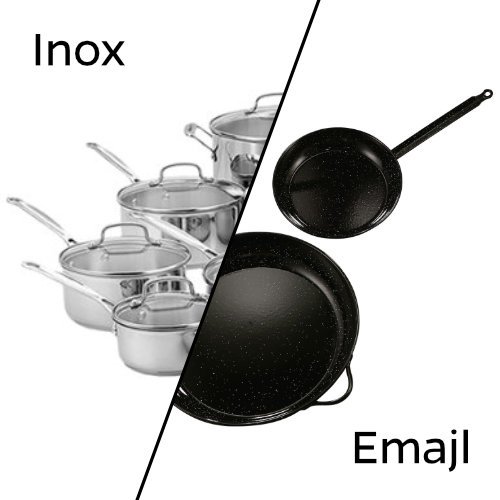
If you are asking which is better enamel or stainless steel, the answer depends on how you cook. These materials work in very different ways. Stainless steel gives you a tough cooking surface that handles heat, daily use, and many cooking methods. Enamel gives you a smooth glass-like surface over metal, which is easy to clean and well suited to slow cooking.
For a typical U.S. home kitchen, stainless steel is often the more flexible choice. It works well for boiling, sautéing, browning, making sauces, and cooking at higher heat. Enamel cookware has its own strong place, especially when you make soups, chili, braises, stews, or other meals that simmer for a long time.
Enamel vs Stainless Steel: What Is the Difference?
Before deciding which is better enamel or stainless steel, it helps to know what each material really is. Stainless steel is a metal alloy that contains iron and chromium. Many cookware pieces also use aluminum or copper inside the base or between steel layers to improve heat control.
Enamel cookware is different. It has a metal body with a glass-based enamel coating fused to the surface. The base may be cast iron or steel. This means the cooking properties can vary a lot between a light enamel steel pot and a heavy enameled cast iron Dutch oven.
That difference matters. When people compare enamel and stainless steel, they are not always comparing equal cookware. An enameled cast iron pot and a thin enamel steel pot can behave very differently. The same is true for basic stainless steel and high-quality multi-layer stainless steel.
- ✦ Stainless steel
A durable metal cooking surface. It is strong, corrosion resistant, and useful for many cooking tasks.
- ✦ Enamel
A hard glass-like coating fused to a metal base. It creates a smooth surface and adds a barrier between food and the base metal.
- ✦ Construction matters
The thickness, base, core, and design can affect heat control more than the surface material alone.
Which Is Better Enamel or Stainless Steel for Everyday Cooking?
For everyday cooking, stainless steel has a clear practical advantage in versatility. You can use it for boiling pasta, cooking rice, making soup, sautéing vegetables, browning meat, and reducing sauces. Good stainless steel cookware can also handle frequent use without a fragile coating.
Enamel is also useful every day, but its strengths are different. It is especially handy for pots used for soups, beans, tomato sauces, stews, and slow-cooked meals. The smooth surface also makes cleanup simple when food does not burn onto the pan.
So, which is better enamel or stainless steel for a busy kitchen? Stainless steel is often the better all-purpose option. Enamel becomes more attractive when your cooking centers on simmering, braising, and one-pot meals.

- ✦ Choose stainless steel for
Sautéing, boiling, browning, pan sauces, pasta, vegetables, and general daily cooking.
- ✦ Choose enamel for
Soups, stews, braises, chili, tomato-based dishes, slow cooking, and serving food at the table.
- ✦ For a mixed kitchen
Using both materials can cover more cooking tasks than relying on only one.
Why Stainless Steel Works Well Every Day
Stainless steel is tough and does not have a delicate cooking coating that can wear away. It can take regular use, metal utensils, and repeated washing when the cookware maker allows it. It also works well for cooks who want one material for many different tasks.
Why Enamel Works Well for One-Pot Meals
Enamel cookware has a smooth surface that works well with moist foods. Enameled cast iron also holds heat very well, which makes it useful for long simmering and braising. It can move from the stove to the table in many cases, which makes it popular for family meals.
Heat Performance: Enamel vs Stainless Steel
Heat performance is one of the biggest factors when deciding which is better enamel or stainless steel. Stainless steel by itself is not an excellent heat conductor. That is why quality stainless cookware often uses an aluminum or copper core to spread heat more evenly.
Enamel does not tell you the whole heat story either. The metal under the enamel controls much of the cookware’s heat behavior. Enameled cast iron heats more slowly but holds heat for a long time. Thin enameled steel can heat much faster and behave quite differently.
For quick changes in heat, a well-made stainless steel pan can be very useful. For steady low heat and long cooking, enameled cast iron can be excellent. The right choice depends on whether you value fast response or strong heat retention.
- ✦ Fast heat response
Stainless steel cookware with an aluminum or copper core can respond well when you raise or lower the heat.
- ✦ Heat retention
Enameled cast iron holds heat for a long time and works well for slow cooking.
- ✦ Even heating
Cookware construction matters. A layered stainless steel pan may heat more evenly than a thin single-layer pan.
Which Is More Durable: Enamel or Stainless Steel?
If durability is your main concern, stainless steel usually has the edge. The steel surface can develop scratches, stains, or a dull finish, but these marks often do not stop the pan from working. A good stainless steel pot can remain useful for many years with normal care.
Enamel can also last for years, but the coating needs more care. A hard impact can chip the enamel. A deep chip may expose the metal below and can reduce the usefulness of the cookware, depending on the location and size of the damage.
This is an important point when asking which is better enamel or stainless steel. Stainless steel tends to be more forgiving. Enamel can be highly durable, but it is less tolerant of drops, hard knocks, and rough handling.
- ✦ Stainless steel advantage
Scratches and surface marks usually affect looks more than basic function.
- ✦ Enamel limitation
The glass-like coating can chip or crack after strong impacts or sudden temperature changes.
- ✦ Long-term care
Both can last a long time when used within the maker’s temperature and care instructions.
Cleaning and Maintenance Compared
Both enamel and stainless steel can be easy to clean, but they need different care. Stainless steel can handle more vigorous cleaning than enamel in many cases. Burn marks and discoloration may need extra work, but the surface itself is strong.
Enamel has a smooth surface that often releases food with little effort. Warm water and mild dish soap can be enough for many meals. However, abrasive tools and harsh cleaners can damage the finish over time.
When asking which is better enamel or stainless steel for easy care, the answer is close. Stainless steel is more forgiving, while enamel can be easier to wipe clean after normal cooking.
- ✦ For stainless steel
Use mild soap and a suitable sponge. For stubborn marks, use a cleaner made for stainless steel and follow the cookware maker’s guidance.
- ✦ For enamel
Use warm soapy water and a soft sponge. Avoid harsh abrasives that may dull or damage the enamel.
- ✦ Avoid thermal shock
Do not move very hot enamel cookware into cold water. Sudden temperature changes can stress the coating.
Which Is Better for Acidic Foods?
Enamel and stainless steel are both useful for acidic foods when the cookware is intact and made for cooking. Enamel creates a glass-like barrier between the food and the metal base. This makes it a popular choice for tomato sauce, wine-based dishes, vinegar-based recipes, and long-simmered foods.
Stainless steel is also valued for its resistance to corrosion and its ability to handle many acidic ingredients. It is widely used for tomato sauces, soups, stocks, and other foods with low pH.
If you often cook acidic meals for a long time, both can work well. The bigger issue is the condition of the cookware. Damaged enamel deserves more caution because a chip can expose the underlying metal.
- ✦ Enamel surface
The glass-like coating provides a non-reactive cooking surface when it remains intact.
- ✦ Stainless steel surface
Quality stainless steel resists corrosion and works well with many acidic foods.
- ✦ Best practice
Follow the cookware maker’s instructions and replace enamel cookware if serious coating damage affects the cooking surface.
Cooking Food Without Sticking
One common misunderstanding is that stainless steel is naturally nonstick. It is not. Food can stick to stainless steel if the pan is too cold, the heat is too high, or the food is moved too soon. With good heat control and enough cooking fat, stainless steel can still give excellent results.
Enamel has a smooth surface that can make food release easier, but it should not be treated like a modern nonstick coating. Food can still stick and burn if the pan is overheated or left dry for too long.
For this reason, the question of which is better enamel or stainless steel for sticking does not have a simple winner. Enamel may feel easier for some foods, while stainless steel rewards good cooking technique.
- ✦ Stainless steel tip
Preheat the pan, add suitable cooking fat, and let food develop a crust before trying to move it.
- ✦ Enamel tip
Use moderate heat and avoid letting an empty enamel pan sit over high heat for too long.
- ✦ Important distinction
Neither material should be treated as identical to a dedicated nonstick coating.
Which Is Better for High-Heat Cooking?
Stainless steel is usually the more practical choice for high-heat cooking. It has no enamel layer that can chip from physical impact, and quality stainless steel cookware is designed for a wide range of cooking temperatures. Always check the manufacturer’s oven and stovetop limits before using high heat.
Enamel cookware needs more care. Enameled cast iron can handle substantial heat, but the coating still deserves careful treatment. Very high heat is often unnecessary for slow cooking and can make temperature control harder.
If you regularly sear meat, reduce sauces, or use high heat for quick cooking, stainless steel is often the simpler option. If you mainly simmer and braise, enamel may fit your routine better.
- ✦ High-heat searing
Stainless steel is well suited to browning meat and building fond for pan sauces.
- ✦ Low and steady cooking
Enameled cast iron is well suited to slow cooking because of its strong heat retention.
- ✦ Check the cookware
Temperature limits vary by product, handle material, lid, and construction.
Weight, Handling, and Kitchen Space
Weight can change the daily cooking experience more than people expect. Stainless steel cookware is often lighter than enameled cast iron. That makes it easier to lift, shake, pour, and wash.
Enameled cast iron is much heavier because of the cast iron base. That weight is useful when you want strong heat retention, but it can be tiring when moving a full pot of stew from the stove to the counter.
If you have limited storage or prefer cookware that is easy to move, stainless steel may be more practical. If you value heat retention and do not mind the weight, enameled cast iron can earn a permanent place on the stove.
- ✦ Stainless steel
Usually easier to lift and store, especially in larger cookware sets.
- ✦ Enameled cast iron
Heavy but stable, with excellent heat retention.
- ✦ Think about filled weight
A large pot can become much heavier once filled with water, soup, or stew.
Which Is Better for Different Types of Cooking?
The best way to answer which is better enamel or stainless steel is to match the material to the meal. Stainless steel is a strong general-purpose choice for cooks who use many methods. Enamel is especially useful when the recipe needs steady heat and a smooth cooking surface.
A U.S. home cook who makes pasta, stir-fries, pan sauces, eggs, vegetables, and seared meats may get more use from stainless steel. Someone who makes chili, beef stew, baked beans, braised chicken, or long-simmered sauces may prefer enamel for those jobs.
There is no need to force every recipe into one material. A small stainless saucepan, a stainless skillet, and an enameled Dutch oven can work together as a simple and useful kitchen setup.
- ✦ Best for searing
Stainless steel is a strong choice for browning meat and vegetables.
- ✦ Best for soups and stews
Both work well, but enameled cast iron is especially useful for slow simmering.
- ✦ Best for sauces
Stainless steel is excellent for reducing sauces and building fond in the pan.
- ✦ Best for braising
Enameled cast iron is a strong option because it holds heat well and moves easily from stovetop to oven when rated for it.
- ✦ Best for daily versatility
Stainless steel usually covers the widest range of everyday cooking tasks.
Cost and Long-Term Value
Price varies widely for both materials. A basic stainless steel pot can be affordable, while premium multi-layer stainless cookware can cost much more. Enamel cookware also ranges from simple enamel steel pieces to high-end enameled cast iron.
The purchase price alone does not tell you the long-term value. A well-made stainless steel pan can stay useful despite cosmetic marks. A well-cared-for enamel pot can also serve for many years, but replacing damaged enamel cookware can be more costly.
When deciding which is better enamel or stainless steel for your budget, look at construction and intended use rather than material alone. A good pan that you use often is usually more useful than a large set with pieces you rarely need.
- ✦ Compare construction
For stainless steel, check whether the cookware has a bonded aluminum or copper core or base.
- ✦ Check enamel quality
Look for an even coating, solid handles, a well-fitted lid, and clear care instructions.
- ✦ Buy for your habits
Choose the pieces you will use most rather than paying for a large set just because it contains more items.
Which Is Better for Induction and Different Cooktops?
Both enamel and stainless steel can work on induction, but the answer depends on the metal base. Induction needs a magnetic material or a magnetic layer that the cooktop can detect. A product labeled as induction compatible is the safest choice.
Stainless steel is not automatically induction compatible. Some stainless alloys are not magnetic enough to work directly with induction. Many modern pans solve this with a magnetic base.
Enamel cookware also varies because enamel is only the coating. The metal underneath determines induction compatibility. Always check the product label instead of assuming that enamel or stainless steel alone guarantees induction use.
- ✦ Induction
Look for an induction-compatible label and follow the cookware maker’s instructions.
- ✦ Gas
Both materials can work well on gas when used within the maker’s heat limits.
- ✦ Electric
Both can work on electric cooktops, though heavy enamel cookware should be moved carefully to avoid damaging the glass surface.
Pros and Cons of Enamel and Stainless Steel
Both materials have clear strengths. Stainless steel is tough, versatile, and easy to use across many cooking styles. Enamel offers a smooth surface, strong heat retention in cast iron versions, and a classic look that can move from kitchen to table.
The weaknesses are also different. Stainless steel can stick and can show stains or heat discoloration. Enamel can chip and may need more careful handling.
This is why the answer to which is better enamel or stainless steel should start with your cooking habits. The right material is the one that solves the problems you face most often.
- ✦ Stainless steel pros
Durable, versatile, corrosion resistant, suitable for high-heat cooking, and available in many shapes and price ranges.
- ✦ Stainless steel cons
Food can stick without good technique, and some models heat unevenly if they lack a good heat-spreading core.
- ✦ Enamel pros
Smooth surface, easy cleaning, attractive colors, useful for acidic foods, and excellent heat retention in enameled cast iron.
- ✦ Enamel cons
The coating can chip, heavy versions can be hard to lift, and sudden temperature changes should be avoided.
Which Should You Buy?
If you want one material that can handle most cooking tasks, stainless steel is a practical starting point. Look for a well-built pan with good heat distribution rather than choosing only by appearance or price.
If you already own stainless steel and want a pot for slow cooking, adding an enameled cast iron Dutch oven or braiser can make sense. It adds strong heat retention and works especially well for stews, braises, soups, and long-cooked meals.
So, which is better enamel or stainless steel? For most kitchens, stainless steel is the better all-around foundation. Enamel is an excellent specialist and companion material, especially when slow cooking and heat retention matter most.
- ✦ Choose stainless steel if
You want versatility, frequent daily use, high-heat cooking, and a surface that can take normal wear.
- ✦ Choose enamel if
You focus on soups, stews, braises, slow cooking, and easy cleanup.
- ✦ Choose both if
You cook a wide range of meals and want each material to handle the jobs where it performs best.